Category Archives: Pathogen

Canada – Luigi Guffanti 1876 brand Taleggio DOP a Latte Crudo incarto verde (cheese) recalled due to pathogenic E. coli

Canada Gov

Recall details

Ottawa, March 10, 2020 – Taste for Luxury is recalling Guffanti brand Taleggio DOP a Latte crudo incarto verde (cheese) from the marketplace due to possible contamination with pathogenic E. coli. Consumers should not consume the recalled product described below.

The following product has been sold in Ontario. This product may have been sold clerk-served from counters with or without a label or coding. Consumers who are unsure if they have purchased the affected product are advised to contact their retailer.

Recalled product

Brand Product Size UPC Codes
Luigi Guffanti 1876 Taleggio DOP a Latte crudo incarto verde (cheese) variable variable Lot: 134/20
BB: 13/04/2020

What you should do

If you think you became sick from consuming a recalled product, call your doctor.

Check to see if you have the recalled product in your home. Recalled products should be thrown out or returned to the store where they were purchased.

Food contaminated with pathogenic E. coli may not look or smell spoiled but can still make you sick. Symptoms can include nausea, vomiting, mild to severe abdominal cramps and watery to bloody diarrhea. In severe cases of illness, some people may have seizures or strokes, need blood transfusions and kidney dialysis or live with permanent kidney damage. In severe cases of illness, people may die.

Background

This recall was triggered by a recall in another country. The Canadian Food Inspection Agency (CFIA) is conducting a food safety investigation, which may lead to the recall of other products. If other high-risk products are recalled, the CFIA will notify the public through updated Food Recall Warnings.

The CFIA is verifying that industry is removing the recalled product from the marketplace.

Illnesses

There have been no reported illnesses associated with the consumption of this product.

Research – Complex Interactions Between Weather, and Microbial and Physicochemical Water Quality Impact the Likelihood of Detecting Foodborne Pathogens in Agricultural Water

Frontiers

Agricultural water is an important source of foodborne pathogens on produce farms. Managing water-associated risks does not lend itself to one-size-fits-all approaches due to the heterogeneous nature of freshwater environments. To improve our ability to develop location-specific risk management practices, a study was conducted in two produce-growing regions to (i) characterize the relationship between Escherichia coli levels and pathogen presence in agricultural water, and (ii) identify environmental factors associated with pathogen detection. Three AZ and six NY waterways were sampled longitudinally using 10-L grab samples (GS) and 24-h Moore swabs (MS). Regression showed that the likelihood of Salmonella detection (Odds Ratio [OR] = 2.18), and eaeA-stx codetection (OR = 6.49) was significantly greater for MS compared to GS, while the likelihood of detecting L. monocytogenes was not. Regression also showed that eaeA-stx codetection in AZ (OR = 50.2) and NY (OR = 18.4), and Salmonella detection in AZ (OR = 4.4) were significantly associated with E. coli levels, while Salmonella detection in NY was not. Random forest analysis indicated that interactions between environmental factors (e.g., rainfall, temperature, turbidity) (i) were associated with likelihood of pathogen detection and (ii) mediated the relationship between E. coli levels and likelihood of pathogen detection. Our findings suggest that (i) environmental heterogeneity, including interactions between factors, affects microbial water quality, and (ii) E. coli levels alone may not be a suitable indicator of food safety risks. Instead, targeted methods that utilize environmental and microbial data (e.g., models that use turbidity and E. coli levels to predict when there is a high or low risk of surface water being contaminated by pathogens) are needed to assess and mitigate the food safety risks associated with preharvest water use. By identifying environmental factors associated with an increased likelihood of detecting pathogens in agricultural water, this study provides information that (i) can be used to assess when pathogen contamination of agricultural water is likely to occur, and (ii) facilitate development of targeted interventions for individual water sources, providing an alternative to existing one-size-fits-all approaches.

Research – Salmonella enterica Serovar Typhimurium 14028s Genomic Regions Required for Colonization of Lettuce Leaves

Frontiers in Microbiology

Contamination of edible produce leaves with human bacterial pathogens has been associated with serious disease outbreaks and has become a major public health concern affecting all aspects of the market, from farmers to consumers. While pathogen populations residing on the surface of ready-to-eat produce can be potentially removed through thorough washing, there is no disinfection technology available that effectively eliminates internal bacterial populations. By screening 303 multi-gene deletion (MGD) mutants of Salmonella enterica serovar Typhimurium (STm) 14028s, we were able to identify ten genomic regions that play a role in opening the stomatal pore of lettuce leaves. The major metabolic functions of the deleted regions are associated with sensing the environment, bacterium movement, transport through the bacterial membrane, and biosynthesis of surface appendages. Interestingly, at 21 days post inoculation, seven of these mutants showed increased population titers inside the leaf, two mutants showed similar titers as the wild type bacterium, whereas one mutant with a large deletion that includes the Salmonella pathogenicity island 2 (SPI-2) showed significantly impaired persistence in the leaf apoplast. These findings suggest that not all the genomic regions required for initiation of leaf colonization (i.e., epiphytic behavior and tissue penetration) are essential for continuing bacterial survival as an endophyte. We also observed that mutants lacking either SPI-1 (Mut3) or SPI-2 (Mut9) induce callose deposition levels comparable to those of the wild type STm 14028s; therefore, these islands do not seem to affect this lettuce defense mechanism. However, the growth of Mut9, but not Mut3, was significantly impaired in the leaf apoplastic wash fluid (AWF) suggesting that the STm persistence in the apoplast may be linked to nutrient acquisition capabilities or overall bacterial fitness in this niche, which are dependent on the gene(s) deleted in the Mut9 strain. The genetic basis of STm colonization of leaves investigated in this study provides a foundation from which to develop mitigation tactics to enhance food safety.

Research – Stressed-out dust is sharing antibiotic resistance genes

Northwestern

First study to show indoor dust bacteria have transferrable antibiotic resistance genes.

A new Northwestern University study is the first to find that bacteria living in household dust can spread antibiotic resistance genes. Although most bacteria are harmless, the researchers believe these genes could potentially spread to pathogens, making infections more difficult to treat.

“This evidence, in and of itself, doesn’t mean that antibiotic resistance is getting worse,” said Northwestern’s Erica Hartmann, who led the study. “It’s just one more risk factor. It’s one more thing that we need to be careful about.”

Research – Inactivating foodborne pathogens in apple juice by combined treatment with fumaric acid and ultraviolet-A light, and mechanisms of their synergistic bactericidal action

Science Direct

We evaluated the bactericidal efficacy of the simultaneous application of ultraviolet-A (UV-A) irradiation and fumaric acid (FA) against Escherichia coli O157:H7, Salmonella enterica serovar Typhimurium, and Listeria monocytogenes in apple juice and as well as investigated the effects of this treatment on product quality. Further, we elucidated the mechanisms underlying their synergistic bactericidal action. Simultaneous UV-A light irradiation and 0.1% FA treatment for 30 min resulted in 6.65-, 6.27-, and 6.49-log CFU/ml reductions in E. coli O157:H7, S. Typhimurium, and L. monocytogenes, respectively, which involved 3.15, 2.21, and 3.43 log CFU reductions, respectively, and these were attributed to the synergistic action of the combined treatments. Mechanistic investigations suggested that the combined UVA-FA treatment resulted in significantly greater bacterial cell membrane damage and intracellular reactive oxygen species (ROS) generation. UVA-FA treatment for 30 min did not cause significant changes to the color, nonenzymatic browning index, pH, and total phenolic content of apple juice. These results suggest that combined UVA-FA treatment can be effectively used to control foodborne pathogens in apple juice without affecting its quality.

Research – Probiotics Lactobacillus strains: A promising alternative therapy against to biofilm-forming enteropathogenic bacteria?

Academic Journals

Biofilms formation stands out in context of persistent intestinal infections caused by Enterobacteriaceae, which are associated with a high resistance to antimicrobial agents’ and phagocytosis by host defense cells. Hence, understanding the mechanisms involved in this process becomes major for the development of new preventive and therapeutic strategies. Lactic acid bacteria, including species of the genus Lactobacillus, have been associated with the prevention or dispersion of biofilms formed by pathogenic microorganisms. This effect is often associated with the antimicrobial substances production, among them organic acids, bacteriocins, hydrogen peroxide and biorsurfactants. However, the antibiofilm action of Lactobacillus seems to be strain-specific and may not be demonstrated by strains of the same genus. Thus, diet supplementation with beneficial microorganisms represents a possible strategy for prevention and treatment of intestinal infectious diseases, such as persistent or acute diarrhea caused by enteropathogenic bacteria. However, in vitro and in vivo further studies are needed to clarify the efficacy of different probiotic candidates, including commercially available products.


Research – Bacteria trapped — and terminated — by graphene filter Laser-induced graphene to remove pathogens from the air

Science Daily

Airborne bacteria may see what looks like a comfy shag carpet on which to settle. But it’s a trap.

Rice University scientists have transformed their laser-induced graphene (LIG) into self-sterilizing filters that grab pathogens out of the air and kill them with small pulses of electricity.

The flexible filter developed by the Rice lab of chemist James Tour may be of special interest to hospitals. According to the Centers for Disease Control and Prevention, patients have a 1-in-31 chance of acquiring a potentially antibiotic-resistant infection during hospitalization.

The device described in the American Chemical Society journal ACS Nano captures bacteria, fungi, spores, prions, endotoxins and other biological contaminants carried by droplets, aerosols and particulate matter.

The filter then prevents the microbes and other contaminants from proliferating by periodically heating up to 350 degrees Celsius (662 degrees Fahrenheit), enough to obliterate pathogens and their toxic byproducts. The filter requires little power, and heats and cools within seconds.

LIG is a conductive foam of pure, atomically thin carbon sheets synthesized through heating the surface of a common polyimide sheet with an industrial laser cutter. The process discovered by Tour’s lab in 2014 has led to a range of applications for electronics, triboelectric nanogenerators, electrocatalysis, water filtration and even art.

Adapting it for use as a filter meant laser-building graphene into both sides of the polyimide, leaving a fine, three-dimensional lattice of the polymer to reinforce the graphene foam. Laser-building at different temperatures resulted in a thick forest of graphene fibers with smaller, interconnected sheets underneath.

Like all pure graphene, the foam conducts electricity. When electrified, Joule heating raises the filter’s temperature above 300 C, enough to not only kill trapped pathogens but also to decompose toxic byproducts that can feed new microorganisms and activate the human immune system.

The researchers suggested a single, custom-fit LIG filter could be efficient enough to replace the two filter beds currently required by federal standards for hospital ventilation systems.

“So many patients become infected by bacteria and their metabolic products, which for example can result in sepsis while in the hospital,” Tour said. “We need more methods to combat the airborne transfer of not just bacteria but also their downstream products, which can cause severe reactions among patients.

“Some of these products, like endotoxins, need to be exposed to temperatures of 300 degrees Celsius in order to deactivate them,” a purpose served by the LIG filter, he said. “This could significantly lessen the transfer of bacteria-generated molecules between patients, and thereby lower the ultimate costs of patient stays and lessen sickness and death from these pathogens.”

The lab tested LIG filters with a commercial vacuum filtration system, pulling air through at a rate of 10 liters per minute for 90 hours, and found that Joule heating successfully sanitized the filters of all pathogens and byproducts. Incubating used filters for an additional 130 hours revealed no subsequent bacterial growth on the heated units, unlike control LIG filters that had not been heated.

“Bacteria culturing experiments performed on a membrane downstream from the LIG filter indicated that bacteria are unable to permeate the LIG filter,” said Rice sophomore John Li, co-lead author of the paper with postdoctoral researcher Michael Stanford.

Stanford noted the sterilization feature “may reduce the frequency with which LIG filters would need to be replaced in comparison to traditional filters.”

Tour suggested LIG air filters could also find their way into commercial aircraft.

“It’s been predicted that by the year 2050, 10 million people per year will die of drug-resistant bacteria,” he said. “The world has long needed some approach to mitigate the airborne transfer of pathogens and their related deleterious products. This LIG air filter could be an important piece in that defense.”

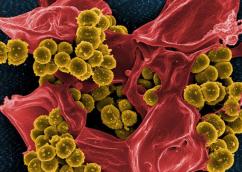
Research – Weak spot in pathogenic bacteria

Science Daily mrsa

Antibiotics are still the most important weapon for combatting bacterial infections. But medical science is running out of “ammunition” because of more and more frequently occurring resistances. Scientists from the Technical University of Munich and the Max Planck Institute of Molecular Physiology has now elucidated the structure of the proteolytic complex ClpX-ClpP. This is a key to development of innovative antibiotics which target the degradation process of defective proteins in bacteria.

Almost 700,000 people in Europe suffer from infections every year through antibiotic-resistant pathogens; approximately 33,000 of them die. Despite this enormous and globally increasing danger, very few new antibiotics have been developed and approved in the past few decades.

There is no improvement in sight. That is why it is urgently necessary to find new points of attack in pathogenic bacteria and to develop new antibiotics which exploit these weak spots.

New mechanism of action destroys bacteria

A particularly promising point of attack for antibacterial therapies is the proteolytic enzyme ClpP: on the one hand it plays an important role in bacterial metabolism, and on the other hand it ensures the controlled degradation of defective proteins.

But for this purpose it requires the ClpX protein as a starting aid. In the complex with ClpP, ClpX identifies proteins which should be degraded, unfurls them and guides them into its barrel-like degradation chamber.

Scientists in the groups led by Prof. Stephan Sieber, Technical University of Munich (TUM) and Prof. Stefan Raunser, Director at the Max Planck Institute of Molecular Physiology in Dortmund, have now elucidated the three-dimensional structure of the ClpX-ClpP proteolytic complex for the first time and thereby established an important basis for future pharmacological strategies.

A new class of potential antibiotics — the so-called acyldepsipeptide (ADEP) antibiotics — also brings about an uncontrolled degradation through ClpP without the support of ClpX. As a result also vital proteins are destroyed — with lethal consequences for the bacteria.

This unique mechanism of action has considerable innovation potential in the fight against pathogenic bacteria. Whereas common antibiotics act through the inhibition of vital processes, in this case the antibacterial effect is achieved through the activation of a process.

Research – Comparison of pH effects on ohmic heating and conventional heating for inactivation of Escherichia coli O157:H7, Salmonella enterica Serovar Typhimurium and Listeria monocytogenes in orange juice

Science Direct

Highlights

Effect of pH on ohmic heating compared to conventional heating was investigated.

Adjusting pH has significant effect on the heating rate of ohmic heating.

Unusual tendency of pathogen inactivation was identified in ohmic heating.

Quality aspects of samples were not severely degraded regardless of pH.

Abstract

The objective of the current study is to identify the influence of acidity on ohmic heating compared to conventional heating for inactivation of food-borne pathogensin orange juice. For conventional heating, the heating rate was not significantly different (P > 0.05) regardless of pH and pathogens were inactivated more effectively at lower pH. However, different patterns were observed for ohmic heating. Although temperature and electrical conductivity were not greatly affected by lowering pH, temperature increased more rapidly with increasing pH due to higher electrical conductivity. Also, the inactivation patterns were significantly different (P < 0.05) from conventional heating. While Salmonella Typhimurium was inactivated most rapidly at pH 2.5, Escherichia coli O157:H7 and Listeria monocytogenes were inactivated most rapidly at pH 4.5. When pathogens were exposed to each heating method at a fixed temperature, additional effects of ohmic heating were not observed. Also, the overall quality of orange juice subjected to ohmic heating was not greatly affected at any pH level. Therefore, increasing as well as lowering pH can also be considered effective ways to optimize pasteurization of orange juice when using ohmic heating. The different characteristics of ohmic heating compared to conventional heating indicate the necessity of a new approach.

Research -The combined effect of high pressure processing and dimethyl dicarbonate to inactivate foodborne pathogens in apple juice

Research Gate

Novel processing technologies can be used to improve both the microbiological safety and quality of food products. The application of high pressure processing (HPP) in combination with dimethyl dicarbonate (DMDC) represents a promising alternative to classical thermal technologies. This research work was undertaken to investigate the combined effect of HPP and DMDC, which was aimed at reaching over 5-log reduction in the reference pathogens Escherichia coli O157:H7, Salmonella enterica, and Listeria monocytogenes inoculated in apple juice. Different strains of each species were tested. The pressure (ranging from 100 to 600 MPa), dwell time (from 26 to 194 s), and DMDC (from 116 to 250 mg/L) were tested based on a central composite rotatable design. The dwell time, in the studied range, did not have a significant effect (p > 0.1) on the pathogens´ reduction. All treatments achieved a greater than 5-log reduction for E. coli O157:H7 and L. monocytogenes. The reductions for S. enterica were also greater than 5-log for almost all tested combinations. The results for S. enterica suggested that it is more resistant to HPP and DMDC compared with E. coli O157:H7 and L. monocytogenes. The findings of this study showed that DMDC at low concentrations can be added to apple juice to reduce the parameters conventionally applied in HPP. The combined use of HPP and DMDC was highly effective under the conditions of this study.