Category Archives: Pathogen

Australian Report on Salmonella – Ready to Eat Nuts

NSW Food Authority

Nuts have traditionally been considered a microbiologically safe product because of their low moisture content (low water activity). However, there have been a number of documented foodborne illness outbreaks and recalls caused by Salmonella in nuts and nut products.

This survey was conducted to gather information on the prevalence of Salmonella and E. coli in ready-to-eat (RTE) nuts and their products sold in Australia, both imported and domestically produced products.

Between January and June 2011, a total of 915 samples were collected from retailers, manufacturers and growers in New South Wales (NSW), the Australian Capital Territory (ACT), Queensland (QLD), Tasmania (TAS), and Western Australia (WA).

Products sampled included pre-packaged and unpackaged, plain and salted nuts and nut products such as flavoured nuts, bars, spreads and sauces.

Excluded were items where nuts were not the major component such as breakfast cereals, dairy products, chocolate covered nuts, fruit and nut mix, and seeds and seed products such as pine nuts.

Nut types included almonds, brazil nuts, cashews, hazelnuts, macadamias, mixed nuts, peanuts, pecans, pistachios and walnuts.

Survey Results

CFIA – Recent E.coli O157 Outbreak Summary

CFIA

The Canadian Food Inspection Agency (CFIA) has completed its in-depth review of the food safety controls at the XL Foods Inc. facility where positive E. coli O157:H7 findings have led to a voluntary recall of more than 250 products. The CFIA continues to identify additional products affected by this recall and conduct effectiveness checks to verify that affected product has been removed from the marketplace.

The in-depth review focused on the plant’s preventative control measures, food-safety policies and procedures, laboratory methodology, and equipment and quality systems.

While the review did not identify one single factor that would lead to E. coli O157:H7 contamination, the combination of several deficiencies could have played a role. By themselves, each of these findings would not typically signal an immediate concern during the course of normal inspection activities.

US – Another Peanut Butter Recall – Salmonella

FDA

Sunland, Inc. today announced a voluntary limited recall of its Almond Butter and Peanut Butter products, manufactured between May 1, 2012 and September 24, 2012, because these products may be contaminated with Salmonella, an organism that can cause serious and sometimes fatal infections in young children, frail or elderly people, and those with weakened immune systems. Healthy persons infected with Salmonella often experiencefever, diarrhea (which may be bloody), nausea, vomiting and abdominal pain. In rare circumstances, infection with Salmonellacan result in the organism getting into the bloodstream and producing more severe illnesses such as arterial infections (i.e., infected aneurysms), endocarditis and arthritis.

The voluntary recall was initiated after learning that between June 11, 2012 and September 2, 2012, twenty-nine people reported Salmonella Bredeney PFGE matching illnesses in approximately 18 states, including Washington, California, Arizona, Texas, Louisiana, Missouri, Illinois, Minnesota, Michigan, Pennsylvania, Massachusetts, New York, Rhode Island, North Carolina, Virginia, Connecticut, New Jersey and Maryland, according to a report issued on September 22, 2012 by the Centers for Disease Control and Prevention (CDC).

“There is nothing more important to us than the health and safety of our customers, particularly the many families who enjoy our peanut butter everyday. While FDA, CDC, and State Health Agencies investigate to confirm the cause of illnesses reported, as a precautionary step, we have decided to voluntarily recall our Almond Butter and Peanut Butter products manufactured between May 1, 2012 and September 24, 2012. If you purchased these products, do not eat them. Please return the product to your supermarket for a full refund or dispose of it.”

Statement of Jimmie Shearer, President and CEO of Sunland, Inc.

The recall is being conducted in cooperation with the U.S. Food and Drug Administration (FDA). No other Sunland products are affected by this recall.

The products were distributed nationally to numerous large supermarket chains.

US – Pet Food Contaminated with Salmonella

Food Poisoning Bulletin

Kasel Associated Industries of Denver, Colorado is recalling its Boots & Barkley 6 count 5 inch American Beef Bully Sticks because it may be contaminated with Salmonella. The bacteria can sicken animals who can pass it to humans, and people can get sick by handling the contaminated product.

The products were distributed nationwide through Target stores from April through September 2012. The pet treats are packed in a clear plastic bag marked with bar code number 647263899189. All lot numbers are recalled. The lot codes that tested positive for Salmonella include   BESTBY20APR2014DEN, BESTBY01JUN2014DEN, BESTBY23JUN2014DEN, and BESTBY23SEP2014DEN.

No illnesses have been reported to date in humans or animals in connection with this product.

US- Romaine Lettuce Recall – Listeria monocytogenes

Listeria Blog

Fresh Express Incorporated is voluntarily recalling a limited quantity of 9 oz. Leafy Green Romaine Salad with the expired Use-by Date of September 16 as a precaution in an unlikely event that consumers may still have the expired salad in their refrigerators. The recall was necessitated by a positive test result for Listeria monocytogenes on a single package out of many samples collected for the U. S. Department of Agriculture random sample testing program.

Because it is beyond the expiration date, the salad is no longer available for sale in stores. No illnesses are reported in association with the product recall. No consumer complaints have been received about the salad. No other Fresh Express products are being recalled.

US Salted Peanut Butter – Salmonella

Food Poisoning Journal

According to a press release, the Pennsylvania Department of Health today advised consumers that Trader Joe’s Valencia Creamy Salted Peanut Butter made with sea salt may be related to a multi-state outbreak of Salmonella.  The department is working with the Centers for Disease Control and Prevention and public health officials in several states to investigate the outbreak. Nationally, there have been 29 cases of illness with two cases reported in Pennsylvania.

Trader Joe’s has voluntarily removed the product for sale from its stores; however, consumers who have the product in their homes should discard it and should also be aware that this product is sold online through other retail outlets

Another UK Petting Farm – E.coli O157 Incident

BBC News

Health officials are investigating an outbreak of E. coli O157 which may be linked to a petting farm in Brecon.

Two children from Ceredigion and Kent who visited Cantref Adventure Farm have been affected by the bug and are recovering at home.

Two family members of one of the infected children have also tested positive.

A farm spokesperson said direct contact between animals and the public at the farm had been stopped as a precaution.

One of the infected family members is believed to have contracted the illness through contact with the child.

Vietnam Bean Sprout Warning

Vietnam News

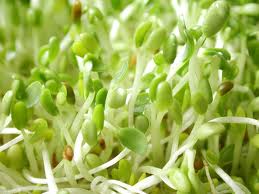
HA NOI (VNS)— Up to 40 per cent of tested bean sprout samples sold in Ha Noi’s markets are infected with harmful bacteria, including E.coli, prompting national food safety officials to call for tightened controls on raw vegetables.

Head of the Plant Protection Department Nguyen Xuan Hong announced the result at a meeting yesterday following a test conducted on 50 bean sprout samples to check their Arsenic and bacteria levels.

Hong said the test proved the samples were safe from metalloid, but the high amount of micro-organisms on the product raised concern.

The micro-organisms, namely E.coli, Salmonella and Listeria, were found to be at an unsafe lavel for raw vegetables, which can lead to food poisoning.

RASFF Alerts – Salmonella, Listeria, Coliforms

RASFF – Salmonella in Chicken Breast Fillets in Denmark sourced in Poland

RASFF – High Coliforms in Chilled Mussels in Netherlands sourced in Denmark

RASFF – Salmonella in Pet Food in Belgium

RASFF – Listeria in Herring Fillets in Poland

FDA Reort Multi State Outbreak of Listeria monocytogenes in Cheese

FDA

The FDA, the Centers for Disease Control and Prevention and state and local public health officials are investigating a multi-state outbreak of Listeria monocytogenes infections linked to imported Marte brand Frescolina Ricotta Salata cheese distributed by Forever Cheese Inc. of Long Island City, New York. 

Forever Cheese has initiated a voluntary recall of this cheese which may be identified with a lot number (T9425) and/ or a production code (441202).
 

The FDA has placed the maker of the recalled cheese,Fattorie Chiarappa S.R.L.of Conversano, Italy, on Import Alert1. This means that Fattorie Chiarappa cheese will be denied admission into the United States unless the importer shows that the cheese is not contaminated with Listeria monocytogenes, such as by using private laboratories to test the cheese.

The Centers for Disease Control and Prevention (CDC) reports a total of 14 people infected with the outbreak strain of Listeria monocytogenes from 11 states and the District of Columbia. Nationwide, 14 persons have been hospitalized. Three deaths have been reported. The CDC2 says that listeriosis contributed to at least one of those deaths. 

 The investigation into this outbreak continues, in order to determine whether there are other possible sources of the outbreak.