Category Archives: Pathogen

Controlling Microbiology of Meat with Active Packaging Research

Science Direct

Abstract

Antimicrobial packaging appears to be a promising application of active food packaging technology. This project was undertaken to evaluate the effectiveness of selected antimicrobial packaging structures in improving the microbial quality of a ready-to-eat (RTE) meat product. Cooked ham samples (25 g) inoculated with a five-strain mixture of Listeria monocytogenes (2 or 4 log CFU g−1) were packaged into three different antimicrobial packaging structures, respectively, and samples in the non-antimicrobial packaging structure served as controls. The samples were stored at 4, 10, or 22 °C, and populations of total aerobic bacteria, Enterobacteriaceae, and inoculated L. monocytogenes were determined twice a week over a 4 w storage period. Packaging structures with an O2 scavenger or a CO2 generator were more effective than the structure with an allyl isothiocyanate (AIT) generator. Listeria populations in the packaging structure with the O2 scavenger were 1.80–2.65, 3.69–4.76, and 4.62–4.67 log CFU g−1 lower than the controls at 4, 10, or 22 °C. Samples in the packaging structure with the CO2 generator were 1.11–1.63, 4.30–4.45, and 4.01–4.44 log CFU g−1 lower than the controls at 4, 10, or 22 °C. Significant inhibitions on total aerobic bacteria and Enterobacteriaceae counts were also observed in packaging structures with the CO2 generator and O2 scavenger. However, packaging structures with the AIT generator only significantly inhibited L. monocytogenes, total aerobic bacteria, and Enterobacteriaceae in some samples, mainly those stored at 22 °C. These results suggest that some of the evaluated packaging structures can effectively control bacterial populations, particularly Listeria populations on RTE meat products.

Dutch US Smoked Salmon – Salmonella Hundreds Sick

BBC

Scores of people in the Netherlands and the US have caught salmonella after eating Dutch smoked salmon, say Dutch health authorities.

About 200 people have fallen ill in the Netherlands along with about 100 people in the US, said the National Institute for Public Health (RIVM).

USA Today

Smoked salmon tainted with salmonella bacteria has sickened hundreds of people in the Netherlands and the U.S., sparking a major recall, health authorities said Tuesday.

The National Institute for Public Health and the Environment said the salmon has been traced to Dutch company Foppen, which sells fish to many major Dutch supermarkets and to stores around the world, including the U.S.

The institute said in a statement that around 200 people — and likely more — in the Netherlands and more than 100 people in the U.S. have been sickened

Foppen Company producing the products recall list.

More Mango Products Recalled – Salmonella

Food Safety News

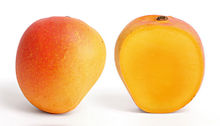
Del Monte Fresh Produce N.A.  recalled some of its fresh-cut fruit packages containing mangoes from Mexico’s Agricola Daniella because they may be contaminated with Salmonella.
 
Dell Monte said its recalled was associated with Coast Distributors Inc., one of four importers supplying the Mexican grown Agricola Daniella brand mangoes to customers in the U.S.
 
Del Monte in turn distributed the recalled mangoes to retailers in Alabama, Arkansas, Florida, Georgia, Kentucky, Louisiana, Mississippi, Missouri, North Carolina, Puerto Rico, South Carolina, Tennessee.  
 
The recalled fresh cut fruit packages are in clear plastic bowls.  
 
Splendid Products of Burlingame, CA first recalled Daniella brand mangoes in the U.S. because they were associated with 25 Salmonella Braenderup illnesses in 25 states.  Three other distributors have now joined the recall.

European Recalls – Salmonella, Virus Update

Denmark – Salmonella in Salad with Salmon

France – The company Asselot Andouille de Vire recalls Andouilles brand Andouille Asselot – Salmonella

Germany Virus Update – Now 8,365 Cases English Translation


Research – Listeria Diversity in Estonian Foods

Science Direct

Abstract

The aim of the current study was to estimate the prevalence and serotype diversity of Listeria monocytogenes in various foods of Estonian origin such as meat, milk, fish, pastry, crop, culinary, fruit and vegetable with special reference to ready-to-eat (RTE) foods. In 2008–2010, a total of 554 (2.6%) of 21,574 food samples were positive for L. monocytogenes in Estonia. L. monocytogenes contamination was significantly (P < 0.001) higher in raw meat and raw meat products (18.7%), raw mixed salads (18.5%) and in raw milk (18.1%) compare to raw fish products (8.8%). Among RTE fish products, cold-smoked fish products were most frequently contaminated with L. monocytogenes (32.9%). Generally, the counts of L. monocytogenes in tested products remained under 10 colony forming units (CFU) per gram of product. Only 2.9% and 0.8% of the RTE fish products contained L. monocytogenes in range of 100–1000 CFU/g and >1000 CFU/g at the end of shelf life. The majority of tested isolates (73.6%) belonged to serotype 1/2a, followed by 1/2b (7.4%), 1/2c (7.4%), 4b (7.7%) and 4d (3.5%). Our findings showed that the prevalence of L. monocytogenes in various RTE food categories, in spite of higher prevalence among raw products, was generally low in Estonia.


German Foodborne Virus Outbreak 6,500 Cases

Reuters

More than 6,500 German children and teenagers have fallen ill with diarrhea and vomiting that health authorities say has likely been caused by a food-borne virus in meals delivered to schools and day care centers.

Regional health ministries and a top health research institute said youngsters from five of Germany’s 16 states had been affected by the acute gastroenteritis, with the first cases registered on Tuesday. So far, those affected had not suffered any complications.

“All the institutions which have registered cases of the illness so far are probably being provided by the same caterer,” wrote the Robert Koch Institute, which researches and advises the German health ministry on infectious diseases. “This suggests that it is an outbreak caused by food.”

The German government and affected states have established a task force charged with looking for the reason for the illness in order to prevent it spreading any further.

(Reporting By Thorsten Severin, Writing by Sarah Marsh; Editing by Myra MacDonald)

Extra Peanut Butter Recalls – Salmonella

Food Poisoning Bulletin

Justin’s has announced a recall of some lots of its peanut butters because they were made with Sunland products that have been recalled for Salmonella. Other Justin’s products are not involved in this recall. Fresca Foods in Colorado notified Justin’s that Sunland peanuts were used to make their products in the past, so the company is voluntarily participating in the recall.

Food Poisoning Bulletin

Fairytale Brownies is recalling Peanut Butter Sprites and Peanut Butter Cookies because they were made with recalled products from Sunland, Inc. and may be contaminated with Salmonella. The products were mainly sold through mail order, although some were sold at retail outlets. These products have not been associated with any illnesses, although there is a Salmonella Bredeney outbreak associated with Sunland Products and Trader Joe’s peanut butter that has sickened 30 people in 19 states.

RTE Poultry Products Recall – Listeria monocytogenes

Food Safety News

Reichel Foods in Minnesota is recalling approximately 15,880 pounds of ready-to-eat meat and poultry products due to possible contamination with Listeria monocytogenes, the U.S. Department of Agriculture’s Food Safety and Inspection Service (FSIS) announced today.

The products subject to recall include: [View Labels]

-5.6 oz. packages of “Armour Active Packs Turkey & Cheese Wrap” Package Code 1026090112 or Case Code 27815-17994

-5.6 oz. packages of “Armour Active Packs Ham & Cheese Wrap” Package Code 1026090112 or Case Code 27815-17995
  
All the products were produced between July 23, 2012, and July 26, 2012, and have a “sell by” date of Sept. 1, 2012. The packages bear the establishment number “P-19941” or “Est. 19941” inside the USDA mark of inspection. The products were shipped to distribution centers in Indiana, Minnesota, Pennsylvania, and Texas. When available, the retail distribution list will be posted on FSIS’ website.

US – Popcorn Recall – Listeria monocytogenes

Listeria Blog

Dale and Thomas Popcorn is voluntarily recalling a limited number of ready-to-eat bags of select flavors of Popcorn, Indiana-brand popcorn products (listed below) because of possible contamination by Listeria monocytogenes. Listeria monocytogenes is an organism which can cause serious and sometimes fatal infections in young children, frail or elderly people, and others with weakened immune systems. Although healthy individuals may suffer only short-term symptoms such as high fever, severe headache, stiffness, nausea, abdominal pain and diarrhea, Listeria infection can cause miscarriages and stillbirths among pregnant women. Anyone who is concerned about a possible health problem or illness should contact a healthcare provider immediately.

The potential for contamination was noted after testing by the company revealed the presence of Listeria monocytogenes in some ready-to-eat bags of Popcorn, Indiana-brand products.

Even More Peanut Butter Product Recalls – Salmonella

FDA

Whole Foods Market is recalling Peanut Butter Power Chews and Treasure Trove Mix, both sold as bulk items, in seven stores in Florida and one store in southern California due to possible Salmonella contamination. Salmonella is an organism which can cause serious and sometimes fatal infections in young children, frail or elderly people, and others with weakened immune systems. Healthy persons infected with Salmonella often experience fever, diarrhea (which may be bloody), nausea, vomiting and abdominal pain. In rare circumstances, infection with Salmonella can result in the organism getting into the bloodstream and producing more severe illnesses such as arterial infections (i.e., infected aneurysms), endocarditis and arthritis.

No illnesses have been reported related to the bulk bin items. This recall is in response to a recall by Sunridge Farms/Falcon Trading who was supplied peanut butter by Sunland, Inc which has been connected to 30 illnesses in 18 states.

FDA

Jer’s™ Chocolates announced today that it has taken the precautionary measure of issuing a voluntary limited recall of some of its Gourmet Peanut Butter Bars and Gourmet Jer’s Squares produced from July 9, 2012 to September 24, 2012. Salmonella is an organism which can cause serious and sometimes fatal infections in young children, frail or elderly people, and others with weakened immune systems.

SUNLAND, Inc. has stated that twenty-nine people have reported Salmonella Bredeney PFGE matching illnesses in approximately 18 states. These illnesses were associated with Almond Butter, Peanut Butter, Cashew Butter, Tahini and Roasted Blanched Peanut Products produced by Sunland, Inc.

Jer’s™ Gourmet Peanut Butter Bars and Jer’s™ Squares HAVE NOT been associated with any of the reported illnesses and ALL of Jer’s Chocolates products have passed its internal quality control tests and procedures

“Our customers’ health and safety is paramount. This precautionary step is to protect our customers and their families from any, even if remote, possible risk”, says Jerry Swain, Founder/CEO of Jer’s Chocolates.