Category Archives: Pasteurisation

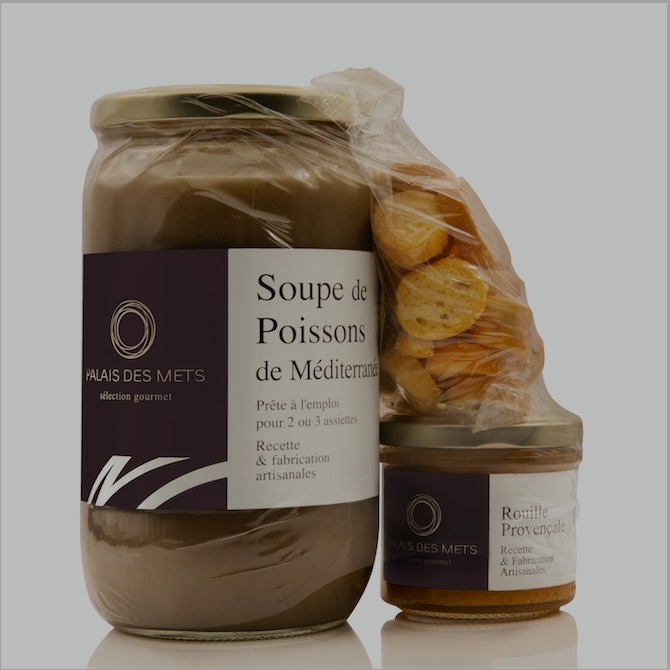
France -Lot of croutons rouille soup 925g – Food Safety

Gov France

Product Category
Food
Product subcategory
Soups, sauces and condiments
Product brand name
Palace of Food
Model names or references
Provencal rouille 90g
Product identification
GTIN Batch Date
3760089330371 003 Minimum durability date 03/01/2026
3760089330371 170 Minimum durability date 06/19/2026
3760089330371 051 Recommended consumption date 02/20/2026
3760089330371 216 Recommended consumption date 04/08/2026
3760089330371 234 Recommended consumption date 08/22/2026
3760089330371 257 Recommended consumption date 09/14/2026
3760089330371 262 Recommended consumption date 09/19/2026
Packaging
Glass jar
Start/End of marketing date
From 01/11/2023 to 11/14/2023
Storage temperature
Product to be stored at room temperature
Health mark
FR11255005CE
Geographic area of ​​sale
Whole France
Distributors
Large distribution. Among our clients, there is a client outside France. This is the CORA of BERTRANGE (Luxembourg) – It has since become LECLERC BERTRANGE.


France – Various Spreads – Physicochemical defect which cannot guarantee the total safety of the product after pasteurization

Gov France

Gov France

Gov France

Gov France

Gov France

Gov France

Gov France

Gov France

Gov France

Gov France

Gov France

Gov France

Gov France

Gov France

Gov France

Gov France

Gov France

Gov France

Gov France

Research – USDA Develops Egg Pasteurization Technology That Rapidly Kills 99.999 Percent of Salmonella

Food Safety.com

Researchers at the U.S. Department of Agriculture’s Agricultural Research Service (USDA’s ARS) have developed a thermal pasteurization method based on Radio Frequency (RF) technology that effectively reduces the presence of Salmonella in intact eggs, in a fraction of the time required for traditional pasteurization.

Although thermal pasteurization is proven to inactivate pathogens in intact eggs, less than 3 percent of commercial eggs are pasteurized in the U.S., as the process can take more than 57 minutes, according to ARS. Conventional thermal pasteurization involves submerging the eggs fully in hot water.

Research – The Investigation of Changes in Bacterial Community of Pasteurized Milk during Cold Storage

MDPI

Abstract

The quality of pasteurized milk is commonly assessed through microbiological analysis, with variations in storage conditions significantly impacting the suppression of bacterial growth throughout the milk’s shelf life. This study investigated the dynamics of total bacterial counts (TBCs) and bacterial community shifts in milk that underwent pasteurization at 80 °C for 15 s. The milk was subsequently stored at 4 °C for varying intervals of 1, 4, 7, 10, 13, and 16 days. Culture-based testing revealed a significant TBC increase during the storage period spanning 1 to 16 days (up to −log10 4.2 CFU/mL at day 16). The TBC in pasteurized milk exhibited accelerated microbial growth from day 13 onwards, ultimately peaking on day 16. Bacillus was detected through 16S rRNA identification. Principal component analysis demonstrated a significant impact of storage time on bacterial communities in pasteurized milk. Analysis of bacterial diversity revealed a negative correlation between the Shannon index and the duration of pasteurized milk storage. Using high-throughput sequencing, Streptococcus and Acinetobacter were detected as prevalent bacterial genera, with Streptococcus dysgalactiae and Streptococcus uberis showing as dominant taxa. The presence of Streptococcus dysgalactiae and Streptococcus uberis in pasteurized milk might be attributed to the initial contamination from raw milk with mastitis. This study offers new evidence of the prevalence of bacterial community in pasteurized milk, thereby adding value to the enhancement of quality control and the development of strategies for reducing microbial risks.

Research – Cooked rice safety: A review of status and potential of radiative pasteurization

Wiley Online

Abstract

Microbial contamination in cooked rice-based foods poses a global concern due to rice’s widespread consumption. This review aims to consolidate information on harmful microorganisms associated with such foods from various countries and their adverse effects on consumers. Additionally, it explores the reported causes of microbial contamination in cooked rice-based dishes and proposes an intervention strategy for safer consumption. The findings highlight that ready-to-eat cooked rice-based foods may harbor unsafe levels of microorganisms like Bacillus cereus, Staphylococcus aureus, and Aspergillus spp. A recommended solution is the application of microwave pasteurization. This method involves cooking rice in pasteurized packaging, minimizing human contact, and effectively controlling harmful microorganisms. Microwave pasteurization emerges as a promising approach to ensure the safe consumption of cooked rice-based foods by reducing microbial contamination levels.

USA – Georgia dairy recalls milk because of incomplete pasteurization records

Food Safety News

Rock House Creamery Newborn, GA, has issued a voluntary recall for its whole milk and buttermilk.

“During a routine inspection conducted by the Georgia Department of Agriculture on Sept. 13, 2023, pasteurization records were found incomplete for select lots in September. Since these pasteurization charts are the primary record of pasteurization, Rock House Creamery is performing a voluntary recall,” according to the State Department.

“Drinking raw milk that has not undergone pasteurization to kill disease-causing germs can lead to serious illness.”

The affected products were distributed to Madison, Mansfield, Athens, Atlanta, and Milledgeville retailers. Consumers are strongly urged to dispose of any product remaining in their refrigerators.

USA – White cheese queso recalled over inadequate pasteurization

Food Safety News

Pool Forge Dairy, of East Earl, PA, is recalling certain white cheese queso because of the possible risk of pathogen contamination due to inadequate pasteurization.

According to the information posted online by the Food and Drugs Administration (FDA), the recall was initiated on March 14 and is ongoing.

The recalled products were distributed in New Jersey.

Recalled product:

  • White Cheese Queso Blanco Delicias del Campo Queso Blanco White Cheese Net Wt. 1lb (453g)
  • UPC: 7 69602 55441 9 White Cheese also packaged in Pool Forge Dairy LLC labeling
  • The product is vacuum packaged in plastic and in a plastic container with a press-on lid
  • Sell-by dates are Jan. 7 to March 28, 2023

Consumers who purchased the recalled product should immediately dispose of it and not consume it.

Research – Australian breakthrough is the new alternative to milk pasteurisation

Food Safety News

From “down under” comes news that is said to be the biggest breakthrough in dairy safety since pasteurization. It has been accepted as “an alternative treatment to pasteurization of raw milk” by Dairy Food Safety Victoria (DFSV) with financial support from both the Queensland state government putting in $190,000 and the Australian Federal Government $761,700.

Australia-based Naturo plans to roll out its Wholey Milk Co. brand, using the new “Haelen” technology beginning in March and April, serving retail outlets in Queensland during 2021, and then expanding internationally in 2022.

Naturo CEO Jeff Hastings says Haelen is a “gentle alternative technology” that without heat kills pathogens while retaining higher levels of useful vitamins, proteins, and enzymes that under pasteurization are damaged or destroyed.