Category Archives: Microbiology

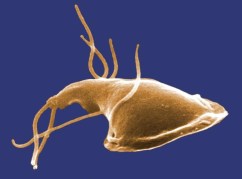
Europe – Giardiasis (lambliasis) – Annual Epidemiological Report for 2017

ECDC

CDC Giardia2

Image CDC

Key facts
• In 2017, 19 437 confirmed giardiasis cases were reported in the EU/EEA.
• The EU/EEA notification rate was 5.5 cases per 100 000 population. The highest notification rates were reported in Belgium, Estonia and Sweden.
• The highest notification rate per 100 000 was observed in the age group 0–4 years (17.6 for males and 14.9 for females).
• While the EU/EEA notification rate was stable during the period 2013–2017, the annual number of cases has increased steadily.

Report Download


USA -Outbreaks of Salmonella Infections Linked to Backyard Poultry

CDC

Latest Outbreak Information
Illustration of a megaphone.
At A Glance
  • Reported Cases: 279
  • States: 41
  • Hospitalizations: 40
  • Deaths: 0

Infographic with baby chickens on it reading Always wash your hands after handling live poultry.

  • Since the last update on May 16, 2019, illnesses in an additional 227 people and 20 states have been added to this investigation. Four Salmonella serotypes have also been added.
  • A total of 279 people infected with the outbreak strains of Salmonella have been reported from 41 states.
    • 40 (26%) people have been hospitalized and no deaths have been reported.
    • 70 (30%) people are children younger than 5 years.
  • Epidemiologic and laboratory evidence indicate that contact with backyard poultry, such as chicks and ducklings, from multiple hatcheries is the likely source of these outbreaks.
    • In interviews, 118 (77%) of 153 ill people reported contact with chicks or ducklings.
    • People reported obtaining chicks and ducklings from several sources, including agricultural stores, websites, and hatcheries.
  • One of the outbreak strains making people sick has been identified in samples collected from backyard poultry in Ohio.

RASFF Alert – Salmonella – Soy Flour

RASFF-Logo

RASFF – Salmonella enterica ser. Minnesota (presence /25g) in soy flour from Argentina in Italy

RASFF Alerts – Animal Feed – Aflatoxins – Groundnuts – Sunflower Seeds

RASFF-Logo

RASFF – aflatoxins (B1 = 0.43 mg/kg – ppm) in groundnut kernels for feed from Sudan, via the Netherlands in Belgium

RASFF – aflatoxins (B1 = 35.5 µg/kg – ppb) in groundnuts in shell for bird feeding from China in the UK

RASFF – aflatoxins (B1 = 769.88; Tot. = 871.98 µg/kg – ppb) in sunflower seeds from Egypt in Belgium

UK – Class 2 Medicines Recall: Paracetamol 500mg Tablets, 1 x 1000 PL 04077/0001 (MDR 13-04/19) – Fungal Contamination

Gov.uk

M & A Pharmachem is recalling the above batches because a small number of pots from each batch have been found to contain discoloured tablets due to fungal contamination.

The fungi have been identified as Penicillium citrinium and Penicillium brevicompactum. It is unlikely that any affected tablets will have got to patient level as the discolouration is noticeable on opening affected packs.

Research – How flow shapes bacterial biofilms

Science Daily

Although we tend to think of them as solitary sojourners of the world, bacteria are actually very social organisms. In fact, the vast majority of bacteria live on surfaces by forming “biofilms”: three-dimensional communities hosting thousands to millions of bacteria of such bustling activity that scientists describe them as “bacterial cities.”

Bacteria form biofilms by attaching to each other on a wide variety of surfaces: the bottom of oceans, lakes or rivers, medical equipment and even internal organs, like the intestine, lungs, and teeth — the latter is the familiar dental plaque, a large source of income for dentists.

In short, biofilms are the preferred lifestyle of bacteria. They grow wide and thick, forming a new, social dynamic among their member microorganisms, while also defending them: biofilms can be notoriously inaccessible to antibiotics, which is why they have drawn a lot of medical research.

But looking at biofilms can also give us clues about broader social dynamics that have shaped the evolution of species across the entire planet, like cooperation, competition etc. And it is such questions that drive the work of Alexandre Persat, director of EPFL’s Microbial Mechanics Lab.

USA – NYC officials advise providers to look out for Legionnaires’ disease

Outbreak News Today

Legionella A

Image CDC

New York City health officials are advising providers to test for Legionella in adults with pneumonia, particularly patients who are > 50 years or have lung disease, immune-suppression, or a history of smoking.

Legionnaires’ disease follows a seasonal pattern in New York City, with an increased number of cases
reported from June to October each year.  NYC sees between 200 and 500 cases of Legionnaires’ disease each year.

While it remains a relatively rare infection, the rate of Legionnaires’ disease is increasing significantly in NYC. From 2007-2017, there was an 8.1% average increase in the rate of Legionnaires’ disease cases citywide each year.

The rate of Legionnaires’ disease increased significantly in all boroughs and demographic groups over this period.

Research – Listeria monocytogenes risk associated with chicken at slaughter and biocontrol with three new bacteriophages

Wiley Online

Listeria kswfoodworld food safety food poisoning

Image CDC


Abstract

The aim of this study was to isolate Listeria monocytogenes from chicken neck skins and lytic bacteriophages from poultry slaughterhouse wastewaters, and following the characterization of the isolates, biocontrol of L. monocytogenes was investigated on chicken drumsticks with the isolated phages. L. monocytogenes prevalence was detected 12.3% in the chicken samples and the dominant serotype was determined as 1/2a (92.5%). Expression levels of major virulence genes were revealed by real‐time RT‐PCR. Ten different DNA profiles were detected by ERIC‐PCR fingerprinting. According to the MIC results, LM‐P75 was defined as MDR by showing resistance to antibiotics in six different groups. Besides, five lytic listeriophages were isolated from wastewaters and treated with Cla1 and Sac1. Taking EoP, TEM, in vitro, and in vivo analyses results into consideration, three bacteriophages were used for the biocontrol assay. The application of the bacteriophages on drumsticks achieved a reduction up to 3.3 log CFU/ml in L. monocytogenes count in 3 hr of incubation at 4°C.

Practical applications

Our results showed that in spite of the developments in hygiene practices during slaughtering, chicken meat is still a potential source for L. monocytogenes. On the other hand, the phage cocktail that used in this study can be an effective tool to reduce L. monocytogenes in chicken carcasses at final wash or at cooling step in poultry slaughtering process, as well as in decontamination of chicken meat parts.

Research – Discerning microbial and quality attributes of differently slaughtered and dead poultry meat

Wiley Online

Abstract

Globally, various methods of slaughtering have been practiced for the production of chicken meat. Among these methods, Halal slaughtering is implemented to produce Halal chicken. This method involves cutting the throat to bring the animal toward quick death without anguishing. Additionally, Halal slaughtering also favors rapid blood flow and more bleeding. Slaughtering methods are concorded with composition, quality, and microbial safety of meat, mediated by varied blood retention. Accordingly, the present work was aimed to explicate the effect of various slaughtering methods on quality and safety of broiler meat. Results revealed that significant compositional changes were observed in meat obtained from different slaughtering methods. Additionally, Halal‐slaughtered meat showed less nitrogenous losses (TVBN = 9.81 mgN/100 g), high water holding capacity (72.02%), better shear‐force value (21.37 g), and normal color (L* = 48.59, a* = 0.85, b* = 11.56) as compared to other slaughtering methods and dead meat. Additionally, Halal‐slaughtered meat contained less number of total plate count (4.28 log10CFU/g), Enterobacteriaceae count (3.12 log10CFU/g), Salmonella (2.74 log10CFU/g), and E. coli (2.78 log10CFU/g) counts in comparison with the other slaughtering methods and dead meat samples. Findings of the study indicate that slaughtering methods significantly influence the quality and microbial status of broiler meat.

Practical applications

In recent years, the international market for meat obtained from animals/birds slaughtered by using various religious methods has become important for supplying the desired meat globally. Although several studies have been conducted in this domain but most of the published data mainly emphasize the work related to the use of conventional slaughtering methods with limited comparison to religious slaughtering methods. However, some projects have also addressed the issues related to the impact of slaughtering methods on meat quality. Discussion related to religious slaughtering has been in progress around the world. Accordingly, the present study was conducted in this regard for providing some more information and facilitating the existing and upcoming discussions on the merits and demerits of several slaughtering methods with special reference to meat quality and safety.

Research -Does physical state of farm housing and milking practices affect total bacteria and somatic cell count of cow milk?

Wiley Online

Abstract

The study determined the effect of physical state of farm housing on total bacteria and somatic cell count (SCC) of cow milk. Milk records collected at Dairy Services Zimbabwe were used. Effects of physical state of ceilings, doors, ventilation, walls, drains, fly‐proofs, windows and roof type on total bacterial count (TBC) in milk, and SCC were determined using general linear models procedure. Poor physical state of ceilings, doors and floors in milking parlors, wash rooms and bulk tank rooms result in high TBC and SCC in milk (p < 0.05). Poor ventilation in the bulk tank room results in high TBC in milk (p < 0.05). Floors, doors, and ceilings of milking houses should be kept in sound condition and good repair in order minimize TBC and SCC in raw milk.

Practical applications

Understanding how physical state of farm houses and management practices affect total bacterial count and somatic cell count in fresh milk enables farmers and regulatory agencies to put in corrective action to reduce bacterial contamination of milk at farm level. This helps keep the population of disease causing bacteria in raw milk, which is widely consumed by human beings, as low as possible. It also helps reduce contamination by some resistant bacteria that might survive processing and cause further defects in milk products. The shelf‐life of the milk and its products is, thus, improved. Reducing bacterial and somatic cell count in raw milk also helps the milk producers to score high milk grades on the market and, thus, fetch high prices.