Category Archives: Microbiology

Research – Your energy-efficient washing machine could be harbouring pathogens

Science Daily 

For the first time ever, investigators have identified a washing machine as a reservoir of multidrug-resistant pathogens. The pathogens, a single clone of Klebsiella oxytoca, were transmitted repeatedly to newborns in a neonatal intensive care unit at a German children’s hospital. The transmission was stopped only when the washing machine was removed from the hospital. The research is published this week in Applied and Environmental Microbiology, a journal of the American Society for Microbiology.

Research – Effectiveness of Food Handler Training and Education Interventions: A Systematic Review and Meta-Analysis

Journal of Food Protection

ABSTRACT

Improper food handling among those working in retail and food service settings is a frequent contributor to foodborne illness outbreaks. Food safety training and education interventions are important strategies to improve the behaviors and behavioral precursors (e.g., knowledge and attitudes) of food handlers in these settings. We conducted a comprehensive systematic review to identify, characterize, and synthesize global studies in this area to determine the overall effectiveness of these interventions. The review focused on experimental studies with an independent control group. Review methods included structured search strategy, relevance screening of identified abstracts, characterization of relevant articles, risk of bias assessment, data extraction, meta-analysis of intervention effectiveness for four outcome categories (attitudes, knowledge, behavior, and food premise inspection scores), and a quality of evidence assessment. We identified 18 relevant randomized controlled trials (RCTs) and 29 nonrandomized trials. Among RCTs, 25 (64%) unique outcomes were rated as high risk of bias, primarily owing to concerns about outcome measurement methods, while 45 (98%) nonrandomized trial outcomes were rated as serious risk of bias, primarily because of concerns about confounding bias. High confidence was identified for the effect of training and education interventions to improve food handler knowledge outcomes in eight RCT studies (standardized mean difference = 0.92; 95% confidence interval: 0.03, 1.81; I2 = 86%). For all other outcomes, no significant effect was identified. In contrast, nonrandomized trials identified a statistically significant positive intervention effect for all outcome types, but confidence in these findings was very low due to possible confounding and other biases. Results indicate that food safety training and education interventions are effective to improve food handler knowledge, but more evidence is needed on strategies to improve behavior change.

HIGHLIGHTS
  • Food safety training and education interventions improve food handler knowledge.

  • There is low confidence that these interventions improve other food safety outcomes.

  • Risks of bias were present for most study outcomes.

  • Further research is needed on strategies that can change food handler behaviors.

Research -Interaction of Gaseous Chlorine Dioxide and Mild Heat on the Inactivation of Salmonella on Almonds

Journal of Food Protection

ABSTRACT

The interactive effects of mild heat and gaseous chlorine dioxide (ClO2) on populations of Salmonella on almonds were studied. Almonds, dip inoculated with a two-strain cocktail of attenuated Salmonella Typhimurium, were treated with three concentrations of ClO2 at ambient temperature (ca. 22°C), and at 45, 50, 55, and 60°C for 4 h and with more than 90% relative humidity. Concentrations of ClO2 during treatments were measured, and populations of Salmonella were determined following treatments. Results demonstrated that ClO2 at concentrations of more than 4 mg/L and ambient temperature only reduced populations of Salmonella by 1.46 log CFU/g. With increasing treatment temperature, the efficacy of gaseous ClO2 increased. At 55 and 60°C, >1 mg/L ClO2, and a 4-h treatment time, >4 log CFU/g Salmonella was inactivated. Reductions greater than 4 log of the bacterium by gaseous ClO2 at 55°C were confirmed using a three-strain cocktail of pathogenic Salmonella. Overall, results demonstrated that mild heating is necessary for gaseous ClO2 to achieve more than 4 log CFU/g inactivation of Salmonella on almonds.

HIGHLIGHTS
  • ClO2 applied at ambient temperature achieves less than 2-log reductions of Salmonella.

  • Mild heat and ClO2 have a synergistic effect on the reduction of Salmonella.

  • Surrogate Salmonella Typhimurium and pathogenic Salmonella behave similarly to ClO2 and heat.

Research – Pathogens removed from cows’ drinking water

Dairy Global

Successful trials to remove potentially harmful pathogens, Clostridium perfringens, from drinking water given to cows have received funding for further research after first trials found it increased calf health and size and reduced the need for antibiotic treatment.

“The trials show great promise for the agricultural sector in the UK with potential for farmers to deliver healthier calves with a reduced requirement for antibiotic treatment and ultimately higher yields and increased profitability from their dairy herd,” said Ian Tremain, agriculture innovation manager at Bridgwater & Taunton College.

WET Group, which supplied the technology used to clean the borehole water commonly mixed with artificial nutrition feed and then fed to cows, worked with the Agriculture Innovation Centre at Bridgwater & Taunton College on the year-long trial on cows, and has decided to fund further trials in order to expand on initial findings. The final phase of the trials, which will see the introduction of WET Group’s upgraded mineral enhanced Guided Enhanced Membrane (GEM) system is due to commence in October 2019.

Research – Effect of Tartary Buckwheat Peptides on Shelf Life of Tilapia (Oreochromis niloticus) Fillets

Journal of Food Protection

ABSTRACT

Tartary buckwheat peptides (TBPs), produced from tartary buckwheat through solid-state fermentation, were used as a dip treatment solution to preserve tilapia fillets. Fillets were dip treated with different concentrations of TBPs (0.5, 1, and 2% [v/v]) and stored at 4°C for 12 days. The effect of TBPs on thiobarbituric acid, total volatile base nitrogen, surface color, texture profile analysis, total viable counts, and changes in sensory properties of tilapia fillets during storage was investigated. Compared with the control group, the groups treated with TBPs displayed reduced rates of quality deterioration in physicochemical, bacteriological, and sensory characteristics. Based on total volatile base nitrogen content, total viable counts, and sensory scores, the shelf life of control tilapia fillets was 4 days and that for TBP-treated fillets was 8 days, twice as long as that of the control group. Thus, TBPs can be used as preservatives to maintain the quality and extend the shelf life of tilapia fillets stored at 4°C.

USA – 32 Sick and 1 Dead in Legionnaires Outbreak Linked to Mountain State Fair

Outbreak News Today

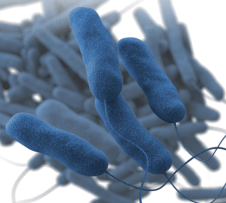
CDC legionella

Image CDC

The North Carolina Department of Health and Human Services has announced an outbreak of Legionnaires’ disease potentially linked to the Mountain State Fair in North Carolina. As of today, there are 32 confirmed illnesses and one person has died. According to the health agents, “The source of the outbreak is under investigation. Many of the cases reported attending the NC Mountain State Fair, held September 6-15, 2019 in Fletcher, NC.” The investigation in ongoing.

As Legionnaires’ disease is typically transmitted through contaminated water sources, the health agencies are investigating any rides that may have water. “Features, exhibits, and rides that incorporated some type of water exposure that created droplets which came in contact with visitors will be our focus,” Steven Smith, Henderson County’s Director of Health.

RASFF Alerts – Animal Feed – Aflatoxin – Peanuts – Sunflower Seeds

RASFF-Logo

RASFF – aflatoxins (B1 = 33.6 µg/kg – ppb) in peanuts from the United States in the UK

RASFF – aflatoxins (B1 = 34.7 µg/kg – ppb) in sunflower seeds from France in Belgium

RASFF Alerts – Animal Feed – Moulds – Dried Beet Pulp

RASFF-Logo

RASFF – dried beet pulp from Ukraine infested with moulds in Poland

RASFF Alerts – Animal Feed – Salmonella – Rapeseed Meal – Soya Bean Meal – Fish Meal – Sunflower Seed Meal

RASFF-Logo

RASFF – Salmonella enterica ser. Senftenberg (presence /25g) in rapeseed meal from Ukraine in Poland

RASFF – Salmonella enterica ser. Agona (presence /25g) in soy bean meal from Spain in Belgium

RASFF – Salmonella group E4 (presence /25g) in post-extracted rapeseed meal from Ukraine

RASFF – Salmonella (presence /25g) in rapeseed meal from Ukraine in Poland

RASFF – Salmonella (presence /25g) in rapeseed meal from Ukraine in Poland

RASFF – Salmonella enterica ser. Mbandaka (present /25g) in soybean meal from Brazil and Paraguay in Belgium

RASFF – Salmonella enterica ser. Montevideo (presence /25g) in fish meal from the United States in Greece

RASFF – Salmonella enterica ser. Senftenberg (presence /25g) in soybean meal from the Netherlands in Germany

RASFF – Salmonella enterica ser. Senftenberg (presence /25g) in sunflower seed meal from the Netherlands in Belgium

Research – Control of pathogens in fresh pork sausage by inclusion of Lactobacillus sakei BAS0117

Canadian Journal of Microbiology

ABSTRACT

A pork sausage was produced with low sodium content (1.64%) to which Lactobacillus sakei was added with the aim of developing a meat pork sausage for cooking and having technological, organoleptic, and hygienic advantages. The lactic acid bacteria (LAB) L. sakei, Lactococcus sp., and Pediococcus pentosaceus were submitted to extreme pH, temperature, and NaCl conditions. Lactobacillus sakei was used in pork sausage because of its resistance to different culture conditions and its antimicrobial potential. The food-borne pathogens Listeria monocytogenes Scott A, Enterococcus faecalis, and Staphylococcus aureus were used as indicator microorganisms to evaluate the antimicrobial activity of selected LAB strains. Salmonella enterica serotype Choleraesuis is a common pathogen of pigs. To the raw sausage product containing L. sakei and nonpathogenic endogenous microbiota, we added about >104 and <105 CFU/g of S. enterica serotype Choleraesuis to evaluate the inhibitory potential of L. sakei towards this pathogen. Salmonella Choleraesuis was inhibited in the presence of L. sakei over 7 days of storage of the meat product (about 3.0 log cycles reduction). Lactobacillus sakei significantly increased inhibition when compared with the nonfermented sausage. Thus, L. sakei BAS0117 played an important role as an additional hurdle in the fermented meat pork sausage during storage.