Category Archives: Microbiology

Research – Heat resistance in Escherichia coli and its implications on ground beef cooking recommendations in Canada

Wiley Online

This study assessed the adequacy of the current cooking recommendations in relation to heat resistant Escherichia coli by evaluating eight potentially heat resistant E. coli strains (four generic and four E. coli O157:H7) along with AW1.7. The D60°C‐values for these strains varied from 1.3 to 9.0 min, with J3 and AW1.7 being the least and most heat resistant strains, respectively. The D60°C‐values for E. coli 62 and 68 were similar and were not affected by growth medium, while the heat resistance of C37, J3, and AW1.7 varied with the growth medium. When heated in extra lean ground beef (100 g) in vacuum pouches, the mean D54°CD57°C, and D60°C‐values were 44.8, 18.6, and 2.9 min for C37, 13.8, 6.9, and 0.9 min for J3, and 40.5, 9.1, and 6.1 min for AW1.7. Burger temperatures continued to rise after being removed from heat when the target temperature was reached, by 3–5°C, and resting of 1 min would result in a destruction of 133, 374 and 14 log C37, J3 and AW1.7. These findings along with the very low occurrence of heat resistant E. coli expected in ground beef show that cooking ground beef to 71°C should be adequate.

Research – Scientists Find Harmful Bacteria on 90% of Make-Up

Labmate

In a finding that could have millions of people around the world rethinking their makeup regimes, a team of researchers from Aston University have found potentially harmful bacteria in around 90% of cosmetics products. Bacterium detected include dangerous strains such as E. coli and Staphylococci, with the highest traces found on mascara, lip gloss and applicators.

Research – Youngsters at risk of food poisoning from dirty school canteens

The Times

Thousands of children are at risk of food poisoning from dirty school canteens where inspectors have found mouse droppings, filthy plates and staff who handle the food without washing their hands.

At least 60,000 children attend schools with dangerous food hygiene levels, according to analysis of data from the Food Standards Agency.

It shows that 207 schools and nurseries need to improve their food safety standards to comply with the law.

This means the schools were given zero, one or two stars out of five by inspectors in England, Wales and Northern Ireland or “improvement required” in Scotland.

Research – Microbial contamination of grocery shopping trolleys and baskets in west Texas, 2020

Barf Blog

Indicator microorganisms evaluated were those detected by aerobic plate count (APC), yeast and molds (YM), Enterobacteriaceae (EB). Environmental listeria (EL), coliforms (CF), and E. coli (EC).  In addition, listeria monocytogenes, staphylococcus aureus, Escherichia coli O157 and salmonella sp. Were tested for.  Trolley grills (n=36) had 2.7 x 10CFU/cm2.  Trolley handles (n=36) had 2.7 x 10of CF and 5.2 CFU/cm2 of YM.  The bottom of handheld baskets (n=25) had 3.5 x 10⁵ CFU/cm2 of CF and 5.07 CFU/cmof EC.  S. aureus was found on 96% of the baskets, 50% of the trolley handles (18 out of 36 samples), and 42% of the trolleys’ grills.  E. coli O157 was identified on 17% of baskets, 3% on trolley grills, and 3% on handles.  Salmonella sp. was detected on 16% of baskets and 8% of trolley grills.  L. monocytogenes was detected on 17% of the bottoms of handheld baskets but on none of the other samples. 

Research -Evaluation of the Efficacy of Three Direct Fed Microbial Cocktails To Reduce Fecal Shedding of Escherichia coli O157:H7 in Naturally Colonized Cattle and Fecal Shedding and Peripheral Lymph Node Carriage of Salmonella in Experimentally Infected Cattle

Journal of Food Protection

ABSTRACT

Two experiments were conducted to evaluate the feeding of direct fed microbials (DFMs) on fecal shedding of Escherichia coli O157:H7 in naturally infected cattle (experiment I) and on Salmonella in the feces and peripheral lymph nodes (PLNs) of experimentally infected cattle (experiment II). Thirty cattle, 10 per treatment, were used in each experiment. Treatments in experiment I consisted of a control (lactose carrier only); DFM1, a 1:1 ratio of Enterococcus faecium and Lactobacillus animalis; and DFM2, a 1:1 ratio of Lactobacillus acidophilus and Pediococcus acidilactici. In Experiment II, DFM1 was replaced with DFM3, a 1:2 ratio of Lactobacillus reuteri and other Lactobacillus strains. Additives were mixed in water and applied as a top-dressing to each pen’s daily ration for 50 days. Approximately half-way through each experiment, the DFM concentration was doubled for the remainder of the study. Fecal samples were collected throughout experiment I and cultured for E. coli O157:H7. Cattle in experiment II were inoculated intradermally with Salmonella Montevideo on days 32, 37, and 42 and then necropsied on days 49 and 50 (five cattle per treatment on each day). Innate immune function was assessed on days 29, 49, and 50. In experiment I, fecal concentration and prevalence of E. coli O157:H7 were not different (P > 0.10) nor was there an effect (P = 0.95) on the percentage of super shedders (cattle shedding ≥3.0 log CFU/g of feces). In experiment II, no treatment differences (P > 0.05) were observed for Salmonella in the PLNs except for the inguinal nodes, which had a significantly lower Salmonella prevalence in DFM-supplemented cattle than in the controls. Immune function, as measured by monocyte nitric oxide production and neutrophil oxidative burst, was decreased (P < 0.05) in the DFM treatment groups. Although results of this research indicate little to no effect of these DFMs on E. coli O157:H7 or Salmonella in cattle, an increase in the duration of administration to that similar to what is used for commercial cattle might elicit treatment differences.

HIGHLIGHTS
  • Direct fed microbials were evaluated for pathogen mitigation in cattle.

  • No treatment effects on fecal shedding of E. coli O157:H7 were observed.

  • DFM treatment reduced Salmonella in only one the four lymph node types examined.

  • Under these experimental conditions, short-term feeding of DFMs failed to mitigate pathogens.


Research – Effect of Eryngium caeruleum essential oil on microbial and sensory quality of minced fish and fate of Listeria monocytogenes during the storage at 4°C

Wiley Online

The present study investigated in vitro antimicrobial activity of Eryngium caeruleum essential oil (EEO) against five foodborne pathogenic bacteria based on microdilution and disk diffusion methods. Moreover, its effects on specific spoilage microorganisms, inoculated Listeria monocytogenes, and its sensory changes in minced fish were evaluated during 12 days of storage at refrigeration temperature. The results showed that Staphylococcus aureus and Escherichia coli were the most sensitive and the most resistant bacteria with a minimum inhibitory concentration of 0.125 and 1 mg/ml, as well as inhibition zones of 15.66 and 11.66 mm, respectively. Regarding the antimicrobial effect of EEO on the microbial profile and inoculated L. monocytogenes, treating with 0.4% EEO caused a significant decrease in the studied microorganisms when compared to the control group (p < 0.05). In addition, considering the sensory evaluation, the best scores were observed for the samples treated with 0.2% and 0.4% EEO. However, none of the groups obtained acceptable scores until the final day of storage except for the color attribute. In general, sensory evaluation and its correlation with microbial counting indicated that the treatment with 0.4% EEO was able to preserve the microbial quality of the minced fish at refrigeration temperature without any undesirable sensory effects.

Research – Thermal and Chemical Treatments To Reduce Salmonella on Alfalfa (Medicago sativa) and Broccoli (Brassica oleracea var. italica) Seeds before and during the Sprouting Process: A Hurdle Approach

Journal of Food Protection

ABSTRACT

Sprouts are vehicles of foodborne diseases caused by pathogens such as Salmonella. The aim of this study was to evaluate thermal and chemical treatments applied as a hurdle approach to reduce Salmonella in alfalfa (Medicago sativa) and broccoli (Brassica oleracea var. italica) seeds before and during their germination. Seeds, inoculated and then dried at 55°C for 48 h, were subjected to a chemical treatment and a thermal shock with (i) 75 mM caprylic acid at 70°C for 5 s, (ii) 0.04% CaO at 70°C for 5 s, or (iii) 1% H2O2 at 70°C for 5 s. After each treatment, seeds were immersed in water at 3°C for 5 s. Next, the imbibition process was carried out with 0.016% H2O2 at pH 3.0. Finally, the seeds were transferred to a rotary drum-type germinator and were sprayed with the same chemical solution that was applied before the imbibition process, for 20 s at intervals of 5 min for 40 min at 3 rpm. All chemical treatments reduced Salmonella at least 5 log CFU/g on both seeds. Germination rates between 90 and 93% were obtained after application of thermal and chemical treatments. Salmonella was not detected after the imbibition stage when caprylic acid and H2O2 treatments were applied. However, during the germination process of both seeds, Salmonella counts of >6 log CFU/g were obtained despite all treatments being applied at different stages of the sprouting process. These results demonstrated that thermal and chemical treatments used as a hurdle approach to control Salmonella on alfalfa and broccoli seeds significantly reduced the pathogen concentration on seeds >5 log but were ineffective to eliminate Salmonella and to control its growth during the sprouting process. The production of safe sprouts continues to be a major challenge for industry.

HIGHLIGHTS
  • A hurdle approach reduces Salmonella concentration >5 log on alfalfa and broccoli seeds.

  • Germination rates over 90% were reached on alfalfa and broccoli seeds after sequential treatments.

  • Salmonella counts increase during germination, despite the efficacy of previous treatments on seeds.

  • Production of safe sprouts continues to be a major challenge for industry.

USA – Pig ears still a Salmonella risk despite interventions

AVMA

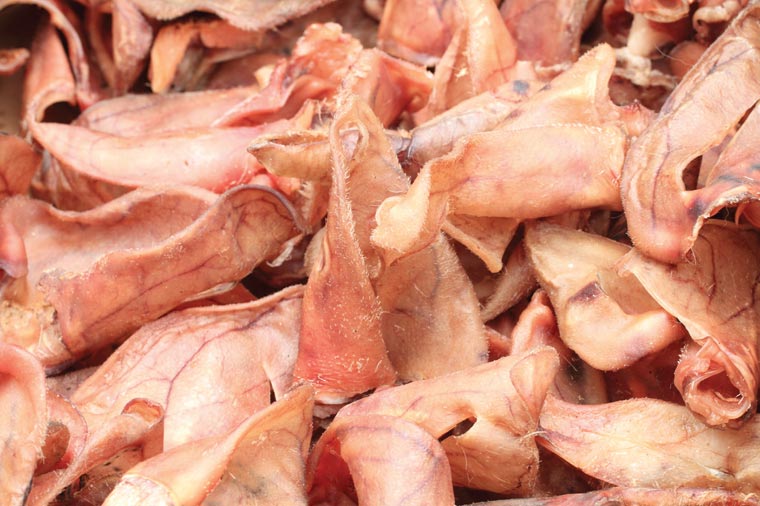
Pig ear treats remain a source of Salmonella after decades of illnesses.

The most recent outbreaks linked with pig ears ended in October 2019 after at least 154 illnesses with 35 people hospitalized. Companies recalled treats imported from Argentina, Brazil, and Columbia.

Pig ear treats have been linked with illness outbreaks since at least 1999, when epidemiologists said the products likely sickened at least 30 people in Canada. U.S. authorities blocked entry of the implicated products.

Pig ear treats

Image AVMA

RASFF Alert – Animal Feed -Salmonella – Toasted Soya Beans

RASFF-Logo

RASFF – Salmonella enterica ser. Agona (present /25g) in toasted soy beans from Belgium in Belgium

Research – Foodborne Illness and the Struggle for Food Safety

CDC

Professor Timothy D. Lytton, a keen scholar of regulatory evolution, provides a lively and well-documented guide to 150 years of major advances in food safety regulation and prevention in the United States. He starts with the early efforts to cleanse and regulate the milk supply in the 19th century that ultimately led to near-universal pasteurization. Efforts to make canned food free of botulism in the 1920s led to a new focus on critical control steps in processing, using sufficient time and heat to eliminate the risk, and thus to a new general approach based on process control. Modernizing meat inspection with process control logic in the 1990s and the recent efforts to make fresh produce safer in the 2000s take the reader to the controversies of the present day.

This book fills a critical gap, weaving the history of public health, regulatory agencies, and the food industry together with issues of immediate concern today. It is an innovative perspective that captures the complexity of the system beyond the scientific report or published regulation. The book should be of interest to students and practitioners of public health and food science and anyone interested in making food reliably safe.

With fresh examples and detailed interviews, Lytton illustrates the dynamic interplay of outbreak investigations, better prevention strategies developed by industry, consumer advocacy, and regulations. He explains why the resulting balance is a punctuated equilibrium, with longer steady states ending in momentous rapid change. Large and catastrophic outbreaks come as the final trigger, as “focusing events” that, with media coverage, increase public attention and create pressure for change. Lytton tells the striking and less well-known story of what happens behind the scenes as food safety champions within the industry push new solutions and voluntary standards forward, show how they could reduce contamination, and gain adherents up and down the food supply chain, thus leading the way for others in industry and regulators to follow. He also deftly outlines the complex roles of third-party auditors, who provide information to one company about the safety practices of its suppliers, and provides a fresh perspective on the growing role that liability insurers may play in the future.

This is history that uplifts, showing how we honor those who suffered from and died of a foodborne disease that is now preventable in the form of better practices and safer food today. In the crucible of public action, it reminds us all how these advances begin and, with feedback and learning, how they can succeed.