RASFF-Salmonella (presence /25g) in fish meal from the United States in Greece
RASFF-Salmonella enterica ser. Mbandaka (presence /25g) in soybean meal from Brazil in Belgium

The recall of Columbia River frozen pet foods, including Cow Pie Pet Foods, has expanded to include more products. Those foods are being recalled for possible Listeria monocytogenes and Salmonella contamination. No illnesses have been reported in this recall. The Washington State Department of Agriculture found the pathogens in one package of each product.
The recall. now includes 261 packages of Cow Pie Lot #72618 and 82 packages of Chicken & Vegetables Lot #111518 fresh frozen meats for dogs and cats, that were produced in July 2018 and November 2018. These are fresh frozen meat products that are fed raw to dogs and cats. The products were distribute din Alaska, Oregon, and Washington state through direct delivery and retail stores.
The Cow Pie product is in frozen 2 pound purple and white plastic bags with the lot number, 72618, on an orange sticker. The Chicken & Vegetables product comes in frozen 2 pound turquoise and white plastic bags with lot number 111518 found on an orange sticker.
Pets can be sickened with Salmonella and Listeria monocytogenes bacteria. They can then pass the bacteria onto people. Pets infected with those pathogens may be lethargy and have bloody diarrhea, fever and vomiting. If your pet has been ill with these symptoms, see your vet.
Staff, patients and visitors are unable to drink the water at a Christchurch hospital after it was found to be contaminated with E coli.
In an email to Princess Margaret Hospital staff on Sunday, the Canterbury District Health Board (CDHB) said people should avoid drinking the water until further notice.
“Everyone on the site should use bottled water where possible and do not use zips or plumbed in water coolers until further notice,” the email said.
CDHB chief of psychiatry Dr Peri Renison said on Monday evening the water supply had since tested negative for contaminants and no-one had been harmed.
Scientists have deciphered how some types of ‘swimming’ bacteria have evolved to be able to escape when trapped in small spaces. The discovery could pave the way to finding new methods to stop the spread of certain bacteria, including species that cause food poisoning and stomach ulcers.
Many bacteria can swim, allowing them to seek out new sources of nutrients, or in the case of pathogenic bacteria, infect and spread.
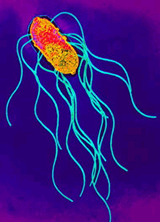
Almost all swimming species of bacteria propel themselves forward using corkscrew-like propellers called “flagella.” Bacterial flagella are composed of thousands of protein building blocks arranged in spiralling chains.
A multidisciplinary team of scientists, including researchers from the University of York, has discovered that some types of bacteria have evolved complex flagella made up of many different types of proteins to enable them to manoeuvre themselves out of small spaces.
The scientists looked at a soil-dwelling species of bacteria called Shewanella putrefaciens and found that when they get stuck in a tight space their multi-component flagella buckle, wrapping around the cell bodies and allowing them to corkscrew free.
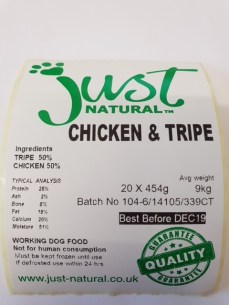
Avondale Pet Foods Ltd recalls Just Natural Chicken & Tripe because salmonella has been found in the product. This product has been sold in Scotland and England only.
| Pack size | 20 x 454g and 8 x 1kg |
| Batch code | 104-6/14105/339CT |
| Best before | December 2019 |
No other Avondale Pet Foods Ltd products are known to be affected.
Risk: The presence of salmonella in the product listed above. Salmonella is a bacteria that can cause illness in humans and animals. The product could therefore carry a potential risk, because of the presence of salmonella, either through direct handling of the pet food, or indirectly, for example from pet feeding bowls, utensils or contact with the faeces of animals. In humans, symptoms caused by salmonella usually include fever, diarrhoea and abdominal cramps. Infected animals may not necessarily display signs of illness, but symptoms can include diarrhoea.
Our advice to consumers (pet owners):
When handling and serving raw pet food it is always advised to clean utensils and feeding bowls thoroughly after use. Consumers should wash hands thoroughly after handling raw pet food, bowls, utensils or after contact with the faeces of infected animals. Raw pet food should be stored separately from any food (especially ready to eat foods). Care should be taken when defrosting to avoid cross contamination of foods and surfaces. If you have bought any of the above product, return it to the store from where it was bought for a full refund.
Action taken by the company:
Avondale Pet Foods Ltd is recalling the above product. Point of sale notices will be displayed in all retail stores that are selling this product. These notices explain to customers why the product is being recalled and tell them what to do if they have bought the product.
RASFF-aflatoxins (B1 = 34 µg/kg – ppb) in gluten corn from China, via the Netherlands in Iceland
Controlled release antimicrobial film makes seafood safer.
Seafood may be contaminated with bacterial pathogens, such as Vibrio and Salmonella, which can survive long-term freezing conditions. Vibrio naturally occur in marine environments and Salmonella can contaminate seafood during production or processing and both are concerns for the seafood industry.
However, a solution may be at hand. A biodegradable, edible film made with plant starch and antimicrobial compounds may control the growth of foodborne pathogens on seafood, according to a group of international researchers.
Catherine Cutter, professor of food science, Penn State, explained, “We have the ability to develop a film with antimicrobial activity that can kill foodborne pathogens on food surfaces. Given the recent outbreaks that we have seen with a number of food products, coming up with something that can be used by the industry to kill microorganisms on the surfaces of food is a noble area of research to investigate.
“Vibrio and Salmonella are somewhat susceptible to freezing,” Cutter said. “So, if you treat bacterial cells with antimicrobials and then freeze them, the approach can be more lethal.”
Freezing does not kill bacteria. However, when freezing food, ice crystals can form from the water in food. The ice crystals, Cutter said, can act like “daggers” and pierce the bacterial cell wall, causing damage to the cell.
Researchers used a blend of thermoplastic starch, a biodegradable polymer made from tapioca powder and a gelatin coating containing antimicrobials known as Nisin Z and lauric arginate (LAE).
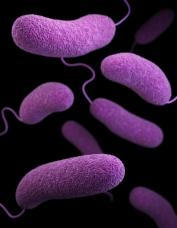
Florida state health officials have reported 39 Vibrio vulnificus cases through Dec. 14, down from last year’s total of 50. Of this total, nine fatalities have been reported.
Lee County saw the most with four cases, while nine counties reported two cases each. Deaths were reported from Hillsborough (2), Dade, Indian River, Jackson, Okaloosa, Sarasota, Volusia and Walton counties.
People can get infected with Vibrio vulnificus when they eat raw shellfish, particularly oysters. The bacterium is frequently isolated from oysters and other shellfish in warm coastal waters during the summer months. Since it is naturally found in warm marine waters, people with open wounds can be exposed to Vibrio vulnificus through direct contact with seawater. There is no evidence of person-to-person transmission of Vibrio vulnificus.
Vibrio vulnificus can cause disease in those who eat contaminated seafood or have an open wound that is exposed to warm seawater containing the bacteria. Ingestion of Vibrio vulnificus can cause vomiting, diarrhea and abdominal pain. Vibrio vulnificus can also cause an infection of the skin when open wounds are exposed to warm seawater; these infections may lead to skin breakdown and ulcers.
A Perthshire nursery school is at the centre of a three-day deep clean after a suspected case of E-coli was detected.
Health bosses say suspected symptoms were detected in a child with links to Errol nursery and stressed the risks to the wider public were very low.
NHS Tayside and Perth and Kinross Council are investigating how the infection may have come about.
The school remained open while the nursery area was cleaned thoroughly overnight on the advice of public health experts. Council chiefs insisted the operation by Tayside Contracts was being carried out as a precaution.
The health board wrote to parents last week to say experts were investigating a single case of suspected Escherichia coli, more commonly known as E. coli.
The germs are commonly found in farm animals and can cause sickness, diarrhoea and a fever in humans.
An NHS Tayside spokeswoman confirmed yesterday the infection was in a nursery pupil and that investigations are ongoing.