Category Archives: HPA

UK- Public Health England New Food Web Link

We are pleased to inform you that the UK National Reference Laboratory for Food Microbiology has launched a webpage within Public Health England Food, Water and Environmental Microbiology Services, giving details of recent activities and events.  Please click on this link PHE

Within our webpage you will see two published documents which are free to download as pdf copies:-

  • “Audit      of Official Control Laboratories capabilities and accreditation status in      the UK 2013”
  • “2012      – 2013 Report of UK National Reference Laboratory for Food Microbiology”


Scotland – HPA 2013 1st Quarter Food Outbreaks Surveillance Report

HPA

Gastro-intestinal and foodborne infections: general outbreaks of infectious intestinal disease reported to HPS in the first quarter of 2013.

UK – Research – Guidance – Pseudomonas aeruginosa in Water Systems

Health Protection Scotland

Guidance on management of Pseudomonas aeruginosa in water systems

On 12 March, the UK Department of Health published an addendum to the Health Technical Memorandum 04-01 Water sources and potential Pseudomonas aeruginosa contamination of taps and water systems – Advice for augmented care units.

The document is concerned with controlling and minimising the risk of morbidity and mortality due to P. aeruginosa associated with water outlets and provides guidance on:

  • forming a Water Safety Group and developing water safety plans
  • assessing the risk to patients when water systems become contaminated with P. aeruginosa or other opportunistic pathogens
  • remedial actions to take when a water system becomes contaminated with P. aeruginosa
  • protocols for sampling, testing and monitoring water for P. aeruginosa.

The guidance is directed towards healthcare organisations providing patient care in augmented care settings, and is specifically aimed at estates and facilities departments, and infection prevention and control teams. [Source: DH News Release, 12 March 2013. http://www.dh.gov.uk/health/2013/03/pseudomonas-addendum]

In Scotland, the same issues have been addressed in Health Protection Scotland’s Guidance for neonatal units (NNUs) (levels 1, 2 & 3) adult and paediatric intensive care units (ICUs) in Scotland to minimise the risk of Pseudomonas aeruginosa infection from water. This is due for imminent publication with an accompanying CEL letter. SHTM 04-01 Parts A&B have also been amended to reflect this latest guidance and will be published on the Health Facilities Scotland website along with the new Part G (following a consultation period) at the end of March.

UK – FSA – HPA – Cryptosporidum 2012 Outbreak

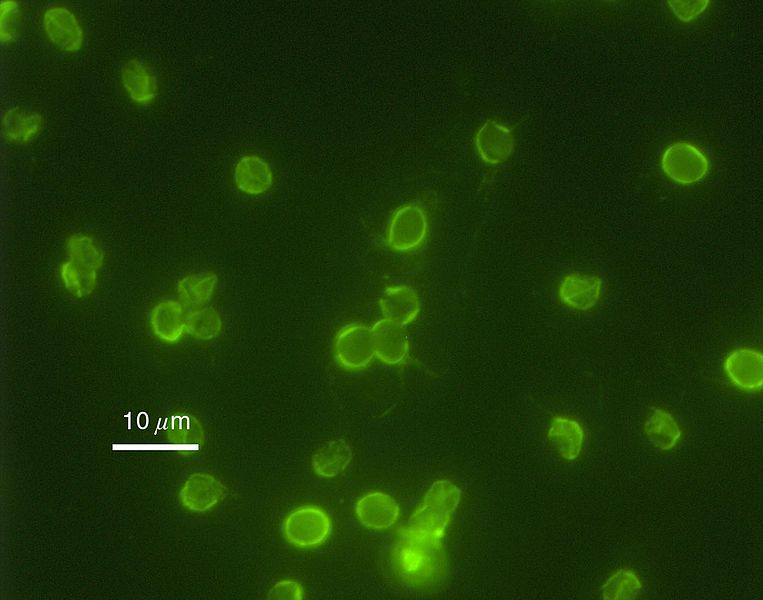
FSA763px-Cryptosporidium_parvum_01

The Health Protection Agency (HPA) today published findings of an investigation into an outbreak of Cryptosporidium infection that affected around 300 people in England and Scotland in May 2012.

The Food Standards Agency was part of the outbreak control team, led by the HPA, and gathered information on the production and distribution of salad vegetables to help identify the likely source of the outbreak.

The full HPA statement can be read via this HPA link

UK -HPA -Burger Vans – Ecoli Contamination

ITV News

HPA Report

Research from the Health Protection Agency (HPA) has revealed that food, water, chopping boards, cleaning cloths and security wristbands sampled from mobile and outdoor food vendors were contaminated with a range of bacteria including E.coli.

The bacteria, which originates from human or animal faeces is usually an indicator of either poor hygiene, undercooking or cross-contamination in the kitchen.

The events where samples were taken included 50 concerts or music festivals, 20 sports events, 39 carnivals, fetes and fairs and 44 ‘other’ events.

8% of food samples were of an unsatisfactory quality with a further 1% containing potentially hazardous levels of bacteria.

Water samples tested revealed that 27% contained unacceptable levels of coliform bacteria which can be found in the environment in soil, water and on plants and may also be a sign of faecal contamination.

E.coli and/or enterococci bacteria (of faecal origin) were found in 8%.

UK-HPA

HPAhpa_logo

HPA welcomes move to put antibiotic resistance on the national risk register

11 March 2013

The Health Protection Agency (HPA) welcomes the move by England’s Chief Medical Officer (CMO), Professor Dame Sally Davies to add antibiotic resistance to the national risk register.

Its addition to the risk register will mean that this issue will be given full attention by politicians here in England as well as the G8 and World Health Organization.

This announcement was made at the launch of the Annual Report of the Chief Medical Officer – Infections and the rise of antimicrobial resistance which was published today.

Figures from the HPA’s Antimicrobial Resistance Reference Laboratory show that in 2003 there were three samples which tested positive for antibiotic resistance compared to 800 in 2012.

It is this dramatic rise in the numbers of cases that warrants active intervention not just from Government but also from healthcare institutions, the pharmaceutical industry, patients and the general public to address this very serious problem.

HPA – New Strain of Norovirus – Sydney 2012

HPANorovirus

As part of its surveillance for norovirus the Health Protection Agency (HPA) carries out genetic testing of norovirus strains from cases in England and Wales.

Testing carried out when cases started to rise in October revealed a cocktail of different strains that were circulating including Sydney 2012 and another called New Orleans 2009, although no one strain was dominant.

The latest testing of the most recent outbreaks, completed this week, has now shown that Sydney 2012 has overtaken all others to become the dominant strain.

Syndey 2012 was first seen in Australia (and takes its name from the place it was first identified) and has also been seen in France, New Zealand and Japan.

This new strain does not cause more serious illness than others and the methods of managing cases and outbreaks are the same for any strain of norovirus. These measures include washing the hands thoroughly and regularly particularly after using the toilet and before eating.

Dr David Brown, Director of Virology Reference Department at the HPA said, “It is always difficult to predict the norovirus season and this year is no different.

“Noroviruses mutate rapidly and new strains are constantly emerging. At the start of the season it is normal for outbreaks to be caused by a range of different strains. However as the season progresses particular strains are more successful and become dominant. The emergence of a new strain does not mean that it causes more serious illness and managing outbreaks and those will the illness remains the same.

UK – HPA Update on Norovirus Activity

HPANorovirus

Latest figures from the Health Protection Agency (HPA) show there have been 4,140 laboratory confirmed cases of norovirus this season (from week 27 to week 52 2012). The latest figures are 63 per cent higher than the number of cases reported at this point last year, when there were 2,535 cases.

The downward trend in the number of confirmed cases has continued in line with the previous report although this is to be expected following the Christmas and New Year period. We will expect to see the number of cases increase again over the following few weeks.

During the two weeks up to 6 January there were 33 hospital outbreaks reported, compared to 30 in the previous fortnight, bringing the total of outbreaks for the season to 673.

UK – HPA Norovirus Update

HPAnorovirus-2(1)

Latest figures from the Health Protection Agency (HPA) show there have been 3,877 laboratory confirmed cases of norovirus this season (from week 27 to week 51 2012). The latest figures are 72 per cent higher than the number of cases reported at this point last year, when there were 2,255 cases.

During the Christmas period there is typically a drop in the number of laboratory reports. In previous norovirus seasons the general trend is that cases increase in the New Year and we expect to see cases rise again over the next few weeks.

During the two weeks up to 30 December there were 29 hospital outbreaks reported, compared to 70 in the previous fortnight, bringing the total of outbreaks for the season to 590.

Cases of norovirus have risen earlier than expected this winter season and this is a trend that has been seen across Europe and other parts of the world. It has not yet been determined why this has been the case and activity varies significantly from year to year.

HPA – Scotland Cryptosporidum Increase 2012

HPA Scotland763px-Cryptosporidium_parvum_01

By the end of the first 50 weeks of 2012, 684 cases of cryptosporidiosis had been reported to Health Protection Scotland. This was an increase of 256 (60%) over the same period in 2011.

In weeks 41-44 of 2012, 128 cases were reported. This was an increase of 84 (191%) over the same period in 2011. In weeks 45-48 of 2012, 74 cases were reported, an increase of 38 (106%) over the same period in 2011. However, in the first two weeks of the current period (weeks 49-52) of 2012, only 17 cases have been reported. In weeks 49-52 of 2011, a total of 39 cases were reported so the figure for weeks 49-52 of 2012, thus far, is unremarkable.