Category Archives: foodborne outbreak

Canada – Raw Pet Food Salmonella Outbreak in Canada Sickens 40

Food Poisoning Bulletin

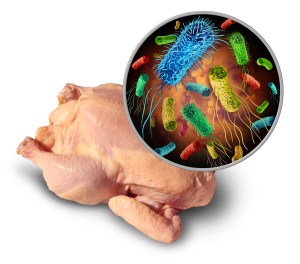
A raw pet food Salmonella outbreak in Canada has sickened at least 40 people. Public Health Canada describes the pathogen as “extensively drug-resistant,” which means it is much more difficult to treat illnesses caused by this bacteria. The outbreak is also linked to contact with cattle.

As of November 11, 2023 there are 40 confirmed cases of XDR (extensively drug resistant) Salmonella in Canada. The case count by provinces is: Manitoba (1), Ontario (14), Quebec (21), New Brunswick (1), Nova Scotia (2), and Prince Edward Island (1). Illness onset dates are between July 2020 and September 2023. Thirteen patients have been hospitalized. The patient age range is between 0 and 91 years of age. About 43% of the patients are children under the age of five
China – Norovirus sickens 74 students in Shandong

China Daily

Seventy-four students infected with norovirus at a middle school in Anqiu, Shandong province, experienced nausea, vomiting and diarrhea on Saturday, the city’s bureau of education and sports said on Monday night.

Norovirus is highly contagious and often food-borne. It is sometimes incorrectly referred to as “stomach flu” but is not related to the flu virus.

Hongyi Middle School organized medical treatment for the affected students and sent 14 to the hospital for observation and treatment.

Ten students remain hospitalized, four have been discharged, and the rest, who returned to school, no longer show symptoms.

After collecting and analyzing samples, the city’s disease control and prevention center concluded that the norovirus infection, caused the illnesses.

The school in Anqiu cleaned and disinfected its facilities to reduce the risk of transmission.

Canada – Outbreak of extensively drug-resistant Salmonella infections linked to raw pet food and contact with cattle

PHAC

The Public Health Agency of Canada (PHAC) is collaborating with provincial public health partners, the Canadian Food Inspection Agency and Health Canada to investigate an outbreak of extensively drug-resistant (XDR) Salmonella infections in six provinces.

Many of the individuals who became sick are children 5 years of age or younger. Illnesses associated with this outbreak strain may be difficult to treat with commonly recommended antibiotics, if antibiotic treatment is needed.

The outbreak is ongoing, as recent illnesses continue to be reported to PHAC.

Based on the investigation findings to date, two sources have been identified:

  • Exposure to raw meat prepared for pets (raw pet food) has been identified as a likely source for some of the illnesses reported in this outbreak. Some of the individuals who became sick reported exposure to raw pet food, or to dogs fed raw pet food, before their illnesses occurred. A single common supplier of raw pet food has not been identified.
  • Contact with cattle, particularly calves, has also been identified as a likely source for some of the illnesses reported in the outbreak.

The outbreak investigation is ongoing and it’s possible that additional sources may be identified.

The outbreak is a reminder that Salmonella bacteria can be found in raw pet food and in many species of animals, including dogs and cattle. Always use safe food handling practices when preparing, cooking, or storing raw pet food to prevent illness. Practice good hand hygiene and frequent handwashing after contact with dogs fed raw pet food, cattle, and their environments.

The outbreak strain of Salmonella that made people sick has been found in raw pet food from the home of an ill individual. If contaminated, raw pet food can also make your pets sick. Infected pets can also spread bacteria, like Salmonella, to individuals they are in contact with, even if they do not show any signs of illness. This outbreak strain of Salmonella has also been found in sick dogs and cattle, and some of these animals have died. This public health notice will be updated as the investigation evolves.

Research – Monophasic Variant of Salmonella Typhimurium 4,[5],12:i:- (ACSSuGmTmpSxt Type) Outbreak in Central Italy Linked to the Consumption of a Roasted Pork Product (Porchetta)

MDPI

Abstract

The monophasic variant of S. Typhimurium 4,[5],12:i:- (MVST) is the third most commonly reported Salmonella serovar involved in human infections (8.8%) in the EU and ranks after S. Enteritidis (54.6%) and S. Typhimurium (11.4%). In Italy, in contrast, the MVST has achieved peculiar epidemiological and ecological success which has allowed it to be, since 2011, the serovar most frequently isolated from humans. In the summer of 2022, a foodborne outbreak of the MVST involving 63 people occurred in the Marche Region (Central Italy). A common food exposure source among some human cases was a roasted, ready-to-eat (RTE) pork product, porchetta, which is a typical product of Central Italy. This paper describes the results of investigations conducted to clarify this outbreak. The porchetta was produced by a local manufacturing plant and distributed to at least two local retail stores, one of which was the retail outlet for the manufacturing plant. The MVST was isolated from surface samples collected at the porchetta manufacturing plant and at both local retail stores via bacterial analysis, and the porchetta sampled at one store contained the MVST. These data confirm this type of RTE pork product can be a source of Salmonella infection in humans.

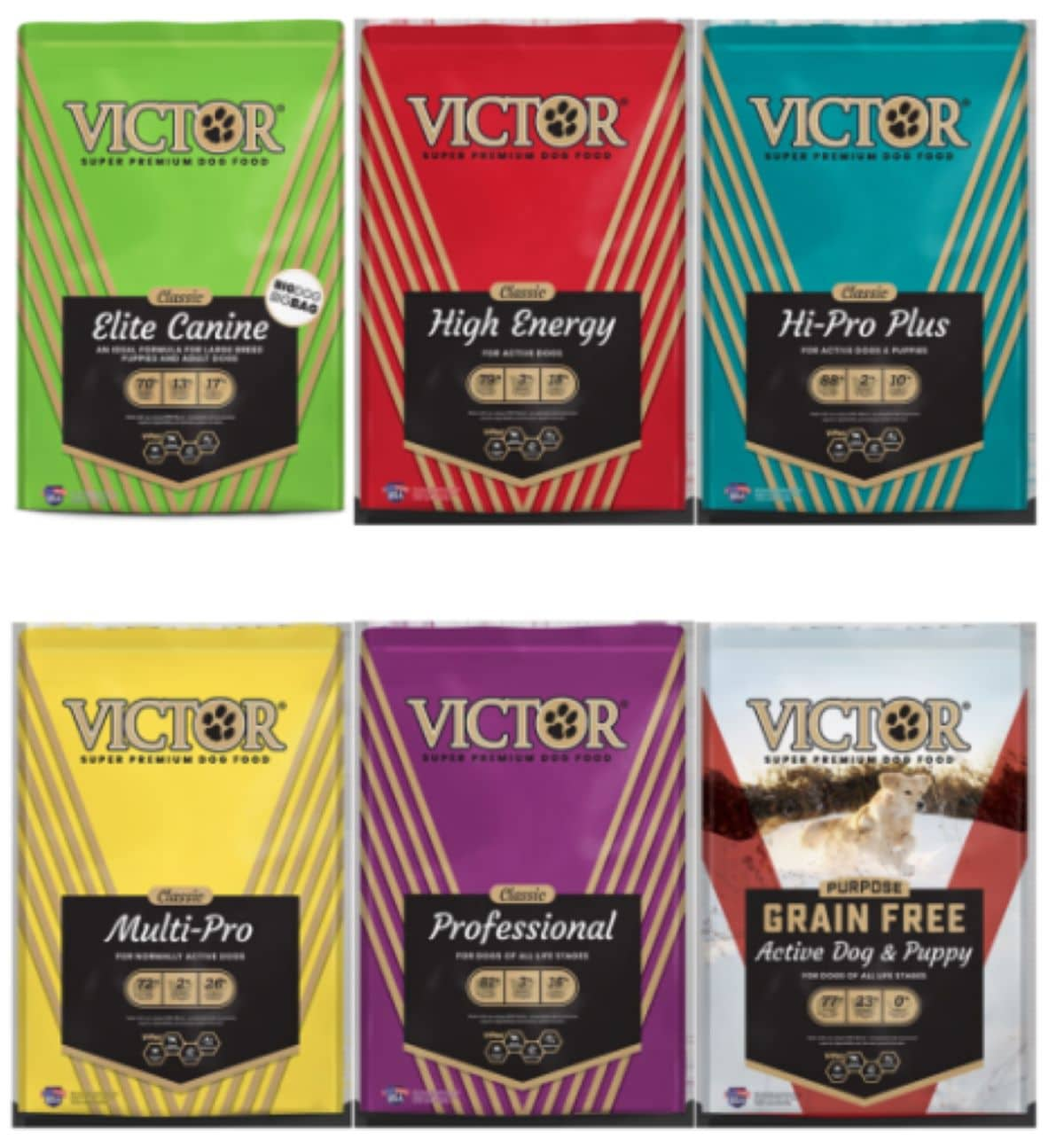
Salmonella Outbreak Linked to Dry Dog Food

CDC

Recalled pet food images.

People in this outbreak got sick from touching recalled dog food, touching things like dog bowls that contained the dog food, or touching the poop or saliva of dogs that were fed the dog food. Most of the sick people in this outbreak are infants. Take steps to handle dog food safely every day.

Research – From field to plate: How do bacterial enteric pathogens interact with ready-to-eat fruit and vegetables, causing disease outbreaks?

Science Direct

Abstract

Ready-to-eat fruit and vegetables are a convenient source of nutrients and fibre for consumers, and are generally safe to eat, but are vulnerable to contamination with human enteric bacterial pathogens. Over the last decade, Salmonella spp., pathogenic Escherichia coli, and Listeria monocytogenes have been linked to most of the bacterial outbreaks of foodborne illness associated with fresh produce. The origins of these outbreaks have been traced to multiple sources of contamination from pre-harvest (soil, seeds, irrigation water, domestic and wild animal faecal matter) or post-harvest operations (storage, preparation and packaging). These pathogens have developed multiple processes for successful attachment, survival and colonization conferring them the ability to adapt to multiple environments. However, these processes differ across bacterial strains from the same species, and across different plant species or cultivars. In a competitive environment, additional risk factors are the plant microbiome phyllosphere and the plant responses; both factors directly modulate the survival of the pathogens on the leaf’s surface. Understanding the mechanisms involved in bacterial attachment to, colonization of, and proliferation, on fresh produce and the role of the plant in resisting bacterial contamination is therefore crucial to reducing future outbreaks.

Denmark Solves E. coli Outbreak; More Sick in Norwegian outbreak

Food Safety News

The SSI, Danish Veterinary and Food Administration (Fødevarestyrelsen), and DTU Food Institute investigated the outbreak that was linked to a type of beef steak, thanks to patient interviews.

Meanwhile, in Norway, four other cases have been added to a different E. coli outbreak.

The Norwegian Institute of Public Health (FHI) reported that E. coli O26:H11 had been detected in 24 people. It is one of the country’s most severe E. coli outbreaks.

Fifteen of those infected are under the age of 13, and nine children have developed hemolytic uremic syndrome (HUS).

Catalonia – Multinational Salmonella Enteritidis outbreak

ACSA

The European Food Safety Authority (EFSA) and the European Center for Infectious Disease Control (ECDC) have carried out an assessment of an outbreak of  Salmonella  Enteritidis that has affected 14 EU/EEA countries, the United Kingdom and the United States. Joined.

From January 1 to October 24, 2023, 335 laboratory-confirmed cases of Salmonella Enteritidis ST11 belonging to three different microbiological groups have been reported . Bacteria similar to those causing the outbreak have been detected in samples of chicken meat and chicken kebab.

Chicken meat and chicken meat products (kebab) are probably the source of the outbreak.

Although food traceability data points to producers located in Poland (7 producers) and Austria (1 producer), no microbiological evidence of contamination has been found in their facilities.

Scientists consider it likely that new cases will occur in this multinational outbreak, as the source has not yet been identified.

EFSA and ECDC experts recommend further investigations to identify places in the chicken meat production chain where contamination may have occurred.

Research – USA – Kratom with Salmonella not a good mix

Food Poison Journal

The Centers for Disease Control and Prevention (CDC), the U.S. Food and Drug Administration (FDA), and several state partners investigated a multistate outbreak of Salmonella infections linked to kratom products.

As of May 24, 2018, 199 people infected with the outbreak strains of Salmonella were reported from 41 states. Washington state reported 16 illnesses. Illnesses started on dates ranging from January 11, 2017, to May 8, 2018. Ill people ranged in age from less than 1 to 75 years (median 38). Among ill people, 52 percent were male. Of 132 people with available information, 50 (38 percent) were hospitalized. No deaths were reported.

USA – Wedding from Hell in Idaho – STEC E.coli

Food Poison Journal

An outbreak of suspected enterotoxigenic E. coli (ETEC) was investigated by the Idaho Department of Health (the state) and the Southwest District Health Department (SWDH). The suspected outbreak was reported to the investigating agencies by August 31, 2022. The outbreak was given the state ID “2022-076.”

On August 30, 2022, the Southwest District Environmental Health Department (EH) received a phone call to notify them of a possible foodborne illness outbreak related to a wedding over the weekend. The caller was the father of the groom, who described around 15 people that he knew with diarrhea. On August 31, EH spoke with the groom and received more information. After this conversation, EH notified the epidemiology department, who again called and interviewed the groom about the event, the food, the activities on site, and others known to be ill. The information gathered from the groom over the phone is as follows: