Four cases of salmonella are being investigated by Hamilton’s public health department.Public health says it believes the cases are connected to the Eat a Pita restaurant on Main Street East at Kenilworth Avenue.


Four cases of salmonella are being investigated by Hamilton’s public health department.Public health says it believes the cases are connected to the Eat a Pita restaurant on Main Street East at Kenilworth Avenue.
The most recent outbreak of food borne illness linked to raw sprouts is a restaurant-based outbreak of E. coli O26 associated with consumption of raw clover sprouts served on sandwiches at certain Jimmy John’s locations in Iowa, Missouri, Kansas, Arkansas and Wisconsin.
Like other restaurant chains and some large food retailers, Jimmy John’s has now removed sprouts from its menu offerings because of the inherent risk of pathogen contamination in this area of fresh produce.
Researchers from the UCLA Henry Samueli School of Engineering and Applied Science have developed a new cell phone–based fluorescent imaging and sensing platform that can detect the presence of the bacterium Escherichia coli in food and water. The engineers combined antibody functionalized glass capillaries with quantum dots (semiconductors often used for medical imaging) as signal reporters to specifically detect E. coli particles in liquid samples using a lightweight, compact attachment to an existing cell-phone camera.
In Pennsylvania, where a raw milk Campylobacter outbreak has sickened at least 77 people during the last month, dairies – even those selling raw milk, are only required to test for pathogens twice a year, according to Penn State Food Safety, a blog by the Penn State College of Agricultural Services.
Pasteurisation kills harmful pathogens, but raw milk is unpasteurized and can sicken consumers if tainted. Since 2006, there have been seven raw milk outbreaks involving five or more people, sickening 284 Pennsylvanians. In addition, there were nine clusters of five or fewer cases during that same period.
Posted in Campylobacter, Eurofins Laboratories, Food Hygiene, Food Inspections, Food Safety, Food Testing, Microbiology, Pathogen
Tagged raw milk
HCM CITY — Health officials have called on local food and beverage enterprises to strictly follow the regulations on food safety to protect consumer rights and product quality.
Around 10,000 food-poisoning cases occur yearly. Phong said that last year inter-sector inspectors found many violations of food-advertising regulations.
Under a Government plan, 100 per cent of food-processing factories would qualify to receive food-safety certificates and 70 per cent of food processors and consumers and producers would be knowledgeable about food-safety practices.
An additional five confirmed infections have brought the total number of Campylobacter illnesses to 76 in an outbreak linked to raw milk from Your Family Cow dairy in Chambersburg, Pennsylvania, the Pennsylvania Department of Health said Wednesday. At least 9 people have been hospitalized.
The order of a federal judge has finally shut down Rainbow Acres Farm, the raw milk dairy located near Washington D.C. in Pennsylvania’s Amish County.
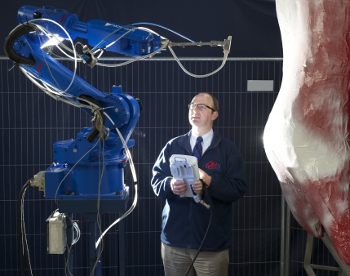
Robotic sampling of meat quality on slaughterhouse production lines could be commercially available next year, as a result of a £1M research project.
A cutting-edge robot has been installed at meat processing plant Scotbeef, as part of an ongoing research project into measuring meat quality.
The research, which was funded by Quality Meat Scotland and the Scottish Government, forms part of the Integrated Measurement of Eating Quality (IMEQ) project. Now in its second year, it is being led by the Scottish Agricultural College (SAC) and other partners.
After a series of off-line trials, the robotic system has been installed in the meat processing plant in order to test the machine’s technical robustness and how it can be developed for integration into the processing line.
The cutting-edge technology is being used to determine carcase pH, temperature and surface-based ultrasound probes at certain positions on the carcase. It uses a robotic manipulator with novel camera technology and special end-of-arm tools. The camera scans the carcase and generates an automatic three-dimensional contour map, which allows the robot to guide the pH/temperature probe to the target muscle in the half-carcase online.
Indian spice traders and producers are facing challenges like food safety, sustainability and traceability. Food safety regulations are affecting spice exports especially to the countries like Germany, France, England, Japan and Australia. India is biggest producer and exporter of spices in the world. As the regulations varies from country-to-country, it is becoming hard to maintain all the required standards.
Geemon Korah, CEO, Kancor Ingredients Ltd said, “These regulations are badly hitting our export markets. Therefore sustainability is a major issue.
The maximum containers are rejected from European countries, Japan and Australia. We are largest exporter of chilli and ginger to these countries.”
Among the major spices exported from India, chilli contributes 132,500 tonnes occupies the first place. Other major spices that are exported from India include turmeric (58,000 tonnes), Cumin (26,500 tonnes), Coriander (18,200 tonnes), Pepper (17,000) , Fenugreek (14,700 tonnes), Ginger (11, 250 tonnes) , Fennel (5,100 tonnes ), Nutmeg & mace (2,550 tonnes), celery (2,450 tonnes) , Cardamom small (3,100 tonnes) and Cardamom Large (475 tonnes), Garlic (1075 tonnes).
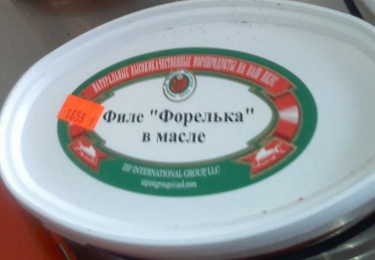
ZIP INTERNATIONAL GROUP LLC, 160 Raritan Center Parkway #6, Edison, NJ 08837 is expanding its recall of sliced herring fillet (forelka) 330 gram and 600 gram in plastic packaging due to Listeria contamination.
The Health Protection Agency (HPA) has this week been alerted by the Spanish public health authorities about a further case of Legionnaires’ Disease in a UK resident who stayed at the Diamante Beach Hotel in Calpe, Costa Blanca, as well as two French cases. This brings the total number of UK residents associated with this cluster to 12, with three deaths.
Posted in Eurofins Laboratories, Food Hygiene, Food Inspections, HPA, Legionella, Microbiology
Tagged health protection agency


