Category Archives: Eurofins Laboratories

Canada – Recall Extended on Salted Cured Fish – Botulinum

Food Posioning Bulletin

The Canadian Food Inspection Agency has expanded the health hazard warning for fesikh, a salted and cured fish product that may be contaminated with Clostridium botulinum. Whole fesikh shad has been added to the warning.

Product details:

  • Whole fesikh mullet
  • Cut up fesikh mullet in oil
  • Whole fesikh shad
  • Sold in packages of different weights and count
  • No code or date information
  • Sold from Lotus Catering at 1960 Lawrence Avenue East in Toronto, Ontario
  • Sold on or before April 17, 2012

There have been three reported illnesses associated with the consumption of these products. For questions, call the CFIA at 1-800-442-2342.

RASFF Alerts – Pork Sausage – Listeria/Suckling Pig – Salmonella/ Soy Bean – Salmonella

RASFF

Listeria monocytogenes (1200 CFU/g) in pork sausage from Spain

RASFF 

Salmonella spp. (presence /25g) in frozen suckling pig racks from France

RASFF

Salmonella Agona (presence /25g) in soya bean meal from Argentina

Norway Two Products from Vietnam With High E.coli Counts

Alert

High count of Escherichia coli (>1500; 1400; 1200 CFU/g) in chilled basil leaves from Vietnam.

Alert

High count of Escherichia coli (30; >1500; 30 CFU/g) in chilled celery from Vietnam

US – Daycare Center 3 Children Sick with E.coli

Ecoli Blog

KBIR reports, three children are in the hospital following an E. coli outbreakat a Cocke County daycare facility. According to the Tennessee Department of Health, three juveniles, all of whom attend the same daycare facility in Newport, were diagnosed with E. coli symptoms. The source of the bacteria is currently unknown, but managers of the facility are working with investigators, and the families of all children who attend the daycare have been contacted. State health department officials have not closed the facility, but are continuing to investigate the situation.

UK – Salmonella Control for Pigs

Farming UK 

Animal nutrition specialists Optivite have launched a new salmonella control programme for pigs. The programme looks at meeting an overall need rather than looking at problems in isolation.

The programme includes:

1. Good bacterial control in feed and the intestine which helps the sow maintain a more positive intestinal microflora.

Preparing the sow is an important part of the programme. A piglets first contact with the outside environment is through the sow as birth involves the passing of the piglet from a sterile environment within the sow, through the birth canal and into the farrowing house where the Salmonella cell count will be much higher.

2. Enabling a successful continuity through the life cycle. It is important to ensure the protection of the baby pigs once they have lost the passive protection of their mothers’ milk.

Powerful water disinfectants can also be included in the drinking water as part of the programme to remove other potential sources of salmonella infection, especially in older systems where exposed header tanks may become contaminated.

Peru – Police Base Hit by Food Poisoning – 90+ Cases

BBC News 

More than 90 police officers at a jungle base in Peru have been taken to hospital with food poisoning.

The officers developed fever, nausea and stomach ache after eating chicken soup at Mazuco police base in Tambopata province, officials say.

Police said they would investigate the suppliers of the meals.

US Study – 50% Retail Chicken Contaminated with Faecal Matter

Food Poisoning Bulletin

A study conducted by Physicians Committee for Responsible Medicine (PCRM)found that almost half of the chickens sold in supermarkets in the United States are contaminated with faeces.

The study looked at chickens produced by Pilgrim’s, Sanderson Farms, Perdue, and 22 other brands. The tests found that “48% of the chicken samples tested positive for faecal contamination, indicated by the presence of coliform bacteria commonly found in chicken dung.”

Chicken samples from every city and every grocery store chain tested positive. In Dallas, 100 percent of the chicken bought at the Kroger’s store tested positive for faecal matter. In Washington, D.C., 83 percent of the chicken bought at a Giant store and 67 percent of the chicken bought at a Safeway tested positive. Samples were also tested in Charleston, S.C., Milwaukee, Phoenix, Chicago, Denver, Houston, Miami, and San Diego.

UK Boom in Norovirus ‘Free’ Oysters

The Grocer 

Sales of norovirus-free oysters at the Cornish Shellfish Co have grown by 100% since an FSA study in November revealed that three quarters of all UK oysters carried the virus.

Cornish Shellfish has been selling its Cornish Assured shellfish for three years. But sales had grown to 3,500 oysters a week since September, a spokesman told The Grocer.

“Chefs like to serve oysters, but you cannot have customers falling ill, especially in high-profile, prestigious restaurants,” said a spokesman.

USDA – Calzone Pizza – Listeria monocytogenes

USDA

Albie’s Foods, a Gaylord, Mich. establishment, is recalling approximately 311 pounds of pizza calzone products due to possible contamination with Listeria monocytogenes, the U.S. Department of Agriculture’s Food Safety and Inspection Service (FSIS) announced today.

The fully cooked, ready-to-eat, calzone products were produced on April 10, 2012, and then shipped to institutions in Indiana and Michigan.

The problem was discovered during routine FSIS testing. FSIS and the company have received no reports of illnesses associated with consumption of these products.

Salmonella From Rats Used for Pet Food

Food Safety News

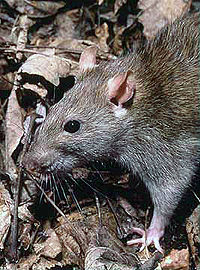
Along with reports of Salmonella infection outbreaks involving contact with chicks and ducks, tiny turtles and pet frogs, add 46 cases of Salmonella I 4,[5],12:i:- infection linked to handling rodents sold as food for pet reptiles and amphibians.
 
The Centers for Disease Control and Prevention, in its April 20 Morbidity and Mortality Weekly Report “Notes from the Field,” says 22 states are reporting the illnesses, and that the median age of those stricken is 11 years old. More than one third of those ill are younger than 5. At least 6 case patients have been hospitalised.