Category Archives: Animal Feed Salmonella

USA- Recall Expanded – Kitten and Puppy food recalled due to Listeria and Salmonella

Food Poison Journal

TFP-Recall_10-21-2023-1.jpg

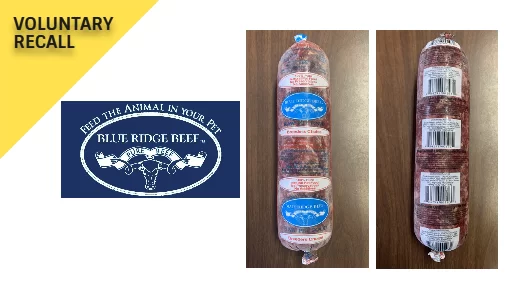
Blue Ridge Beef is expanding their recall to include additional lot numbers. This recall includes all lot numbers and used by dates between N24 1114 to N24 1224 of their 2 lb log of Kitten Grind UPC 8 54298 00101 6; 2lb log of Kitten Mix UPC 8 54298 00143 6 and their 2lb log of Puppy Mix UPC 8 54298 00169 6 due to contamination of Salmonella and Listeria monocytogenes. Salmonellaand Listeria monocytogenes can affect animals eating the products and there is risk to humans from handling contaminated pet products, especially if they have not thoroughly washed their hands after having contact with the products or any surfaces exposed to these products.

RASFF Alerts- Animal Feed – Salmonella – Soy BEan Meal – Feather Meal – Turkey Meal

RASFF

Salmonella Agona in soy bean meal from the Netherlands in France and Belgium

RASFF

Salmonella in soy bean meal from Serbia in Switzerland and Austria

RASFF

Salmonella Ohio in feather meal from the Netherlands in Finland

RASFF

Presence of salmonella in turkey meal from Spain in Italy

RASFF Alert Animal Feed – Salmonella – Processed Animal Protein

RASFF

Salmonella in processed animal protein from Slovakia in Hungary

RASFF Alert – Animal Feed – Salmonella – Soy Bean Feed

RASFF

Salmonella Agona in soy bean meal from Belgium and the Netherlands in France

RASFF Alerts – Animal Feed – Salmonella –

RASFF

Salmonella Enteritidis in feed for laying hens from Germany in the Czech Republic.

RASFF

Enterobacteria and salmonella presence in fishmeal from Morocco in Portugal and Spain

RASFF

Salmonella in organic sunflower cake from Denmark in Sweden

Research – Salmonella Infection in Poultry: A Review on the Pathogen and Control Strategies

MDPI

Abstract

Salmonella is the leading cause of food-borne zoonotic disease worldwide. Non-typhoidal Salmonella serotypes are the primary etiological agents associated with salmonellosis in poultry. Contaminated poultry eggs and meat products are the major sources of human Salmonella infection. Horizontal and vertical transmission are the primary routes of infection in chickens. The principal virulence genes linked to Salmonella pathogenesis in poultry are located in Salmonella pathogenicity islands 1 and 2 (SPI-1 and SPI-2). Cell-mediated and humoral immune responses are involved in the defense against Salmonella invasion in poultry. Vaccination of chickens and supplementation of feed additives like prebiotics, probiotics, postbiotics, synbiotics, and bacteriophages are currently being used to mitigate the Salmonella load in poultry. Despite the existence of various control measures, there is still a need for a broad, safe, and well-defined strategy that can confer long-term protection from Salmonella in poultry flocks. This review examines the current knowledge on the etiology, transmission, cell wall structure, nomenclature, pathogenesis, immune response, and efficacy of preventative approaches to Salmonella.

RASFF Alerts – Animal Feed – Salmonella – Rapeseed Cake – Rape Seed MEal – Barley – Soybean Meal

RASFF

Salmonella in rapeseed cake from Denmark in Sweden.

RASFF

Salmonella Altona in rape seed meal from Germany in Finland and Switzerland

RASFF

Salmonella Typhimurium in Barley from Poland in Finland

RASFF

Salmonella spp. in soybean meal (feed) from Ukraine in Lithuania and Bulgaria

USA – TFP Nutrition Expands Voluntary Recall of Dry Dog, Dry Cat, and Catfish Food Due to Potential Salmonella Health Risk. Recall Includes Dry Dog, Dry Cat, and Catfish Foods Manufactured in Nacogdoches, TX Facility

FDA

FP Nutrition is expanding their voluntary recall that was initiated to include all dry dog, dry cat, and catfish formulas manufactured in their Nacogdoches, Texas, facility. The recall of these production codes is being conducted due to the potential for Salmonella contamination.

Individuals handling dry pet food can become infected with Salmonella, especially if they have not thoroughly washed their hands after having contact with surfaces exposed to this product. Healthy people infected with Salmonella should monitor themselves for some or all of the following symptoms: nausea, vomiting, diarrhea or bloody diarrhea, abdominal cramping, and fever. Rarely, Salmonella can result in more serious ailments, including arterial infections, endocarditis, arthritis, muscle pain, eye irritation, and urinary tract symptoms. Consumers exhibiting these signs after having contact with this product should contact their healthcare providers. Children, the elderly, and individuals with compromised immune systems may be at greater risk of Salmonella infection.

Pets with Salmonella infections may be lethargic and have diarrhea or bloody diarrhea, fever, and vomiting. Some pets will have may only exhibit decreased appetite, fever, and abdominal pain. Infected but otherwise healthy pets can be carriers and infect other animals or humans. If your pet has consumed the recalled product and has these symptoms, please contact your veterinarian.

The company is working directly with retailers to remove the impacted product from the supply chain. Consumers who have purchased any of the formulas listed below with these specific date codes should immediately stop feeding the affected products to your pets and dispose of any product and packaging. TFP Nutrition apologizes for any potential issues this may have caused pet owners and their pets.

Pet owners who are unsure if the product they purchased is included in the recall may visit tfpnutrition.com/recallExternal Link Disclaimer. Please be ready to provide the product name, product size, and manufacture date or lot code which can be found on the back of the bag. Pet owners may also reach out via phone by calling 1-866-311-1323.

The dry dog, dry cat, and catfish food recall is an expansion of an Oct. 20, 2023 limited voluntary recall that included 50-pound bags of Retriever Mini Chunk Chicken Recipe with manufacturing dates from 3277 TFP to 3278 TFP distributed in Arkansas, Arizona, California, Louisiana, Mississippi, New Mexico, Nevada, Oklahoma, Texas and Utah. https://www.fda.gov/safety/recalls-market-withdrawals-safety-alerts/tfp-nutrition-initiates-voluntary-recall-50-lb-bags-retriever-all-life-stages-mini-chunk-chicken

Dry Dog Formulas (as listed in the below attached chart)
Dry Cat Formulas (as listed in the below attached chart)
Floating Catfish Formulas (as listed in the below attached chart)

The date code is printed on the back of the bag near the bottom. Please use the example graphic below and the “MFG From” column associated with your formula to see if your product is affected. The XXXXX is the timestamp when the bag was packaged.

Link to TFP Nutrition List of Recalled Products

Canada – Raw Pet Food Salmonella Outbreak in Canada Sickens 40

Food Poisoning Bulletin

A raw pet food Salmonella outbreak in Canada has sickened at least 40 people. Public Health Canada describes the pathogen as “extensively drug-resistant,” which means it is much more difficult to treat illnesses caused by this bacteria. The outbreak is also linked to contact with cattle.

As of November 11, 2023 there are 40 confirmed cases of XDR (extensively drug resistant) Salmonella in Canada. The case count by provinces is: Manitoba (1), Ontario (14), Quebec (21), New Brunswick (1), Nova Scotia (2), and Prince Edward Island (1). Illness onset dates are between July 2020 and September 2023. Thirteen patients have been hospitalized. The patient age range is between 0 and 91 years of age. About 43% of the patients are children under the age of five

Canada – Outbreak of extensively drug-resistant Salmonella infections linked to raw pet food and contact with cattle

PHAC

The Public Health Agency of Canada (PHAC) is collaborating with provincial public health partners, the Canadian Food Inspection Agency and Health Canada to investigate an outbreak of extensively drug-resistant (XDR) Salmonella infections in six provinces.

Many of the individuals who became sick are children 5 years of age or younger. Illnesses associated with this outbreak strain may be difficult to treat with commonly recommended antibiotics, if antibiotic treatment is needed.

The outbreak is ongoing, as recent illnesses continue to be reported to PHAC.

Based on the investigation findings to date, two sources have been identified:

  • Exposure to raw meat prepared for pets (raw pet food) has been identified as a likely source for some of the illnesses reported in this outbreak. Some of the individuals who became sick reported exposure to raw pet food, or to dogs fed raw pet food, before their illnesses occurred. A single common supplier of raw pet food has not been identified.
  • Contact with cattle, particularly calves, has also been identified as a likely source for some of the illnesses reported in the outbreak.

The outbreak investigation is ongoing and it’s possible that additional sources may be identified.

The outbreak is a reminder that Salmonella bacteria can be found in raw pet food and in many species of animals, including dogs and cattle. Always use safe food handling practices when preparing, cooking, or storing raw pet food to prevent illness. Practice good hand hygiene and frequent handwashing after contact with dogs fed raw pet food, cattle, and their environments.

The outbreak strain of Salmonella that made people sick has been found in raw pet food from the home of an ill individual. If contaminated, raw pet food can also make your pets sick. Infected pets can also spread bacteria, like Salmonella, to individuals they are in contact with, even if they do not show any signs of illness. This outbreak strain of Salmonella has also been found in sick dogs and cattle, and some of these animals have died. This public health notice will be updated as the investigation evolves.