Tag Archives: washington state department of health

USA – Outbreak – Jimmy Johns Again – E.coli

Food Poisoning Bulletin alfalfa

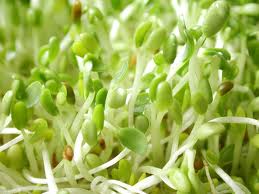
Raw clover sprouts on Jimmy John’s and other fast food sandwiches are the likely source of an E. coli outbreak that has sickened 10 people in Washington and Idaho, according to the Washington State Department of Health. Seven people have confirmed cases of E. coli O121 poisoning and three have probable cases. Five people have been hospitalized.

Health officials are warning consumers not to eat raw clover sprouts from Evergreen Fresh Sprouts, LLC of Idaho. They were distributed to restaurants and grocery stores in the northwest. “If you have these products at home, you should throw them out.,” said Washington State Health Officer Dr. Kathy Lofy.

USA – Warning – Vibrio in Warm Water Oysters

Food Safety News300px-Crassostrea_gigas_p1040848

The warmer coastal water temperature produced by summer weather creates ideal conditions for bacteria that can contaminate oysters, the Washington State Department of Health reminded the public over the Fourth of July weekend.

Vibrio vulnificus and Vibrio parahaemolyticus, two types of bacteria that grow in warm waters and can cause human illness, are known to be carried by oysters, especially in summer months.

There is further information at the link above.

Laboratory Detection of ‘Toxic’ E.coli Increases

Food Poisoning Bulletin

Enhanced laboratory detection of non-O157:H7 types of E. coli from stool samples of the sick is causing a surge in positive findings for toxic E. coli that is exponentially larger than the number of labs adopting the enhanced methods, a study by a Washington State Department of Health has found.

Washington State disease trackers looked at laboratories in Washington and examined the rate of non-O157 E. coli detection as more and more labs developed the tools to test for varied STECs. According to a summary of the research published this week by the Centers for Disease Control and Prevention (CDC), the number of laboratories in Washington State that tested for varied STECs increased from 2 (4 percent) in 2005 to 19 (33 percent) in 2010.

Four serogroups accounted for more than 80 percent of non-O157 STEC case findings. They were E. coli O26, E. coli O103, E. coli O121 and E. coli O111.