Category Archives: Water Safety

USA – Minnesota DOH investigates Legionnaires’ disease associated with an Albert Lea hotel

Food Poison Journal

Legionella_Plate_01

State health officials investigating Legionnaires’ cases linked to Albert Lea hotel
Early evidence suggests source may be the spa; recent guests with undiagnosed symptoms should consult with their health care provider

Cases of Legionnaires’ disease associated with an Albert Lea hotel are prompting state health officials to warn anyone who stayed at the hotel in late June to seek medical care promptly if they are ill.

Minnesota Department of Health investigators have identified two laboratory-confirmed cases so far among people from unrelated groups who were at the Ramada by Wyndham Albert Lea and spent time in the pool/hot tub area around the last weekend of June.

Research – Sachet water consumption as a risk factor for cholera in urban settings: Findings from a case control study in Kinshasa, Democratic Republic of the Congo during the 2017–2018 outbreak

PLOS One

Food Illness

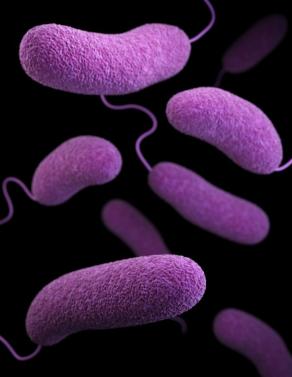
Cholera is a diarrheal disease caused by ingestion of the Vibrio cholerae bacterium. Outbreaks in urban areas are becoming increasingly frequent in Sub-Saharan Africa. Risk factors for cholera have been studied in rural settings but not sufficiently in urban areas. Understanding context-specific risk factors is key for successful outbreak response. During a cholera outbreak in Kinshasa, the Democratic Republic of the Congo we were able to identify a previously unknown behavioural risk factor of particular relevance in urban settings–the consumption of drinking water from plastic sachets. Water sachets are sold on the streets of all major cities in Sub-Saharan Africa. It requires biting off an edge and sucking out the water, and we think that external contamination of these sachets was an important transmission route in the Kinshasa outbreak. Water sachets are predominantly consumed by socio-economically disadvantaged groups who lack piped water supply in their homes and have poor access to sanitary infrastructure. This makes our findings particularly relevant because these are the very populations who are at increased risk of getting and transmitting cholera. Health messaging and response measures should include consumption of water sachets as a potential risk factor during future cholera outbreaks in urban low-resource settings.

Research – Use of Oxidative Stress Responses to Determine the Efficacy of Inactivation Treatments on Cryptosporidium Oocysts

MDPI

crypto

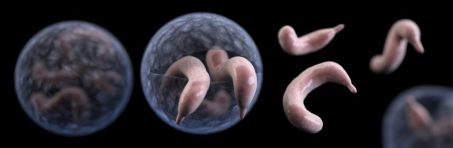
Cryptosporidium oocysts are known for being very robust, and their prolonged survival in the environment has resulted in outbreaks of cryptosporidiosis associated with the consumption of contaminated water or food. Although inactivation methods used for drinking water treatment, such as UV irradiation, can inactivate Cryptosporidium oocysts, they are not necessarily suitable for use with other environmental matrices, such as food. In order to identify alternative ways to inactivate Cryptosporidium oocysts, improved methods for viability assessment are needed. Here we describe a proof of concept for a novel approach for determining how effective inactivation treatments are at killing pathogens, such as the parasite Cryptosporidium. RNA sequencing was used to identify potential up-regulated target genes induced by oxidative stress, and a reverse transcription quantitative PCR (RT-qPCR) protocol was developed to assess their up-regulation following exposure to different induction treatments. Accordingly, RT-qPCR protocols targeting thioredoxin and Cryptosporidium oocyst wall protein 7 (COWP7) genes were evaluated on mixtures of viable and inactivated oocysts, and on oocysts subjected to various potential inactivation treatments such as freezing and chlorination. The results from the present proof-of-concept experiments indicate that this could be a useful tool in efforts towards assessing potential technologies for inactivating Cryptosporidium in different environmental matrices. Furthermore, this approach could also be used for similar investigations with other pathogens. View Full-Text

USA – Shigella linked to Splash Park at Tanganyika Wildlife Park in Goddard Kansas

Food Poison Journal

The Kansas Department of Health and Environment (KDHE) and Sedgwick County Health Department (SCHD) continue to investigate cases of illness associated with Tanganyika Wildlife Park in Goddard, Kan., just west of Wichita. KDHE became aware of the possible link between the cases on Friday, June 18 and began investigation the same day.

Initially, there were three cases that were identified as linked to the park. These cases have tested positive for Shigella bacteria. Additional testing is underway to determine if the bacteria from each person are related. Shigella is a bacteria spread from person-to-person through exposure to contaminated stool (faeces).

Shigella spreads easily; just a small number of bacteria can spread illness.

Ireland – Boil water notice issued for Clare Island public water supply

Con-telegraph

crypto

FOLLOWING advice from the Health Service Executive, Irish Water and Mayo County Council have issued a boil water notice for the area supplied by the Clare Island public water supply to protect approximately 165 people following a recent drinking water quality test.

The notice has been put in place due to the detection of cryptosporidium in the Clare Island public water supply.

Cryptosporidium is a tiny parasite found in human and animal waste. If it is swallowed (ingested), it can cause a disease called cryptosporidiosis. The symptoms of cryptosporidiosis include fever, stomach upset, weight loss and diarrhoea.

Cryptosporidium may be found in water if it has been contaminated or if there has been a problem with water treatment.

Research – Escherichia coli Survival on Strawberries and Unpacked Romaine Lettuce Washed Using Contaminated Water

MDPI

A number of foodborne outbreaks have occurred in the past decade, with higher incidences associated with romaine lettuce and strawberries. Contaminated agricultural water has been reported as the source of microbial contamination in most of these outbreaks. Maintaining the adequate and sanitary quality (0 E. coli/100 mL) of agricultural water can be challenging during post-harvest operations such as washing. The study focused on the attachment of generic E. coli (Rifampicin resistant) onto romaine lettuce and strawberries, mimicking the produce wash step. The produce was washed with contaminated water, air-dried, and stored in display units for 7 days. The produce was sampled randomly each day and analyzed for the surviving E. coli count. The results indicated that E. coli can survive in both lettuce and strawberries over extended periods. A survival population of 2.3 log CFU/cm2 (day 8) was observed on lettuce with an initial population of 2.8 log CFU/cm2 (day 0). On strawberries, the population reduced from 3.0 (day 0) to 1.7 log CFU/cm2 (day 7), with an initial E. coli concentration of approx. 6 log CFU/mL in the wash water. Strawberry leaves had a higher attachment of E. coli than the fruit (p < 0.05). In conclusion, romaine lettuce and strawberries washed with contaminated water can cause an outbreak affecting consumers and public health. View Full-Text

Research – Determining bacterial load and water quality of tomato flume tanks in Florida packinghouses

Journal of Food Protection

Monitoring and maintenance of water quality in dump tanks or flume systems is crucial to prevent pathogen cross-contamination during postharvest washing of tomatoes, but there is limited information on how organic matter influences sanitizer efficacy in the water. The main objective of this study was to monitor water quality in flume tanks and evaluate the efficacy of postharvest washing of tomatoes in commercial packinghouses. Flume tank water samples (n=3) were collected on an hourly basis from three packinghouses in Florida and analyzed for pH, total dissolved solids (TDS), free chlorine, chemical oxygen demand (COD), oxidation-reduction potential (ORP), and turbidity. Additionally, three flume water samples were collected and tested for total aerobic plate count (APC), total coliforms (TC), and generic E. coli (EC). Fresh tomatoes (n=3), both before and after washing, were collected and analyzed for the same bacterial counts. Turbidity, COD, and TDS levels in flume water increased over time in all packinghouses. Correlations observed include COD and turbidity (r = 0.631), turbidity and TDS (r = 0.810), and ORP and chlorine (r = 0.660). APC for water samples had an average range of 0.0 to 4.7 log CFU/mL and TC average range of 0.0 to 4.7 log CFU/mL. All water samples were negative for generic E. coli . The average APC for pre-and post-flume tomatoes from the three packinghouses was 6.0 log CFU/tomato and ranged from 2.2 to 7.4 log CFU/tomato. The average TC count was <1.5 and 7.0 log CFU/tomato for pre-and post-wash tomatoes, respectively. There was no significant effect ( P >0.05) of postharvest washing on the microbiological qualities of tomatoes. Water quality in flume tanks deteriorated over time in all packinghouses during a typical operational day of 4-8 h.

Research – Legionella and Biofilms—Integrated Surveillance to Bridge Science and Real-Field Demands

MDPI

Legionella_Plate_01

Legionella is responsible for the life-threatening pneumonia commonly known as Legionnaires’ disease or legionellosis. Legionellosis is known to be preventable if proper measures are put into practice. Despite the efforts to improve preventive approaches, Legionella control remains one of the most challenging issues in the water treatment industry. Legionellosis incidence is on the rise and is expected to keep increasing as global challenges become a reality. This puts great emphasis on prevention, which must be grounded in strengthened Legionella management practices. Herein, an overview of field-based studies (the system as a test rig) is provided to unravel the common roots of research and the main contributions to Legionella’s understanding. The perpetuation of a water-focused monitoring approach and the importance of protozoa and biofilms will then be discussed as bottom-line questions for reliable Legionella real-field surveillance. Finally, an integrated monitoring model is proposed to study and control Legionella in water systems by combining discrete and continuous information about water and biofilm. Although the successful implementation of such a model requires a broader discussion across the scientific community and practitioners, this might be a starting point to build more consistent Legionella management strategies that can effectively mitigate legionellosis risks by reinforcing a pro-active Legionella prevention philosophy. View Full-Text

Ireland – Tipperary County Council not aware of source of Cryptosporidium in Borrisokane water

Tipperary Live

crypto

Tipperary County Council is not aware if the source of the cryptosporidium that has affected Borrisokane water supply has been found, local councillors have been told.

Cllr Ger Darcy had also raised concerns as to whether the pollution could happen again.

Irish Water is installing a UV system to kill any bacteria in the supply and director of water services Jerry Robinson said that hopefully that would be done this month, but warned it was a “work in progress”.

He said the UV system should prevent issues in the future.

EU – Legionnaires’ disease – Annual Epidemiological Report for 2019

ECDC

Legionella_Plate_01

ECDC’s annual surveillance reports provide a wealth of epidemiological data to support decision-making at the national level. They are mainly intended for public health professionals and policymakers involved in disease prevention and control programmes.

Executive summary

  • Legionnaires’ disease remains an uncommon and mainly sporadic respiratory infection with an overall notification rate in 2019 for the EU/EEA of 2.2 cases per 100 000 population.
  • There is heterogeneity in notification rates between EU/EEA countries, with the highest rate reported by Slovenia (9.4 cases per 100 000 population).
  • The annual notification rate increased in recent years, from 1.4 in 2015 to 2.2 cases per 100 000 population in 2019.
  • There was a marginal decrease of less than 1% in the number of reported cases in 2019, compared with 2018.
  • Four countries (France, Germany, Italy, and Spain) accounted for 71% of all notified cases in 2019.
  • Males aged 65 years and above were most affected (8.4 cases per 100 000 population).
  • Only 10% of cases were culture-confirmed (10%) probably meaning that disease caused by Legionella species other than Legionella pneumophila is under-estimated.