Category Archives: water microbiology

Ireland -Recall of Certain Batches of Bottled Water Bottled by Celtic Pure due to Microbiological Contamination

FSAI

Pseudomonas aeruginosa, Enterococci or E. coli bacteria were detected in a range of batches of water bottled by Celtic Pure. Please see tables of implicated brands and batches that do not comply with the legal requirements. These implicated batches are unsafe or potentially unsafe and are subject to recall.

Update 1, 22.10.2019: Please note that the recall was extended to include additional batches of bottled waters bottled by Celtic Pure, see FSAI Food Alert 2019.42 Update 1 for further details.

Update 2, 23.10.2019: Please note that the recall was extended to include an additional batch of bottled water bottled by Celtic Pure, see FSAI Food Alert 2019.42 Update 2 for further details.

For more information, please see statement: https://www.fsai.ie/news_alert/bottled_water_21102019.html.


Nature Of Danger:

Pseudomonas aeruginosa poses a higher risk of complications if consumed by severely immunocompromised people such as those who have undergone transplants or chemotherapy. It rarely causes illness in healthy individuals.

Enterococci and E. coli – their presence in water is considered an indicator that the water has been contaminated with faecal material, however, this does not mean that it will make people sick.

Action Required:

Manufacturers, wholesalers, distributors, caterers & retailers:

Retailers are requested to remove the implicated batches from sale. Retailers are also advised to display a point-of-sale recall notice in stores where the implicated batches were sold.

Consumers:

Consumers are advised not to drink the implicated bottled waters.

Research -Tiny droplets allow bacteria to survive daytime dryness on leaves

Science Daily

Microscopic droplets on the surface of leaves give refuge to bacteria that otherwise may not survive during the dry daytime, according to a new study published today in eLife.

Understanding this bacterial survival strategy for dry conditions may enable scientists to develop practices that support healthy plant microbiomes in agricultural and natural settings.

The surface of an average plant leaf is teeming with about 10 million microbes — a population comparable to that of large cities — that contribute to the health and day-to-day functioning of the plant. Scientists have long wondered how bacteria are able to survive as daytime temperatures and sunlight dry off leaf surfaces.

“While leaves may appear to be completely dry during the day, there is evidence that they are frequently covered by thin liquid films or micrometre-sized droplets that are invisible to the naked eye,” says co-lead author Maor Grinberg, a PhD student at Hebrew University’s Robert H. Smith Faculty of Agriculture, Food, and Environment in Rehovot, Israel. “It wasn’t clear until now whether this microscopic wetness was enough to protect bacteria from drying out.”

To answer this question, Grinberg, together with co-lead author and Research Scientist Tomer Orevi and their team, recreated leaf surface-like conditions in the laboratory using glass plates that were exposed to various levels of humidity. They then conducted experiments with more than a dozen different bacteria species in these conditions.

They observed that while these surfaces appeared dry to the naked eye, under a microscope bacteria cells and aggregates were safely shielded in miniscule droplets. Interestingly, larger droplets formed around aggregates of more than one cell, while only tiny droplets formed around solitary cells. This microscopic wetness is caused by a process called deliquescence — where hygroscopic substances, such as aerosols, that are prevalent on leaves absorb moisture from the atmosphere and dissolve within the moisture to form the droplets.

“We found that bacteria cells can survive inside these droplets for more than 24 hours and that survival rates were much higher in larger droplets,” Orevi explains. “Our results suggest that through methods of self-organisation, for example by aggregation, these cells can improve their survival chances in environments frequently exposed to drying.”

These findings could have important implications for agriculture as human practices may inadvertently interfere with this bacterial survival mechanism, endangering the health of crops and natural vegetation, according to senior author Nadav Kashtan, PhD, Assistant Professor at Hebrew University’s Robert H. Smith Faculty of Agriculture, Food, and Environment. “A greater understanding of how microscopic leaf wetness may protect the healthy plant microbiome and how it might be disrupted by agricultural practices and human aerosol emissions is of great importance,” he says.

Kashtan also notes that similar microscopic surface wetness likely occurs in soil, in the built environment, on human and animal skin, and potentially even in extra-terrestrial systems where conditions might allow, suggesting such bacterial survival strategies are not limited to leaf surfaces.


Story Source:

Materials provided by eLife.

USA – Legionnaires’ disease: 3rd death reported in North Carolina outbreak

Outbreak News Today CDC legionella

North Carolina health officials have reported a third Legionnaires’ disease fatality linked to the NC Mountain State Fair, held September 6-15, 2019 at the Western North Carolina Agricultural Center in Fletcher, NC.

As of Oct. 14, 140 cases of Legionnaires’ disease or Pontiac Fever had been reported in residents of multiple states and North Carolina counties.

Buncombe, Henderson and Haywood counties have seen the most cases with 49, 34 and 12, respectively. Ten cases were reported in out of state residents.

The outbreak has been linked to a hot tubs display at the Davis Event Center at WNC Ag Center.

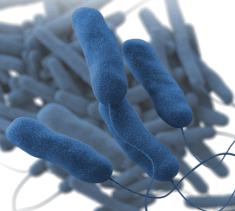
Legionella bacteria are found naturally in the environment. These bacteria can become a health concern when they grow and spread in human-made building water systems like hot water tanks, cooling towers of air conditioning systems, decorative fountains and hot tubs or spas that aren’t properly maintained.

Approximately 200 cases are reported annually in North Carolina.

Research – EU – Cryptosporidiosis – Annual Epidemiological Report for 2017

ECDC crypto

Executive summary

Key facts

  • For 2017, 21 EU/EEA countries reported 11 449 cryptosporidiosis cases, of which 11 418 were confirmed.
  • The notification rate was 3.2 confirmed cases per 100 000 population.
  • Germany, the Netherlands and the United Kingdom (UK) accounted for 71% of all confirmed cases, with the United Kingdom alone accounting for 44%.
  • Most of the cases were reported in September 2017, following the seasonal pattern of previous years.
  • Children aged 0–4 years had the highest notification rate of 12.5 cases per 100 000 population.

Download

Thumbnail

Research – Hepatitis E virus genotype 3 strains and a plethora of other viruses detected in raw and still in tap water

Science Direct

In this study, next generation sequencing was used to explore the virome in 20L up to 10,000L water from different purification steps at two Swedish drinking water treatment plants (DWTPs), and in tap water. One DWTP used ultrafiltration (UF) with 20 nm pores, the other UV light treatment after conventional treatment of the water. Viruses belonging to 26 different families were detected in raw water, in which 6–9 times more sequence reads were found for phages than for known environmental, plant or vertebrate viruses. The total number of viral reads was reduced more than 4-log10 after UF and 3-log10 over UV treatment. However, for some viruses the reduction was 3.5-log10 after UF, as for hepatitis E virus (HEV), which was also detected in tap water, with sequences similar to those in raw water and after treatment. This indicates that HEV had passed through the treatment and entered into the supply network. However, the viability of the viruses is unknown. In tap water 10–130 International Units of HEV RNA/mL were identified, which is a comparable low amount of virus. The risk of getting infected through consumption of tap water is probably negligible, but needs to be investigated. The HEV strains in the waters belonged to subtypes HEV3a and HEV3c/i, which is associated with unknown source of infection in humans infected in Sweden. None of these subtypes are common among pigs or wild boar, the major reservoirs for HEV, indicating that water may play a role in transmitting this virus. The results indicate that monitoring small fecal/oral transmitted viruses in DWTPs may be considered, especially during community outbreaks, to prevent potential transmission by tap water.

USA – Legionnaire’s disease: More than 100 cases reported in North Carolina outbreak

Outbreak News Today 

The number of Legionnaires’ disease cases linked to the NC Mountain State Fair continues to grow at a quick pace.

According to North Carolina health officials, as of Tuesday, 116 total Legionella infections have been reported, including 109 cases of Legionnaires’ disease and seven cases of the less serious Pontiac fever.

One death has been reported.

Seventy-five of the cases were reported from two counties–Buncombe and Henderson.

Information – Washing poultry not worth the risk

Sabatha Herald Campylobacter kswfoodworld

The practice of washing or rinsing raw poultry can actually put you and others at a higher risk of foodborne illness. Quite simply, there’s no need to do this.

Participants in an observational study were observed in handling and preparation to see how bacteria moves from raw foods to other foods or surfaces. They were divided into a control group and a treatment group. Food safety messages were sent via email prior to observation sessions to learn how to effective those messages were in preparing chicken.

Some reasons consumers feel rinsing raw poultry is necessary is to remove blood/slime, because a family member said to do so, or it washes off the germs or bacteria. Most do this under the faucet with water running without any other container. Because of this, water splashes onto other items or food causing cross contamination. Then, many improperly washed their hands by not using water or soap, or did not rub their hands with soap at least 20 seconds. They also were ineffective at cleaning and sanitizing equipment and countertops.

Bottom line. There is no need to wash poultry or meat prior to cooking. Cooking to safe temperatures is the best and safest defense against foodborne illness. All poultry should reach 165 degrees Fahrenheit; ground meat should reach 160 degrees; and roasts, steak and chops should reach 145 degrees.

USA – North Carolina Legionnaires’ Disease outbreak rises to 79 cases, 1 death

Outbreak News Today Legionella_Plate_01

North Carolina state health officials were first notified about an increase in the number of Legionnaire’s disease cases in Buncombe and Henderson counties about one week ago.

To date, health officials have reported 83 Legionella cases (79 Legionnaires’ disease and 4 Pontiac fever), including one fatality.

The most cases have been reported from Buncombe (34) and Henderson (21) counties, with 11 other counties affected plus 5 South Carolina cases.

Legionnaires’ disease gained national notoriety in 1976 when the Centers for Disease Control and Prevention (CDC) discovered it during an epidemic of pneumonia among American legion members at a convention in Philadelphia.

Research – Pathogens removed from cows’ drinking water

Dairy Global

Successful trials to remove potentially harmful pathogens, Clostridium perfringens, from drinking water given to cows have received funding for further research after first trials found it increased calf health and size and reduced the need for antibiotic treatment.

“The trials show great promise for the agricultural sector in the UK with potential for farmers to deliver healthier calves with a reduced requirement for antibiotic treatment and ultimately higher yields and increased profitability from their dairy herd,” said Ian Tremain, agriculture innovation manager at Bridgwater & Taunton College.

WET Group, which supplied the technology used to clean the borehole water commonly mixed with artificial nutrition feed and then fed to cows, worked with the Agriculture Innovation Centre at Bridgwater & Taunton College on the year-long trial on cows, and has decided to fund further trials in order to expand on initial findings. The final phase of the trials, which will see the introduction of WET Group’s upgraded mineral enhanced Guided Enhanced Membrane (GEM) system is due to commence in October 2019.

USA – 32 Sick and 1 Dead in Legionnaires Outbreak Linked to Mountain State Fair

Outbreak News Today

CDC legionella

Image CDC

The North Carolina Department of Health and Human Services has announced an outbreak of Legionnaires’ disease potentially linked to the Mountain State Fair in North Carolina. As of today, there are 32 confirmed illnesses and one person has died. According to the health agents, “The source of the outbreak is under investigation. Many of the cases reported attending the NC Mountain State Fair, held September 6-15, 2019 in Fletcher, NC.” The investigation in ongoing.

As Legionnaires’ disease is typically transmitted through contaminated water sources, the health agencies are investigating any rides that may have water. “Features, exhibits, and rides that incorporated some type of water exposure that created droplets which came in contact with visitors will be our focus,” Steven Smith, Henderson County’s Director of Health.