Category Archives: Uncategorized

Canada – Recall – Gelfite Fish – Clostridium botulinum

CFIACIFA

The Canadian Food Inspection Agency (CFIA) and Central-Epicure Food Products Ltd. are warning the public not to consume the Central-Epicure brand Gefilte Fish, Ready to Serve, Sweet and Savoury, described below because they may be contaminated with Clostridium botulinum.Toxins produced by these bacteria may cause botulism, a life-threatening illness.

There have been no reported illnesses associated with the consumption of this product.

The manufacturer, Central-Epicure Food Products Ltd., Toronto, Ontario, is voluntarily recalling the affected product from the marketplace.  The CFIA is monitoring the effectiveness of the recall.

RASFF Alerts – Aflatoxins – E.coli – E.coli STEC – Pistachios – Mussels – Beef

RASFF – Aflatoxins (B1 = 32.3; Tot. = 34.8 µg/kg – ppb) in pistachio kernels from Turkey in Italy

RASFF – Too high count of Escherichia coli (490 MPN/100g) in chilled mussels (Mytilus galloprovincialis) from Spain in Italy

RASFF – Shigatoxin-producing Escherichia coli in chilled beef (Bos taurus) from Argentina in Germany

Research – Ready to Eat Salads

HACCPSalmonella

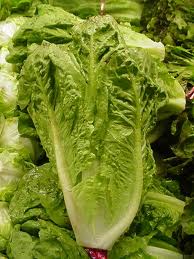
Ready to eat salad is considered one of the products most likely to cause food-related illness, said Professor Hugh Pennington, an emeritus professor of bacteriology at the University of Aberdeen in Scotland — who worked for the British, Scottish and Welsh governments as an expert on microbiology and food safety.

His claim follows a Health Protection Agency investigation into an outbreak of salad-linked Cryptosporidium infections that affected around 300 people in England and Scotland in May.

In the analysis of the exposure to different salad vegetables a significant statistical association was found between infection and the consumption of pre-cut spinach. The strongest association with infection was found to be with consumption of ready to eat pre-cut mixed salad leaves from a major supermarket chain. These findings suggest that one or more types of salad vegetables could have been contaminated.

That is largely because greens are grown directly in the soil, and some pathogens can only be killed by heat or strong detergents, not just water. Certain types of bacteria found in the ready to eat salad bags can be almost impossible to kill, unless the leaves are irradiated – a process the public would oppose.

“You could irradiate it – but that would be a `no, no` with the public. You just can`t be absolutely sure that the bagged salad you are buying – which has been put through a chemical wash to kill the bugs, is actually free of them.”

Food pathogens are very good at clinging on to salad and the risk from cryptosporidium, salmonella and listeria is very real.

“I would advise people to thoroughly wash salad even when it says it has been washed and is ready to eat,” Pennington said.

Vegetables are fine and safe if they are cooked in the traditional way of boiling them to death. The only danger comes when you eat them raw.

The responsibility falls on the people who produce food. But much of our vegetables are now grown in countries that do not necessarily have the same hygiene standards. The consumer has no way of knowing how the food has been produced.

Research – E.coli – Listeria – Salmonella in Cut Celery

Pub Med

Illnesses from Escherichia coli O157:H7, Listeria monocytogenes, and Salmonella have been associated with the consumption of numerous produce items. Little is known about the effect of consumer handling practices on the fate of these pathogens on celery. The objective of this study was to determine pathogen behavior at different temperatures under different storage conditions. Commercial fresh-cut celery was inoculated at ca. 3logCFU/g onto either freshly cut or outer uncut surfaces and stored in either sealed polyethylene bags or closed containers. Samples were enumerated following storage for 0, 1, 3, 5, and 7 days when held at 4 °C or 12 °C, and after 0, 8, and 17 h, and 1, and 2 days when held at 22 °C. At 4 °C, all populations declined by 0.5-1.0logCFU/g over 7 days. At 12 °C, E. coli O157:H7 and Salmonella populations did not change, while L. monocytogenes populations increased by ca. 0.5logCFU/g over 7 days. At 22 °C, E. coli O157:H7, Salmonella, and L. monocytogenes populations increased by ca. 1, 2, or 0.3logCFU/g, respectively, with the majority of growth occurring during the first 17 h. On occasion, populations on cut surfaces were significantly higher than those on uncut surfaces. Results indicate that populations are reduced under refrigeration, but survive and may grow at elevated temperatures.

RASFF Alerts – Salmonella in Feed

RASFF – Salmonella Senftenberg (presence /25g) in rape seed from Estonia in Finland

RASFF – Salmonella Bredeney (presence /25g) in organic soybean meal from China in Cyprus

RASFF – Salmonella Senftenberg (1out of 10 samples /25g) in soy bean meal pellets from Brazil, via Germany in Sweden

RASFF Alerts – Salmonella – Chicken Meat – Herbs

RASFF – Salmonella Minnesota (presence /25g) in frozen chicken meat from Brazil in Spain

RASFF – Salmonella spp. (in 2 out of 5 samples /25g) in Piper sarmentosum from Cambodia in GB

RASFF – Salmonella spp. (presence /25g) in crested latesummer mint from Cambodia in the UK

RASFF Alerts – Norovirus – Clams and Oysters

RASFF -Norovirus in chilled clams (Tapes decussatus) from Turkey in in Italy

RASFF -Norovirus in chilled clams (Veneridae) from Turkey in Italy

RASFF -Norovirus in chilled clams (Tapes decussatus) from Turkey in Italy

RASFF -Norovirus in chilled clams (Tapes decussatus) from Turkey in Italy

RASFF -Norovirus (GI and GII) in chilled oysters (Cassostrea gigas) from France in Italy

Canada – Prison Food Makes You Ill

CBC News

Some 250 prisoners and 25 employees of a Quebec City prison have been ill since last night with what the director of Public Health is calling food poisoning.

A dishwasher at the prison, in the Charlesbourg borough of Quebec City, may be the cause. The hot steam cycle of the machine, which sterilizes the dishes, had stopped working.

The dishwasher was reportedly installed four weeks ago.

Research – USA v UK Eggs

ForbesEGGS

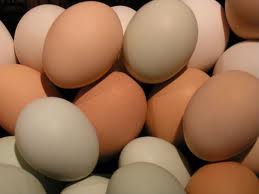
Believe it or not, United States Department of Agriculture (USDA) graded eggs would be illegal if sold in the UK, or indeed anywhere in the European Union (EU). It’s all to do with the fact that commercial American eggs are federally required to be washed and sanitized before they reach the consumer. EU egg marketing laws, on the other hand, state that Class A eggs – those found on supermarkets shelves, must not be washed, or cleaned in any way.

“In Europe, the understanding is that this mandate actually encourages good husbandry on farms. It’s in the farmers’ best interests then to produce to cleanest eggs possible, as no one is going to buy their eggs if they’re dirty, ” explained Mark Williams, Chief Executive, British Egg Industry Council in a phone interview.

UK – FSA – Update Recall – Loch Arthur Creamery Dairy Products – Listeria monocytogenes

FSAfood_standards_agency_logo

Loch Arthur Creamery has initiated a recall of all its dairy products because of possible Listeria monocytogenes contamination. Listeria monocytogenes is a bacterium that causes food poisoning. The Food Standards Agency has issued a second updated Product Recall Information Notice.