Category Archives: Uncategorized

Research Articles – Listeria ID Rapid PCR – Antimicrobial Activity of Natural Antimicrobial Substances Against Spoilage Bacteria Isolated from Fresh Produce

Science Direct

Abstract

Listeriosis is a foodborne disease caused by the pathogenic Listeria monocytogenes and is considered as a serious health problem due to the severity of symptoms and its high mortality rate. Listeria genus is divided into six species and especially L. monocytogenes is an important foodborne pathogen in humans and livestock. Recently, other Listeria species are reported as pathogenic strains in decayed foods and environments as well. High mortality rate of listeriosis demands for rapid methods to detect the potential presence of the food pathogens in the food industry. We have developed a multiplex PCR for rapid and simultaneous detection of six Listeria species including Listeria grayi, Listeria innocua, Listeria ivanovii, L. monocytogenes, Listeria seeligeri and Listeria welshimeri to identify specific Listeria species in processed foods. The optimized multiplex PCR in this study utilized one Listeria genus specific and each Listeria species-specific primer pairs. Each primer pair yields the products of 370-bp for Listeria genus-specific, 201-bp for L. grayi-specific, 749-bp for L. innocua-specific, 463-bp for L. ivanovii-specific, 509-bp for L. monocytogenes-specific, 673-bp for L. seeligeri-specific and 281-bp for L. welshimeri-specific. We have successfully applied multiplex PCR strategy to 93 Listeria isolates from processed meat products to determine specific Listeria species and out of which 81 strains of L. monocytogenes, 10 strains of L. innocua and 2 strains of L. welshimeri were identified. This established multiplex PCR provides rapid and reliable results and will be useful for the detection of Listeria species in contaminated food products and clinical samples.

Science Direct

Abstract

The aim of this study was to investigate the efficacy of natural antimicrobial substances for inhibiting vegetable spoilage bacteria. Natural antimicrobial compounds (carvacrol, thymol, eugenol, cinnamic acid, nisin, and chitosan), organic acids (acetic acid and lactic acid), and chemical sanitizers (sodium hypochlorite and chlorine dioxide) were evaluated for their antibacterial activities, as single and combination treatments, against 15 spoilage bacteria isolated from vegetables, using the agar disc diffusion and broth dilution methods. Carvacrol, thymol, and eugenol showed strong inhibitory effects compared to those of the other antimicrobial substances, and their average minimum inhibitory concentration (MIC) values against 15 spoilage bacteria were 167, 648, and 168 μg/ml, respectively. When they were combined, four kinds (carvacrol + thymol, carvacrol + eugenol, thymol + eugenol, and carvarol + thymol + eugenol) of the combination formulas showed higher antibacterial effect than others against spoilage bacteria, with average MIC values of 47, 43, 59, and 42 μg/ml, respectively. However, two combinations (carvacrol + thymol, and carvacrol + thymol + eugenol) showed the strongest inhibitory effects against bacteria in fresh vegetables among all treatments. These results could be used for the development of new sanitation or preservation methods to improve freshness and to extend the shelf-life of fresh produce.
European RASFF Alerts – Salmonella – E.coli – Aflatoxin – Clostridium

RASFF – Salmonella in Paan Leaves in the UK sourced in Bangledesh

RASFF – E.coli in Mussels in France sourced in Spain

RASFF – Salmonella in Beef Trimmings in Sweden via Netherlands/Poland/Germany

RASFF – Aflatoxin in Figs in Germany sourced in Turkey

RASFF – Low Acidity possible Clostridium growth in tapenade, tian and olivado from France

RASFF – Salmonella in Dog Snacks in Norway from Canada.

RASFF – Possible Clostrium growth – Preparations like tapenade, or anchïoades tians brand “Taste The Trash” and “La Marmite Taste” at risk of botulism according to a statement from the Directorate General for Competition, Consumption and Fraud (DGCCRF).

USA – Recall – Pistachios – Salmonella

Food Safety News

A California company is recalling 1,200 pounds of pistachios because they may be contaminated with Salmonella.

Hoop Nuts LLC of Van Nuys, CA issued a voluntary recall of 600 pounds of raw and 600 pounds of dry roasted pistachios Sunday.

The recalled nuts were sold under the brand names ARO Pistachio and Orandi Farms as Pistachio Halves ‘n Pieces in  30 pound white corrugated boxes.

The dry roasted pistachios are marked with lot #121203 and the raw pistachios are identifiable by lot #1-121213.

The recalled products were distributed in California.

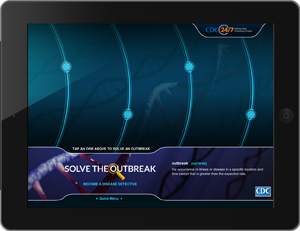
Play the Game – CDC iPAD Outbreak Detective

CDC iPad-STO-sm

Scientists and gamers alike can now play disease detective,  through “Solve the Outbreak,” a new iPad app from the Centers for Disease  Control and Prevention. The app lets users assume the role of a disease  outbreak investigator in the agency’s Epidemic Intelligence Service (EIS) by  navigating three fictional outbreaks based on real-life events. Users get  clues, review data, and make decisions to determine the cause of the outbreak.

“The goal is to use new technology to  provide an  engaging, interactive way for users to learn how CDC solves outbreaks, thereby  increasing general knowledge about real-life public health issues,” said CDC  Director Dr. Tom Frieden. “This application allows us to illustrate the  challenges of solving outbreaks and how our disease detectives work on the  front lines to save lives and protect people 24/7.”

In the game, participants also become familiar with health  tips, definitions and information about epidemiology, which is a science used to investigate outbreaks and to  monitor patterns, causes and effects of diseases on the public. Users  advance in rank as they earn points and can post their results on Facebook and  Twitter to challenge other participants.

“This is a great learning tool for science teachers, teens,  young adults, public health enthusiasts and mystery lovers,” said Carol  Crawford, branch chief, CDC’s Electronic Media Branch.  “The three  introductory scenarios are based on actual events EIS officers have  solved.  We also plan to add new outbreak cases.”

UK- FSA – Updates Recalled Loch Arthur Creamery Criffel Unpasteurised Cheese

FSAfood_standards_agency_logo

Listeria monocytogenes has been detected in the product below following sampling by Dumfries & Galloway Council.

Product name: Criffel Brand name: Loch Arthur Creamery Type of product: Full fat semi-soft unpasteurised cheese Production date: 7 January 2013, 9 January 2013

FSA

Further batches of Loch Arthur Creamery cheese are being recalled because of confirmation that they contain high levels of Listeria monocytogenes. The Food Standards Agency is issuing an updated Product Recall Information Notice.

Loch Arthur Creamery is recalling production date codes of 7 January 2013 and 9 January 2013, following sampling by Dumfries and Galloway Council. Listeria monocytogenes is a food-poisoning bacteria.


USA-Further Recalls – Taylor Farms Organic Baby Spinach EHEC E.coli

Food Poisoning Bulletin

Sam’s Club, Walmart and some Kroger stores are recalling Taylor Farms organic baby spinach products sold under a a variety of names  due to possible contamination with E.coli. The brand names under recall include Central Market Organics, Full Circle Organic, Marketside Organic, Simple Truth Organic and Taylor Farms Organic.

Recalled Simple Truth Organic baby spinach was sold at stores owned by the Kroger company. They include King Soopers, City Market, Fry’s, Fred Meyer, Ralphs, Food4Less, FoodsCo, QFC and Smith’s in Texas and Louisiana.  At this time,  illnesses have not been reported in association with the recalled products. But consumers who have purchased any of them  should not eat them as E.coli can cause serious illness.  Symptoms of an E.coli infection include abdominal cramping anad diarrhea that is often watery or bloody. Consumers who have already eaten the spinach and develop these symptoms should see a doctor.

Research – Chlorine Dioxide Film – Decontaminating Fresh Produce

Journal of Food Science

Abstract

A feasibility study was conducted to develop chlorine dioxide (ClO2)-releasing packaging films for decontaminating fresh produce. Sodium chlorite and citric acid powder were incorporated into polylactic acid (PLA) polymer. Films made with different amounts of PLA (100 and 300 mg), percentages of reactant (5% to 60%), and ratios of sodium chlorite to citric acid (1:2 or 2:1) were prepared using a solvent casting method. The release of ClO2 from the resultant films was activated by moisture. Increase of reactants in the films produced more ClO2 while higher PLA content in the films resulted in less release of ClO2. The ratio of sodium chlorite to citric acid and activation temperature (22 °C compared with 10 °C) did not affect the ClO2 release from the films. Antimicrobial efficacy of ClO2 released from the films was evaluated using grape tomato as a model food. The results indicate that the films were activated by moisture from tomatoes in the package and the released ClO2 reduced Salmonella spp. and Escherichia coli O157:H7 inoculated on the tomatoes to undetectable levels (<5 colony forming units (CFU)/tomato), achieving more than 3 log reduction. The film-treated tomatoes did not show significant changes in color and texture as compared to controls during storage at 10 °C for 21 d. This study demonstrated the technical feasibility for development of gaseous ClO2-releasing packaging system to enhance microbial safety and extend shelf life of fresh produce.

European RASFF Alerts – Histamine- Salmonella

RASFF – Histamine in Chilled Tuna in Italy sourced in Spain

RASFF – Salmonella in Poultry Steak in Belgium

Research – Flow Cytometry Suggests Higher Bacterial Loading in Drinking Water

Science DailyWater

Flow cytometry (FCM) can now be officially used for the quantification of microbial cells in drinking water in Switzerland. The new analytical method — developed at Eawag and extensively tested both in Switzerland and abroad — has been incorporated into the Swiss Food Compendium (SLMB) by the Federal Office of Public Health (FOPH). FCM provides much more realistic results than the conventional method, in which bacterial colonies are grown on agar plates. The results demonstrate that even good-quality drinking water harbours 100 to 10,000 times more living cells than the conventional plate count method would suggest.

EAWAG

FSA – Norovirus Advice and Information

FSANorwalk_Caspid

During the current norovirus outbreak, the FSA is reminding people what they can do when preparing food to minimise the likelihood of food contamination. Tackling foodborne norovirus is one of the priorities for the Agency, as part of its Foodborne Disease Strategy. (see link above)