Category Archives: Eurofins Laboratories

Hot Water Bath for Washing Cantaloupes – Eliminates Pathogens

Food Safety News

The 2011 outbreak of Listeria monocytogenesis in cantaloupe sparked a heightened level of interest in efforts to make cantaloupe safer, with fruit and produce trade associations developing safety guidelines and California cantaloupe growers pushing to set safety goals.
 
Bassam Annous, Ph.D., a microbiologist at the U.S. Department of Agriculture, might just have the solution the cantaloupe industry seeks. Since 2005, Annous has been developing a cost-effective treatment to kill pathogens on cantaloupe rinds by submerging the melons in hot water. 

Robotic Sampling of Meat Quality

Food Manufacture

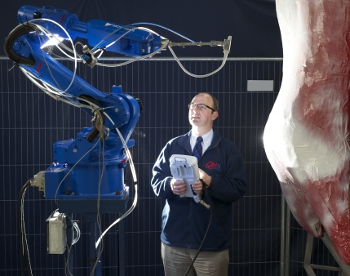
Robotic sampling of meat quality on slaughterhouse production lines could be commercially available next year, as a result of a £1M research project.

A cutting-edge robot has been installed at meat processing plant Scotbeef, as part of an ongoing research project into measuring meat quality.

The research, which was funded by Quality Meat Scotland and the Scottish Government, forms part of the Integrated Measurement of Eating Quality (IMEQ) project. Now in its second year, it is being led by the Scottish Agricultural College (SAC) and other partners.

After a series of off-line trials, the robotic system has been installed in the meat processing plant in order to test the machine’s technical robustness and how it can be developed for integration into the processing line.

The cutting-edge technology is being used to determine carcase pH, temperature and surface-based ultrasound probes at certain positions on the carcase. It uses a robotic manipulator with novel camera technology and special end-of-arm tools. The camera scans the carcase and generates an automatic three-dimensional contour map, which allows the robot to guide the pH/temperature probe to the target muscle in the half-carcase online.

QMS – 2011 Article

Food Safety Issues – Spices in India

Business Standard 

Indian spice traders and producers are facing challenges like food safety, sustainability and traceability. Food safety regulations are affecting spice exports especially to the countries like Germany, France, England, Japan and Australia. India is biggest producer and exporter of spices in the world. As the regulations varies from country-to-country, it is becoming hard to maintain all the required standards.

Geemon Korah, CEO, Kancor Ingredients Ltd said, “These regulations are badly hitting our export markets. Therefore sustainability is a major issue.

The maximum containers are rejected from European countries, Japan and Australia. We are largest exporter of chilli and ginger to these countries.”

Among the major spices exported from India, chilli contributes 132,500 tonnes occupies the first place. Other major spices that are exported from India include turmeric (58,000 tonnes), Cumin (26,500 tonnes), Coriander (18,200 tonnes), Pepper (17,000) , Fenugreek (14,700 tonnes), Ginger (11, 250 tonnes) , Fennel (5,100 tonnes ), Nutmeg & mace (2,550 tonnes), celery (2,450 tonnes) , Cardamom small (3,100 tonnes) and Cardamom Large (475 tonnes), Garlic (1075 tonnes).

More US Norovirus – Cheeleaders and Subway

Cheerleaders

Health officials confirmed Friday that a fast-acting gut bug known as norovirus is responsible for an outbreak of illness that sickened more than 200 people gathered for a cheerleading championship in Washington state last weekend.

Results of state laboratory tests showed that that the nasty group of viruses caused the short-but-severe vomiting and diarrhea that affected some people who participated in and attended the state championship and Salute to Spirit cheerleading, dance and drill team event held in Everett, Wash. Norovirus is typically spread through person-to-person contact.

Subway

Most of the 100-plus people infected with norovirus last month had eaten at a local Subway franchise.

But an investigation by the Blackford County Health Department was unable to determine whether a customer or an employee spread the virus, also known as a stomach bug and food poisoning.

Ukranian Herring Fillet Recall – Listeria monocytogenes

Listeria Blog

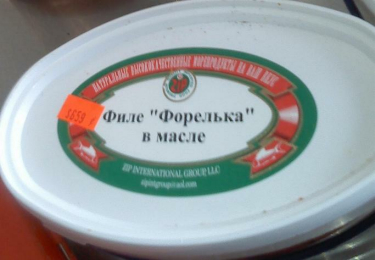
ZIP INTERNATIONAL GROUP LLC, 160 Raritan Center Parkway #6, Edison, NJ 08837 is expanding its recall of sliced herring fillet (forelka) 330 gram and 600 gram in plastic packaging due to Listeria contamination.

Hepatitis A – US Cheesecake Factory

Boise Weekly

While assuring the public that there is no evidence of an outbreak, the Central District Health Department is alerting the public that an employee of the Cheesecake Factory on North Milwuakee Road in Boise was infected with the hepatitis A virus, but is no longer infectious.

CDHD is alerting patrons who may have dined at the restaurant between Dec. 13, 2011, and Jan. 22, 2012, that they may have been exposed to hepatitis A. If a person has had a hepatitits A vaccine or have had the illness in the past, the CDHD said they are protected from the infection.

Symptoms usually occur abruptly and may include:
-fever
-loss of appetite
-abdominal discomfort
-jaundice (yellowing of the skin and eyes)
-tiredness
-nausea
-dark urine

HPA – Legionella Cluster in Spain Update

HPA

The Health Protection Agency (HPA) has this week been alerted by the Spanish public health authorities about a further case of Legionnaires’ Disease in a UK resident who stayed at the Diamante Beach Hotel in Calpe, Costa Blanca, as well as two French cases. This brings the total number of UK residents associated with this cluster to 12, with three deaths.

Mycotoxin Increase with Climate Change?

Sustainablog Article

One of the toxic and carcinogenic threats in the human food supply is a natural chemicals produced by moulds called “mycotoxins”.  The moulds can grow on a wide range of foods and feeds (corn, peanuts, cotton seed, tree nuts, dried spices and chiles…) and produce a range of mycotoxins. Many of  the toxins come from Aspergillus spp or Penicillium spp. The chance that these toxins will contaminate a crop is enhanced by drought and/or insect damage – unfortunately both conditions expected to be more common with the onset of climate change.


Chinese Food Safety Violations – Stiff Sentances in 2011

Food Production Daily

Almost 300 people who violated Chinese food safety laws were handed sentences including life imprisonment and the death penalty in 2011, according to a Chinese news agency.

Bloomberg

Chinese Vice Premier Li Keqiang called for harsh punishments against food-safety violations as officials removed eggs that a shopper claimed were fake in southern China’s Guangzhou city.

Li said China faces a grave situation in ensuring food supplies are kept safe and authorities should take a proactive approach to deter violations.

GovCN

Sources with the State Council’s Food Safety Committee said on Thursday that a total of 286 people in more than 5,200 food safety cases last year were handed sentences, including life imprisonment and suspended death penalties.

Cut Leaf Spinach – E.coli O157

Food Poisoning Bulletin

Almost 230,000 pounds of Robert’s cut leaf curly spinach is being recalled in 30 pound totes because of possible contamination with E. coli 0157:H7. The recall was announced only to the company’s customers by snail mail. (post)