Category Archives: Eurofins Laboratories

UK- Staffordshire School – 8 Cases E.coli O157 Confirmed

This Is Staffordshire

MORE children at a school forced to close following an outbreak of E.coli have tested positive for the illness.

Tests have revealed eight youngsters from Newcastle’s Friarswood Primary School are infected with E.coli 0157.

Samples taken from all 153 pupils at the school are still being processed.

Canada – Salmonella Outbreak – 16 Children Affected

CBC 

Ottawa Public Health is investigating a lunch catering service they believe caused a salmonella outbreak among children.

Ottawa’s chief medical officer of health Dr. Isra Levy sent a letter to local physicians Tuesday warning them of 16 reports of lab-confirmed cases of salmonella and the number is expected to grow.

The reports have come in during the last three days, the letter reads, and CBC News has confirmed it involves children between the ages of 15 months and 14 years old at three schools and one daycare.

New Zealand – Sandwich Recall – Listeria monocytogenes

NZHerald 

A sandwich product has been recalled due to the risk of bacteria being present.

Goodman Fielder NZ is voluntarily recalling its Gourmet Farmhouse flavour of Deli Kitchen sandwiches, due to the possible presence of listeria monocytogenes.

The recall applies only to this flavour of the sandwich with the use by dates of March 13 and 15 this year.

The product was distributed only in the North Island.

Consumers are advised to not eat this product under any circumstances because of a potentially serious health risk.

India – Two Die Salmonella – Review of India Foodborne Disease.

The Times India

VARANASI: Two children died of food poisoning while more than 30 were admitted to a community health centre in Ghazipur district on Sunday night. The food and civil supply department officials collected samples of food articles while police registered a case against unidentified food vendors in this connection.

British Food Journal

Purpose – To review the nature and extent of foodborne diseases in India due to chemical and microbial agents.

Design/methodology/approach – The scientific investigations/reports on outbreak of foodborne diseases in India for the past 29 (1980-2009) years due to adulteration, chemical, and microbiological contamination has been reviewed. Reported scientific information on foodborne pathogens detected and quantified in Indian foods have also been reviewed.

Findings – A total of 37 outbreaks involving 3485 persons who have been affected due to food poisoning has been reported in India. Although the common forms of foodborne diseases are those due to bacterial contamination of foods, however, higher numbers of deaths have been observed due to chemical contaminants in foods.

Originality/value – A national foodborne disease surveillance system needs to be developed in India in order to enable effective detection, control and prevention of foodborne disease outbreaks.

CIFA – Extended Recall E.coli O157

CIFA

The public warning issued on February 25, 2012has been expanded to include additional products and distribution information.

The Canadian Food Inspection Agency (CFIA) and New Food Classics are warning the public not to consume the no name beef burgers and beef steakettes described below because the products may be contaminated with E. coli O157:H7.

The following products are affected by this alert:

Product Size UPC Lot Code
no name 12 Beef Burgers 1.36 kg 0 60383 37333 7 BB 2012 AL 22
EST 761
no name Club Pack Beef  Steakettes 2.27 kg 0 60383 01321 9 BB 2012 AL 22
EST 761

These products have been distributed by Loblaws nationally.

There has been one reported illness associated with the consumption of these products.

FSA – Review of the Food Safety (Sampling & Qualifications) Regulations 1990

FSA

To review and update national legislation on the Food Safety (Sampling & Qualification) Regulations 1990. The primary aim will be to ensure that qualifications listed for food/public analysts and food examiners are up to date and to remove/amend obsolete provisions found within the Regulations.

All comments and reviews to be sent to:

Bhavna Parmar

SMLP Branch, ARD
Food Standards Agency
1st floor Aviation House
125 Kingsway
London
WC2B 6NH

Tel: 0207 276 8307
Fax: 0207 276 8289
E-mail: bhavna.parmar@foodstandards.gsi.gov.uk

Responses are requested by: Monday 4 June 2012

China – Stricter Food Safety Rules

CRI English

A Chinese billionaire beverage tycoon said Monday that besides severe punishment, strict management and unified standards are necessary in ensuring food safety in China.

Zong Qinghou, chairman of beverage giant the Wahaha Group and China’s richest person according to the Hurun Global Rich List 2012, said severe punishment is “necessary”, but measures should be taken to prevent food contamination at “the very beginning” by curbing agricultural pollution.

“With polluted water and soil, pesticide and herbicide-tainted farm produces, antibiotics abuse and illegal uses of feed additives, there will be no food safety,” said Zong, a deputy to the National People’s Congress, the country’s top legislature.

Zong said the lack of unified food-safety standards has undermined China’s food safety efforts, and too many governments or departments are setting different, or even conflicting standards in food production and circulation.

Chinese courts convicted 320 people in 278 cases related to producing and distributing toxic and harmful food and additives, said another report from the Supreme People’s Court.

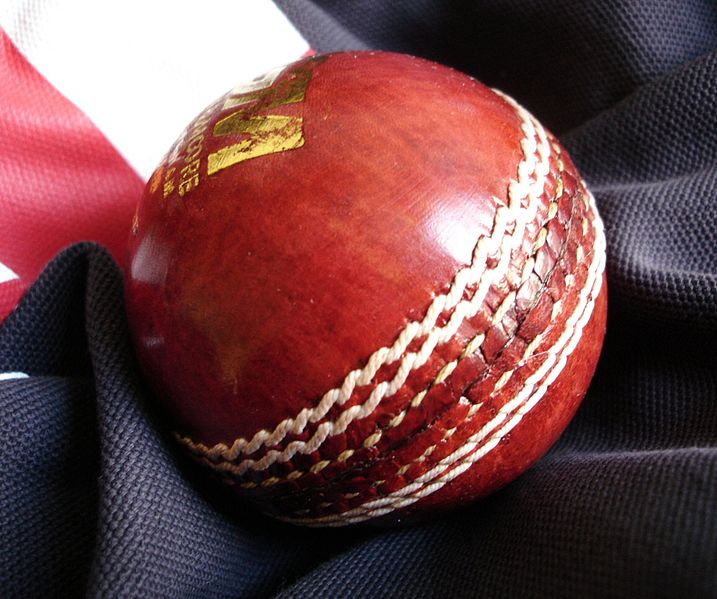
Just Not Cricket – Salmonella

The Mercury

HEALTH officials are still trying to work out the source of the salmonella infection that has hospitalised four Tasmanian cricketers and an umpire.

The Tigers suspect food they ate in Adelaide on the final day of their Sheffield Shield match against South Australia last Friday was the mostly likely source of the poisoning.

But South Australia officials deny they are responsible.

CDC Report – Firemen – Cow Barn Fire – Cryptosporidium

CDC

On June 20, 2011, the Indiana Department of Homeland Security notified the Indiana State Department of Health (ISDH) of an Indiana fire station that reported gastrointestinal illness among a substantial percentage of their workers, causing missed workdays and one hospitalization as a result of cryptosporidiosis. All ill firefighters had responded to a barn fire in Michigan, 15 miles from the Michigan-Indiana border on June 6.

On June 6, 2011, a fire occurred in a barn housing approximately 240 week-old calves. A total of 34 firefighters responded from three Michigan fire stations and one Indiana fire station. Local hydrant water and on site swimming pond water were used to extinguish the fire. Investigators hypothesized that exposures to calves or contaminated drinking water were potential infection sources.

The incident was investigated with the following findings, the following public health recommendations were issued: 1) discontinue swimming in the pond, 2) practice thorough hygiene to reduce fecal contamination and fecal-oral exposures, and 3) decontaminate firefighting equipment properly. No additional primary or secondary cases associated with this exposure have been reported. The findings highlight a novel work-related disease exposure for firefighters and the need for public education regarding cryptosporidiosis prevention.


Predictive Modelling Software Study for Food Shelf Life

TTZ 

The SOPHY project aims to develop a web-based software tool for prediction of product safety, quality and shelf life of ready-to-eat products. Fresh cut salads and deli salads were chosen as model food system. Food producers will be able to optimise their raw material selection, product formulation and processing steps virtually.

As many of you are aware I am not a great fan of predictive modelling but we will have to wait and see if this tool when fully developed will be different. I think that there are just too many parameters that change within a complex food product due to homogeneity of ingredients or constituents, bacterialhomogeneity and changes to the product through shelf life caused by chemical and microbiological actions.