Category Archives: E.coli O157

Canada – Recall Beef Burger – E.coli O157

CFIAE__Coli_0157

The public warning issued on October 2, 2013 has been updated to include additional products.

The Canadian Food Inspection Agency (CFIA) and Belmont Meats Ltd. (Est. 112) are warning the public not to consume the beef burgers described in the link above because they may be contaminated with E. coli O157:H7.

This recall is the result of an ongoing food safety investigation initiated as a result of a recent outbreak investigation. There may be recalls of additional products or best before dates as the food safety investigation at this facility continues.

The manufacturer, Belmont Meats Ltd., Toronto, Ontario, is voluntarily recalling all affected products from the marketplace. The CFIA is monitoring the effectiveness of the recall.

Canada – Recall Beef burgers – E.coli O157

CFIACIFA

The Canadian Food Inspection Agency (CFIA) and Belmont Meats Ltd. (Est. 112) are warning the public not to consume certain Compliments brand Super 8 Beef Burgers described below because they may be contaminated with E. coli O157:H7.

This recall is the result of an ongoing food safety investigation initiated as a result of a recent outbreak investigation. There may be recalls of additional products or best before dates as the food safety investigation at this facility continues.

This product has been distributed in Ontario, New Brunswick, Nova Scotia, Prince Edward Island, and Newfoundland and Labrador in Sobeys banner stores, which might include Sobeys, Foodland, FreshCo, and Price Chopper.

There have been reported illnesses associated with the consumption of this product.

The manufacturer, Belmont Meats Ltd., Toronto, Ontario, is voluntarily recalling all affected product from the marketplace. The CFIA is monitoring the effectiveness of the recall.

Canada – E.coli O157 in Cheese Update

Food Poisoning Bulletin

The Public Health Agency of Canada says that now fourteen cases of E. coli O157:H7 are associated with contaminated raw milk cheese products manufactured by Gort’s Gouda Cheese Farm in Salmon Arm, British Columbia. There are four people who are ill in British Columbia; eight in Alberta; one in Saskatchewan; and one in Quebec. One person in British Columbia has died as a result of this infection.

Ill persons started getting sick between mid-July and early September. Some of Gort’s raw milk cheeses have been recalled as a result of this outbreak. The statement said that “there is currently no indication of widespread risk to Canadians. However, E. coli O157:H7 can pose a serious public health risk. Additional cases of illness may be identified and linked to this outbreak in the future.”

Canada – Gouda Cheese Updates – E.coli O157

CFIA

Ottawa, September 19, 2013 – The public warning issued on September 17, 2013 has been updated to include an additional product.

The Canadian Food Inspection Agency (CFIA) and Gort’s Gouda Cheese Farm (EST 4478) are warning the public not to consume the Mild Gouda Cheese described below because it may be contaminated with E. coli O157:H7.

This recall is the result of an ongoing food safety investigation initiated as a result of a recent outbreak investigation. There may be recalls of additional products as the investigation at this facility continues.

Lot codes 122 to 138 are affected by this recall.

Some product packages may not bear a lot code or indicate that the cheese was made with raw milk. This product may also have been sold clerk-served from deli counters with or without a label or coding. Consumers who are unsure if they have purchased the affected product are advised to contact their retailer.

There have been reported illnesses associated with the consumption of this product.

The manufacturer, Gort’s Gouda Cheese Farm, Salmon Arm, BC is voluntarily recalling the affected product from the marketplace. The CFIA is monitoring the effectiveness of the recall.

Food Safety News

The outbreak of E. coli linked to Gort’s Gouda Cheese Farm in Canada has resulted in one death, as well as 10 confirmed and six suspected illnesses, according to the Public Health Agency of Canada.

The victim who died was from British Columbia. Three more B.C. residents fell ill, while the other seven cases are in Alberta. The agency is investigating another six illnesses that appear to be connected.

Research – Cattle – Vacination and E.coli O157

Trading.comEcoli Istock

The bacteria, which cause severe gastrointestinal illness and even death in humans, are spread by consuming contaminated food and water, or by contact with livestock faeces in the environment. Cattle are the main reservoir for the bacterium. The vaccines that are available for cattle are rarely used, but the latest study suggests the public health benefits could be significant.

The research was lead by a team of researchers at the University of Glasgow in collaboration with the University of Edinburgh, the Royal Veterinary College, Scotland’s Rural College, Health Protection Scotland, and the Scottish E. coli O157/VTEC Reference Laboratory.

The study, published in the online journal PNAS, used veterinary, human and molecular data to examine the risks of E. coli O157 transmission from cattle to humans, and to estimate the impact of vaccinating cattle.

Canada – CFIA Recall Gouda Raw Milk Cheese – Possible E.coli O157

CFIAEurofins Food Testing UK

Ottawa, September 17, 2013 – The Canadian Food Inspection Agency (CFIA) and Gort’s Gouda Cheese Farm (EST 4478) are warning the public not to consume cheese products described below because they may be contaminated with E. coli O157:H7.

This recall is the result of an ongoing food safety investigation initiated as a result of a recent outbreak investigation. There may be recalls of additional products as the investigation at this facility continues.

All sizes of the raw milk cheeses listed in the link above are affected by this recall.

These affected products were sold at the manufacturer’s outlet, at retail stores in Alberta and British Columbia, and through internet sale from May 27 to September 14, 2013, inclusive.

Lot codes 122 to 138 are affected by this recall.

Some product packages may not bear a lot code or indicate that the cheese was made with raw milk.  These products were also sold clerk-served from deli counters with or without a label or coding.  Consumers who are unsure if they have purchased the affected product are advised to contact their retailer.

There have been reported illnesses associated with the consumption of these products.

The manufacturer, Gort’s Gouda Cheese Farm, Salmon Arm, BC is voluntarily recalling the affected products from the marketplace.  The CFIA is monitoring the effectiveness of the recall.

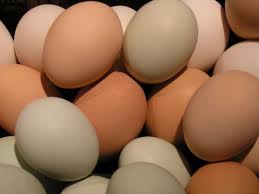
Research – Effect of Pickling on Pathogens in Hard Boiled Eggs

Journal of Food BiochemistryEGGS

Traditional methods of food preservation, such as pickling, have reemerged as popular approaches for home and commercial food processing. The process of pickling hard-cooked eggs (HCE) can be an effective method of preventing the growth and survival of pathogenic microorganisms. Because of the variety of pickling processes, HCE manufacturers must validate their pickling process for Food and Drug Administration (FDA) approval and demonstrate 5-log reductions of pathogens associated with the product. In this study, a rapid one-step pickling process was evaluated for its ability to reduce Salmonella spp., Listeria monocytogenes, Staphylococcus aureus and Escherichia coli O157:H7 inoculated onto HCE for 14 days at room temperature. All pathogens inoculated onto HCE were reduced by (>5.0 logs) within 24 h and were undetectable following enrichment. The data obtained in this study may be of interest to regulatory officials and processors of HCE seeking pathogen reduction validation for their products.

USA – Beef Products Recall – E.coli O157

Food Safety News

A Dodge City, KS, beef packer has recalled about 700 pounds of beef tongue root filet products for potential E. coli O157:H7 contamination, the U.S. Department of Agriculture’s Food Safety and Inspection Service announced late Thursday.

National Beef Packing Co. produced the products on Aug. 19, which were then shipped to a distributor in Amarillo, TX, for further processing.

UK – FSA Recall Watercress E.coli O157

FSA

Sainsbury’s is recalling all of its bagged watercress and salads containing watercress as a precautionary measure, due to a possible association with an outbreak of E.coli O157 that has made 15 people ill.

USA – Beef Recall – E.coli O157

E.coli BlogEcoli Istock

National Beef Packing Company, a Liberal, Kan., firm, is recalling approximately 50,100 pounds of ground beef products that may be contaminated with E. coli O157:H7, the U.S. Department of Agriculture’s Food Safety and Inspection Service (FSIS) announced today.

The following products are subject to recall:

  • 10 lb. chub of “National Beef” 93/ 7 Fine Ground Beef, Product Code 0707
  • 10 lb. chub of “NatureSource” 80/20 Fine Ground Chuck, Product Code 7031
  • 10 lb. chub of “NatureSource” 85/15 Fine Ground Beef, Product Code 7054
  • 10 lb. chub of “NatureSource” 90/10 Fine Ground Beef, Product Code 7344
  • 10 lb. chub of “NatureSource” 93/ 7 Fine Ground Beef, Product Code 7004
  • 10 lb. chub of “NatureWell 80/20 Fine Ground Chuck, Product Code 7484
  • 10 lb. chub of “NatureWell” 85/15 Fine Ground Beef, Product Code 7454
  • 10 lb. chub of “NatureWell” 90/10 Fine Ground Sirloin, Product Code 7577
  • 10 lb. chub of “NatureWell” 93/7 Fine Ground Beef, Product Code 7404

All these products bear the establishment number “EST. 208A” inside the USDA mark of inspection. The products were produced on July 18, 2013 and were shipped in 40 to 60 pound cases to retailers, wholesalers, and food service distributors nationwide.

The problem was discovered through routine FSIS monitoring which confirmed a positive result for E. coli O157:H7. An investigation determined National Beef Packing Co. was the sole supplier of the source materials used to produce the positive product. FSIS and the company have received no reports of illnesses associated with consumption of these products.  Individuals concerned about an illness should contact a healthcare provider.