Category Archives: Contaminated water

USA – YMCA Hot Tub in Waco, Texas Investigated In Legionnaires’ Disease Outbreak

Outbreak News Today

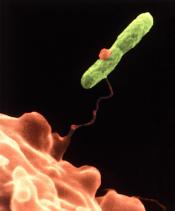
legionellac

Image CDC


Two people in Waco have been diagnosed with Legionnaires’ disease after using a local YMCA’s hot tub. The Waco-McClennan County Health District is investigating the Waco Family YMCA located at 6800 Harvey Rd., Waco, Texas. The hot tub is expected to be closed for the next few weeks, while the water undergoes testing for Legionella bacteria.

Rodney Martin, CEO of YMCA of Central Texas, stated, “Exposure to the Legionella bacteria may have occurred at the Waco Family YMCA.  Hot tubs specifically are a potential source and in both instances there was exposure in the hot tub area.”

USA – Legionnaires’ disease cases linked to Crookston, MN hotel

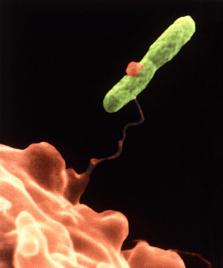
Outbreak News Today Legionella A

Minnesota health officials report investigating four recent cases of Legionnaires’ disease associated with a Crookston area hotel.

Four people who became ill between Jan. 22 and Jan. 27 all reported spending some time at the Crookston Inn and Convention Center prior to their illnesses. None of the ill people were overnight guests at the hotel, but all visited the hotel for various occasions.

USA – Legionnaires’ disease cluster reported in Brooke County, WV

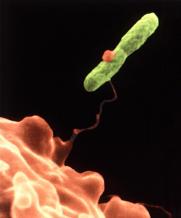
Outbreak News Today legionellac

Brooke County, WV health officials report investigating a cluster of six Legionnaires’ disease cases. At this time, there is no link to any of the cases as a common source or location.

Legionellosis is a bacterial disease of the lungs caused by Legionella pneumophila. The disease can range from a mild respiratory illness to severe pneumonia and death. The most common form of legionellosis is known as “Legionnaires’ disease,” named after an outbreak in 1976 when many people who attended an American Legion conference in Philadelphia became ill.

Most people contract the disease by inhaling mist or vapour from a water source contaminated with the bacteria.   The disease is not contracted by drinking contaminated water, and person-to-person spread of legionellosis does not occur.

Europe – Legionnaires’ disease – Annual Epidemiological Report for 2017

ECDC

Publication series: Annual Epidemiological Report on Communicable Diseases in Europe
Time period covered: This report is based on data for 2017 retrieved from The European Surveillance System (TESSy) on 13 July 2018.

Europe -Cryptosporidiosis – Annual Epidemiological Report for 2016

ECDC

Publication series: Annual Epidemiological Report on Communicable Diseases in Europe

Time period covered: This report is based on data for 2016 retrieved from The European Surveillance System (TESSy) on 15 March 2018. 

USA – Illinois: Another Legionnaires’ disease cluster reported

Outbreak News Today


legionellacIn a follow-up to the recent Legionnaires’ disease clusters in Illinois, state and county health officials are investigating a cluster of three cases at McHenry Villa, an independent senior living community.

Public health officials confirmed the third case this week. McHenry Villa is notifying residents, the residents’ identified contact, and staff.  All three cases had outside exposures, and two of the cases had potential exposures at Centegra Hospital-McHenry.  Public health officials will continue to investigate any other potential sources.

Information – How Many Legionella Species Exist & Which Ones Cause Legionnaires’ Disease?

Legionella Control Legionella A

While there are more than 50 different recognised Legionella species, less than half of those can cause illness in humans. However, while around 20 species are known to be harmful to us, just one has been identified as the cause of most outbreaks of Legionnaires’ disease. Read further at the link above.

Information – How Temperature Influences Legionella Growth

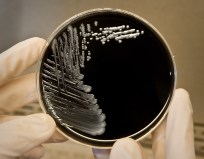
Legionella Control Legionella_Plate_01

In this review the experts at Legionella Control International look at how water temperatures influence legionella growth and how this information can be used to control the risks from the bacteria.

Under certain circumstances Legionella bacteria can lead to serious illness and fatalities in humans. Since Legionella bacteria can exist in man-made water systems, it is imperative to ensure the water is stored, maintained and distributed at temperatures that do not encourage the growth and spread of the bacteria.

There are three temperature ranges that have an influence on the growth and proliferation of Legionella bacteria. Read at the link below.

USA – Flooding from Hurricane Michael creates food safety issues across South

Food Safety News

Strong winds and heavy rain continue to wreak havoc across parts of the South today as Hurricane Michael meanders out of Georgia and heads up the mid-Atlantic Coast.

In addition to the devastating damage that is immediately visible today, less obvious hazards in the wake of the massive storm are expected to last weeks. Food safety dangers come in various forms and can cause severe illnesses and deaths as floodwaters recede.

Among the most vulnerable foods are fresh fruits and vegetables. They are breeding grounds for pathogens when power outages cause the loss of refrigeration and temperature control. Fresh produce that comes into contact with floodwater can be instantly contaminated with a wide range of bacteria, viruses and parasites.

The toxic composition of floodwater is such a serious food safety hazard that federal law prohibits the sale, distribution or donation of any produce or other food crops from fields that are flooded. Special inspections are required before such crops can even be used for animal feed. 

USA Today

Hurricane Michael leaves behind a treacherous, dangerous landscape that will likely pose risks to human health for weeks to come, experts say.

The water itself can carry bacteria and viruses that pose a major health hazard.

Among the medical dangers are cholera, Hepatitis A and vibriosis, said Dr. Robert Glatter, an emergency room physician at Lenox Hill Hospital in New York City. Glatter said storm victims need to stay focused on staying healthy while they await recovery efforts. That may mean not rushing outside as soon as the skies clear.

“Don’t panic— try to take things one step at a time when you feel overwhelmed,” he said.

Zimbabwe – 20 dead, 2,300 suspected cases as Zimbabwe cholera outbreak spreads

Outbreak News Today 

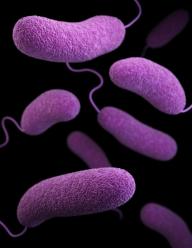
CDC Vibrio

The Zimbabwean Ministry of Health and Child care has declared the ongoing cholera outbreak in the capital Harare a state of national emergency as the death toll rose to 20.

Over 2,300 suspected cases have been reported in Harare since the outbreak was confirmed on September 1. The number of infected is expected to rise countrywide following the confirmation of several new cases and at least one death in four other provinces outside the capital.

Health and Child Care Minister Dr Obadiah Moyo said all the new cases reported in Masvingo, Manicaland, Midlands and Mashonaland Central provinces have been traced back to the outbreak in Harare.

“We are declaring a cholera emergency for Harare. This will enable us to contain cholera and typhoid in the city as quickly as possible. We do not want further deaths, and if we do not create this disaster emergency situation, we will continue losing lives,” he said.

Dr Moyo blamed the Harare City Council for triggering the cholera outbreak by neglecting burst sewerage reticulation pipes over the past two months, leading to faecal contamination of underground water sources.