Category Archives: Contaminated water

Europe – Giardiasis (lambliasis) – Annual Epidemiological Report for 2017

ECDC

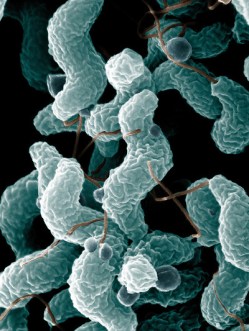
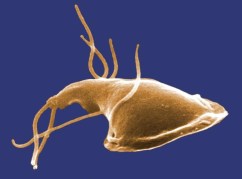
CDC Giardia2

Image CDC

Key facts
• In 2017, 19 437 confirmed giardiasis cases were reported in the EU/EEA.
• The EU/EEA notification rate was 5.5 cases per 100 000 population. The highest notification rates were reported in Belgium, Estonia and Sweden.
• The highest notification rate per 100 000 was observed in the age group 0–4 years (17.6 for males and 14.9 for females).
• While the EU/EEA notification rate was stable during the period 2013–2017, the annual number of cases has increased steadily.
Report Download


Norway – Norway officials trying to ID water contamination source – Campylobacter

NF Chronicle

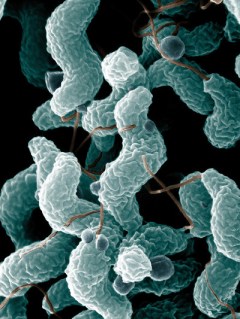
Campylobacter

Image CDC

COPENHAGEN, Denmark (AP) — Norwegian authorities said Tuesday they were trying to identify the source of water contamination that has sent dozens of people in southern Norway to the hospital.

Since Thursday, 55 people — including 13 children — from Askoey, an island north of Bergen, have been hospitalized following the contamination. All have been discharged. Norwegian news agency NTB reported that in all, some 2,000 people had fallen sick.

A 1-year-old child on the island died last week of an infection in the digestive tract, but it was not clear whether it was linked to the contamination.

He said tests showed that the bacteria Campylobacter has been found in 36 cases.

USA – NYC officials advise providers to look out for Legionnaires’ disease

Outbreak News Today

Legionella A

Image CDC

New York City health officials are advising providers to test for Legionella in adults with pneumonia, particularly patients who are > 50 years or have lung disease, immune-suppression, or a history of smoking.

Legionnaires’ disease follows a seasonal pattern in New York City, with an increased number of cases
reported from June to October each year.  NYC sees between 200 and 500 cases of Legionnaires’ disease each year.

While it remains a relatively rare infection, the rate of Legionnaires’ disease is increasing significantly in NYC. From 2007-2017, there was an 8.1% average increase in the rate of Legionnaires’ disease cases citywide each year.

The rate of Legionnaires’ disease increased significantly in all boroughs and demographic groups over this period.

Research – Is Climate Change Increasing Cases of Legionnaires’ Disease?

Legionella Control Legionella_Plate_01

Is climate change increasing cases of Legionnaires’ disease?

It’s a matter of record that our planet’s climate has changed almost continually throughout its history.

It would therefore be foolhardy to assume it would remain identical to the position it was in millions of years ago.

However, most of the climate changes seen in the past have been caused by natural events; that is, changes that have occurred due to factors outside of our control.

A good example would be the earth’s orbit making marginal changes, changes that have influenced the climate on our planet.

However, we have seen these gradual trends change in the last century or so.

Research – Hot Tubs Caused Legionnaires Outbreak of 1999 Killing At Least 32

Legionella Control

One of the largest recorded outbreaks of Legionnaires’ disease

An outbreak of Legionnaires’ disease can affect many people, depending on the circumstances and how long it takes for the outbreak to be discovered. One of the largest ever known outbreaks of the disease to date took place in the Netherlands in 1999. It was named after the town in which it occurred, Bovenkarspel in Northern Holland.

The outbreak began on 25th February that year, in the middle of the Westfriese Flora, which was later renamed as the Holland Flowers Festival. The exhibition took place indoors and attracted many hundreds of visitors. The festival ended on 28th of that month, although it would not be known for some days that anything was amiss.

Belgium – 16 people sickened with Legionnaires’ disease, one dead in East Flanders

Outbreak News Today Legionella_Plate_01

At least 16 people in the Evergem municipality of East Flanders province in northern Belgium has been sickened with Legionanaires’ disease, according to the Flemish Agency for Health and Safety (computer translated).

In addition, one patient has died while being treated at Ghent University Hospital. The first complaints from patients date from the period between April 29 and May 6. the most recent patients presented with illness between 7 and 10 May.

USA – Legionnaires’ Disease Outbreak Linked to Christmas Mountain Resort

Outbreak News Today Legionella_Plate_01

Three people have been diagnosed with Legionnaires’ disease and one person has died following stays at the Christmas Mountain Resort in Wisconsin Dell. At this time, the local health authorities are investigating the outbreak.

As the investigation unfolds, a representative for the resort told the local media that some of their accommodations did indeed have Legionella present. “After testing, we found that the water supply in certain units had been affected and, subsequently, tested positive for the bacteria,” the spokeswoman said. The resort claims to be telling prospective guests about the disease, but thus far denies that the confirmed illnesses occurred on their property – despite the fact that all of those who are ill stayed at the resort within 2 weeks of their illnesses.

USA – New Dates For Implementing Agricultural Water Produce Safety

Food Poisoning Bulletin Eurofins Food Testing UK

FDA’s Commissioner Dr. Scott Gottlieb and Deputy Commissioner Frank Yiannas have addressed advancing new tools and science for produce safety via agricultural water, and have set new dates for implementation. The two E. coli O157:H7 outbreaks that were linked to romaine lettuce in 2018 were allegedly caused by contaminated agricultural water.

USA – Campylobacter Outbreak in 2017 Associated with Well Water Supply in Nebraska

Food Poisoning Bulletin

The February 22, 2019 issue of the CDC’s Morbidity and Morftality Weekly Report had a study about a Campylobacter outbreak in 2017 that was associated with the municipal water supply in Nebraska. At least 39 people were sickened after they drank untreated city water. The city was not named, just called “City A.”

Apparently, a center pivot irrigation system, that was supposed to pump livestock waste into farmland malfunctioned. Runoff collected in a road ditch near two wells that fed the water supply.

There were 33 probable and 6 confirmed cases in this outbreak. Untreated unboiled city A tap water was the only exposure that was significantly associated with illness.

The city is served by four untreated wells and an interconnected distribution system. After the wells were removed from service, no further illnesses were reported.

USA – Campylobacteriosis Outbreak Associated with Contaminated Municipal Water Supply — Nebraska, 2017

CDC

Campylobacter

Image CDC

In March 2017, the Nebraska Department of Health and Human Services (NDHHS) and the Southwest Nebraska Public Health Department were notified of an apparent cluster of Campylobacter jejuni infections in city A and initiated an investigation. Overall, 39 cases were investigated, including six confirmed and 33 probable. Untreated, unboiled city A tap water (i.e., well water) was the only exposure significantly associated with illness (odds ratio [OR] = 7.84; 95% confidence interval [CI] = 1.69–36.36). City A is served by four untreated wells and an interconnected distribution system. Onsite investigations identified that a center pivot irrigation system intended to pump livestock wastewater from a nearby concentrated animal feeding operation onto adjacent farmland had malfunctioned, allowing excessive runoff to collect in a road ditch near two wells that supplied water to the city. These wells were promptly removed from service, after which no subsequent cases occurred. This coordinated response rapidly identified an important risk to city A’s municipal water supply and provided the evidence needed to decommission the affected wells, with plans to build a new well to safely serve this community.