Category Archives: Bacteria

US Salted Peanut Butter – Salmonella

Food Poisoning Journal

According to a press release, the Pennsylvania Department of Health today advised consumers that Trader Joe’s Valencia Creamy Salted Peanut Butter made with sea salt may be related to a multi-state outbreak of Salmonella.  The department is working with the Centers for Disease Control and Prevention and public health officials in several states to investigate the outbreak. Nationally, there have been 29 cases of illness with two cases reported in Pennsylvania.

Trader Joe’s has voluntarily removed the product for sale from its stores; however, consumers who have the product in their homes should discard it and should also be aware that this product is sold online through other retail outlets

Another UK Petting Farm – E.coli O157 Incident

BBC News

Health officials are investigating an outbreak of E. coli O157 which may be linked to a petting farm in Brecon.

Two children from Ceredigion and Kent who visited Cantref Adventure Farm have been affected by the bug and are recovering at home.

Two family members of one of the infected children have also tested positive.

A farm spokesperson said direct contact between animals and the public at the farm had been stopped as a precaution.

One of the infected family members is believed to have contracted the illness through contact with the child.

On-going Problem Salmonella and Small Pet Turtles

CDC

A total of 196 persons infected with outbreak strains of Salmonella Sandiego, Salmonella Pomona, and Salmonella Poona have been reported from 31 states.

  • 36 ill persons have been hospitalised, and no deaths have been reported.
  • 63% of ill persons are children 10 years of age or younger, and 29% of ill persons are children 1 year of age or younger.
  • 55% of ill persons are of Hispanic ethnicity. Information about the association between reptiles and Salmonella is now available in Spanish.

Vietnam Bean Sprout Warning

Vietnam News

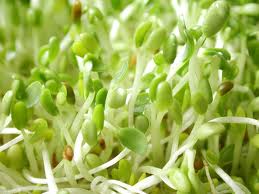
HA NOI (VNS)— Up to 40 per cent of tested bean sprout samples sold in Ha Noi’s markets are infected with harmful bacteria, including E.coli, prompting national food safety officials to call for tightened controls on raw vegetables.

Head of the Plant Protection Department Nguyen Xuan Hong announced the result at a meeting yesterday following a test conducted on 50 bean sprout samples to check their Arsenic and bacteria levels.

Hong said the test proved the samples were safe from metalloid, but the high amount of micro-organisms on the product raised concern.

The micro-organisms, namely E.coli, Salmonella and Listeria, were found to be at an unsafe lavel for raw vegetables, which can lead to food poisoning.

RASFF Alerts – Salmonella, Listeria, Coliforms

RASFF – Salmonella in Chicken Breast Fillets in Denmark sourced in Poland

RASFF – High Coliforms in Chilled Mussels in Netherlands sourced in Denmark

RASFF – Salmonella in Pet Food in Belgium

RASFF – Listeria in Herring Fillets in Poland

FDA Reort Multi State Outbreak of Listeria monocytogenes in Cheese

FDA

The FDA, the Centers for Disease Control and Prevention and state and local public health officials are investigating a multi-state outbreak of Listeria monocytogenes infections linked to imported Marte brand Frescolina Ricotta Salata cheese distributed by Forever Cheese Inc. of Long Island City, New York. 

Forever Cheese has initiated a voluntary recall of this cheese which may be identified with a lot number (T9425) and/ or a production code (441202).
 

The FDA has placed the maker of the recalled cheese,Fattorie Chiarappa S.R.L.of Conversano, Italy, on Import Alert1. This means that Fattorie Chiarappa cheese will be denied admission into the United States unless the importer shows that the cheese is not contaminated with Listeria monocytogenes, such as by using private laboratories to test the cheese.

The Centers for Disease Control and Prevention (CDC) reports a total of 14 people infected with the outbreak strain of Listeria monocytogenes from 11 states and the District of Columbia. Nationwide, 14 persons have been hospitalized. Three deaths have been reported. The CDC2 says that listeriosis contributed to at least one of those deaths. 

 The investigation into this outbreak continues, in order to determine whether there are other possible sources of the outbreak.

US Chicken Product Recall – Listeria monocytogenes

Listeria Blog

Lunds and Byerly’s have recalled some chicken products because of a potential for contamination with a dangerous strain of listeria, the grocery chain reported Thursday.

Listeria monocytoges was found in a recent supply of poultry used to make marinated chicken breasts, chicken kabobs and chicken meal kits, prompting the grocery chain to alert the Minnesota Department of Agriculture.

The recall is strictly a cautionary measure, the company said. No illnesses have been reported.

FSANZ – Call for Submissions on Listeria monocytogenes in RTE

FSANZ

Food Standards Australia New Zealand (FSANZ) today called for submissions on a proposal to review existing limits for Listeria monocytogenes  in the Food Standards Code.

FSANZ Chief Executive Officer Steve McCutcheon said that since the limits were first set, preventative food safety requirements had been introduced and new limits had been established internationally.

“These changes mean it’s time for FSANZ to review the limits in the code to ensure we are providing a nationally consistent approach and where possible, harmonising our standards with those set by international standard-setting bodies,” Mr McCutcheon said.

“FSANZ is also exploring what tools would need to be developed to help industry and enforcement agencies apply any new approach.”

L. monocytogenes causes the serious illness, listeriosis, in some people. People particularly at risk of listeriosis include pregnant women, their unborn and newborn babies, the elderly, and other people whose immune systems have been weakened by illness or immuno-suppressant drugs.

The review of the limits for L. monocytogenes is the first stage of a broader review of microbiological limits in the Code.

The closing date for submissions on Proposal P1017 is 16 November 2012.

USDA – Recall Raw Boneless Beef Trim – E.coli O157

USDAE.coli O157

The U.S. Department of Agriculture’s Food Safety and Inspection Service (FSIS) is announcing a Public Health Alert for raw boneless beef trim products imported from Canada that may be contaminated with E. coli O157:H7.

FSA Scotland Food Survey Report

FSAS

The results from the analysis of food samples collected from Scottish businesses in 2011 have shown a slight increase in the levels of satisfactory samples in comparison with the previous year.

The report has shown that 80% of samples collected in 2011 by local authorities in Scotland and submitted to the UK Food Surveillance System (UKFSS) were satisfactory, a rise of 3% on 2010. Areas where improvements could be made in relation to food handling practices in retail and catering businesses were also identified in the report (see attached).

During 2011, almost 9,200 food samples were collected from Scottish businesses and analysed by the Public Analyst Laboratories in Scotland. More than 5,000 samples were examined microbiologically and a further 4,188 underwent chemical analysis, including tests for contaminants, additives and labelling inaccuracies.

As in previous years, the results of sampling in 2011 show that there were very few issues relating to foodborne pathogens (illness causing organisms). The majority of failures in microbiological testing (83%) were due to the elevated levels of hygiene indicators (bacteria that can be used as indicators of general hygiene practices in food premises) and total bacterial counts (total number of bacteria on a food sample). These are not inherently a hazard but can indicate poor hygiene practices during food preparation and handling.