Category Archives: antimicrobial resistance

Research – Occurrence, Antibiotic Resistance and Biofilm-Forming Ability of Listeria monocytogenes in Chicken Carcasses and Cuts

MDPI

A total of 104 samples of chicken meat acquired on the day of slaughter from two slaughterhouses in northwestern Spain were analyzed. These comprised 26 carcasses and 26 cuts from each of the two establishments. An average load of 5.39 ± 0.61 log10 cfu/g (total aerobic counts) and 4.90 ± 0.40 log10 cfu/g (psychrotrophic microorganisms) were obtained, with differences (p < 0.05) between types of samples and between slaughterhouses. Culturing methods involving isolation based on the UNE-EN-ISO 11290-1:2018 norm and identification of isolates by polymerase chain reaction (PCR) to detect the lmo1030 gene allowed the detection of Listeria monocytogenes in 75 samples (72.1% of the total; 50.0% of the carcasses and 94.2% of the cuts). The 75 isolates, one for each positive sample, were tested for resistance against a panel of 15 antibiotics of clinical interest by the disc diffusion method. All isolates belonged to the serogroup IIa (multiplex PCR assay) and showed resistance to between four and ten antibiotics, with an average value of 5.7 ± 2.0 resistances per isolate, this rising to 7.0 ± 2.1 when strains with resistance and reduced susceptibility were taken together. A high prevalence of resistance was observed for antibiotics belonging to the cephalosporin and quinolone families. However, the level of resistance was low for antibiotics commonly used to treat listeriosis (e.g., ampicillin or gentamicin). Nine different resistance patterns were noted. One isolate with each resistance pattern was tested for its ability to form biofilms on polystyrene during 72 h at 12 °C. The total biovolume of the biofilms registered through confocal laser scanning microscopy (CLSM) in the observation field of 16,078.24 μm2 ranged between 13,967.7 ± 9065.0 μm3 and 33,478.0 ± 23,874.1 μm3, and the biovolume of inactivated bacteria between 0.5 ± 0.4 μm3 and 179.1 ± 327.6 μm3. A direct relationship between the level of resistance to antibiotics and the ability of L. monocytogenes strains to form biofilms is suggested.
Research -Recent advances in the preservation effects of spice essential oils on fruits and vegetables

Science Direct

Abstract

Spice essential oils (SEOs) are currently a prominent area of investigation in food preservation due to their natural, effective, and environmentally friendly properties. This review discussed the latest research progress concerning the application of SEO in fruits and vegetables preservation. The article commenced with an overview of the sources of SEOs and their main components, explored their bioactivities, antimicrobial mechanisms, and the microencapsulation and nanotechnology utilizing spice essential oils. Further research explored the applications of SEOs in culinary, pharmaceuticals, cosmetics, agriculture, and food industries, with a focus on evaluating their effectiveness in extending the shelf-life of fruits and vegetables. Additionally, it discusses limitations such as intense aroma and toxicity concerns, while also outlining prospects for future research and applications in the food sector. Overall, SEOs offer promising avenues for effectively prolonging the storage period of post-harvested fruits and vegetables while maintaining their quality attributes.

Research – UK food microbiology lab reports updates on recent work

Food Safety News

The main food microbiology lab in the United Kingdom has shared highlights of its recent activity in an annual report.

The report covers work of the UK’s national reference laboratory (NRL) for food microbiology between April 2023 and March 2024.

The UK Health Security Agency (UKHSA) provides the service for the Food Standards Agency (FSA) and Food Standards Scotland (FSS). It covers Listeria monocytogenes, coagulase-positive staphylococci, E. coli, Campylobacter, Salmonella, and antimicrobial resistance.

Research – Lysin and Lytic Phages Reduce Vibrio Counts in Live Feed and Fish Larvae

MDPI

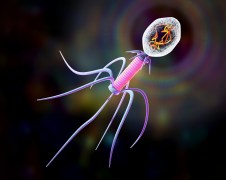
Bacteriophage on colorful background

Abstract

Vibrio species are naturally found in estuarine and marine ecosystems, but are also recognized as significant human enteropathogens, often linked to seafood-related illnesses. In aquaculture settings, Vibrio poses a substantial risk of infectious diseases, resulting in considerable stock losses and prompting the use of antimicrobials. However, this practice contributes to the proliferation of antimicrobial-resistant (AMR) bacteria and resistance genes. Our investigation aimed to explore the potential of biological agents such as bacteriophage CH20 and endolysin LysVPp1 in reducing Vibrio bacterial loads in both rotifer and fish larvae. LysVPp1’s lytic activity was assessed by measuring absorbance reduction against various pathogenic Vibrio strains. Phage CH20 exhibited a limited host range, affecting only Vibrio alginolyticus GV09, a highly pathogenic strain. Both CH20 and LysVPp1 were evaluated for their effectiveness in reducing Vibrio load in rotifers or fish larvae through short-setting bioassays. Our results demonstrated the significant lytic effect of endolysin LysVPp1 on strains of Vibrio alginolyticusVibrio parahaemolyticus, and Vibrio splendidus. Furthermore, we have showcased the feasibility of reducing the load of pathogenic Vibrio in live feed and fish larvae by using a non-antibiotic-based approach, such as lytic phage and endolysin LysVPp1, thus contributing to the progress of a sustainable aquaculture from a One Health perspective

Research – Biocontrol of multidrug resistant pathogens isolated from fish farms using silver nanoparticles combined with hydrogen peroxide insight to its modulatory effect

Nature

This study was divided into two parts. The first part involved the isolation, and detection of the prevalence and antimicrobial resistance profile of Aeromonas hydrophila, Pseudomonas aeruginosa, and Vibrio species from Nile tilapia fish and marine aquatic water. One hundred freshly dead Nile tilapia fish were collected from freshwater aquaculture fish farms located in Al-Abbassah district, Sharkia Governorate, and 100 samples of marine aquatic water were collected from fish farms in Port Said. The second part of the study focused on determining the in vitro inhibitory effect of dual-combination of AgNPs-H2O2 on bacterial growth and its down regulatory effect on crucial virulence factors using RT-PCR. The highest levels of A. hydrophila and P. aeruginosa were detected in 43%, and 34% of Nile tilapia fish samples, respectively. Meanwhile, the highest level of Vibrio species was found in 37% of marine water samples. Additionally, most of the isolated A. hydrophila, P. aeruginosa and Vibrio species exhibited a multi-drug resistance profile. The MIC and MBC results indicated a bactericidal effect of AgNPs-H2O2. Furthermore, a transcriptional modulation effect of AgNPs-H2O2 on the virulence-associated genes resulted in a significant down-regulation of aerA, exoU, and trh genes in A. hydrophila, P. aeruginosa, and Vibrio spp., respectively. The findings of this study suggest the effectiveness of AgNPs-H2O2 against drug resistant pathogens related to aquaculture.

Research – Prevalence, identification and antimicrobial resistance of Listeria monocytogenes and Listeria spp. isolated from poultry and pork meat

IFST

The aim of this work was to evaluate the prevalence of Listeria monocytogenes and other Listeria spp. in chicken, duck, quail, turkey and pork meat, including the antibiotic resistance of isolated strains. A total of 184 meat samples were collected from different retailers in La Rioja (Spain). The presence of Listeria spp. and L. monocytogenes were detected in 24.46% and 10.32% of the meat samples respectively. L. monocytogenes was the predominant Listeria spp. found in chicken, quail and pork meat, while L. innocua and L. welshimeri were the predominant species in duck and turkey meat respectively. A total of thirty-three strains (55.93%) of Listeria spp. were found to be multi-resistant (resistant to ≥3 families of antibiotics). The highest multi-resistant rates were observed in L. monocytogenes (73.68%) and L. innocua (70.59%), followed by L. ivanovii (50%). Resistance to ampicillin and trimethoprim–sulfamethoxazole were found in L. monocytogenes strains isolated from chicken, being of special concern, since these antibiotics are used in the treatment of listeriosis. Special measures should be taken to reduce meat contamination such as adequate handling, correct preparation (cooking) and cleaning and disinfection in order to avoid cross-contamination.

Research – Multistate nontyphoidal Salmonella and Shiga toxin-producing Escherichia coli outbreaks linked to international travel—United States, 2017–2020

Cambridge.org

Abstract

Enteric bacterial infections are common among people who travel internationally. During 2017–2020, the Centers for Disease Control and Prevention investigated 41 multistate outbreaks of nontyphoidal Salmonella and Shiga toxin-producing Escherichia coli linked to international travel. Resistance to one or more antimicrobial agents was detected in at least 10% of isolates in 16 of 30 (53%) nontyphoidal Salmonella outbreaks and 8 of 11 (73%) Shiga toxin-producing E. coli outbreaks evaluated by the National Antimicrobial Resistance Monitoring System. At least 10% of the isolates in 14 nontyphoidal Salmonella outbreaks conferred resistance to one or more of the clinically significant antimicrobials used in human medicine. This report describes the epidemiology and antimicrobial resistance patterns of these travel-associated multistate outbreaks. Investigating illnesses among returned travellers and collaboration with international partners could result in the implementation of public health interventions to improve hygiene practices and food safety standards and to prevent illness and spread of multidrug-resistant organisms domestically and internationally.

EU – Zoonoses, foodborne outbreaks and antimicrobial resistance guidance for reporting 2023 data

EFSA

This technical report provides guidance for reporting countries on how to submit their isolate-based quantitative antimicrobial resistance data, and data on the prevalence of zoonoses and microbiological agents and contaminants in food, food-borne outbreaks, animal populations and disease status. To collect these data, EFSA has created the Data Collection Framework (DCF) application. This report includes data dictionaries to guide the reporting of information derived from 2023 under Directive 2003/99/EC, Regulation (EU) 2017/625, Commission Implementing Regulation (EU) 2019/627 and Commission Implementing Decision (EU) 2020/1729. The objective is to explain in detail the individual data elements of the EFSA data models that are to be used for XML data submission through the DCF. In particular, it explains the data elements to be reported, including information about the data type, a reference to the list of permitted terms and any additional business rules or requirements that may apply.

Research – Antimicrobial Resistance in E. coli: A Growing Concern in Nile Tilapia Consumption

BNN Breaking

A recent study has found a high prevalence and alarming levels of antimicrobial resistance (AMR) in Escherichia coli (E. coli) found in Nile tilapia, a commonly consumed fish. The research analyzed 828 samples from different parts of the fish, including the flesh, liver, kidney, and intestine. Across the samples, high occurrences of fecal coliforms (61.6%) and E. coli (53.0%) were detected. The intestine samples showed the highest prevalence of E. coli at 71.4%, while the liver and kidney samples had a prevalence of 45.7%.

Research – Salmonella in horses at slaughter and public health effects in Italy

Science Direct

Abstract

The study assessed the role of equids at slaughter as faecal carriers of Salmonella enterica and the occurrence of contaminated equid carcasses during the slaughter process in Northern Italy (Emilia-Romagna Region). From June to November 2021, 152 equids (146 horses, 5 donkeys and 1 mule) were tested for Salmonella both in caecal contents and through carcass swabs. Antimicrobial resistance (AMR) of recovered strains was tested against 15 antimicrobials. Salmonella was detected in 3/152 of the caecal contents (2.0 %), while all carcass samples were negative. S. enterica serovars Enteriditis, Typhimurium and Stanleyville were identified. The only AMR isolate was S. Typhimurium with AMR profile AmCStxT.

Considering the consumption of raw horse meat (i.e., minced raw meat named “pesto di cavallo” and dried and smoked strips named “sfilacci di cavallo”) in different areas of Northern Italy, we also investigated the possible link between horse meat eating and salmonellosis cases in the human population in the same area. Specifically, we compared the Salmonella strains collected during the study with those routinely processed in the laboratory surveillance system for human salmonellosis in Emilia-Romagna (a region with about 4.5 million inhabitants). The comparison was based on whole genome sequencing data through core genome multi-locus sequence typing (cgMLST) used in routine surveillance. A genomic match in cgMLST was found between the strain of S. enterica serovar Enteritidis isolated from a horse caecal content and an enduring outbreak of 17 human cases in Emilia-Romagna during the study period. The consequent epidemiological investigation highlighted that a number of cases with known food history reported the consumption of horse meat and traced different batches of the consumed meat, released weeks apart from each other, to the slaughter investigated in the study. The results of the epidemiological investigation suggested the role of horses in the S. enterica serovar Enteritidis outbreak affecting raw horse meat consumers.

This study shows that, despite the low prevalence on equid carcasses, S. enterica in horse meat can represent a risk to consumers. From the perspective of the slaughter activities, this highlights the need to maintain a high level of hygiene during the entire process, starting from the hygiene at lairage up to the slaughtering phase and dressing of carcasses.