Category Archives: Antibiotic Resistance

Research – Study: Low-level antibiotics can produce high-level resistance

CIDRAP kswfoodworld Salmonella

A new study by scientists in Sweden indicates that bacteria exposed to small concentrations of antibiotics over time can become highly resistant, a finding the authors say provides an example of how low levels of antibiotics present in many environments may potentially contribute to antibiotic resistance.

In the study, published this week in Nature Communications, researchers from Uppsala University demonstrated that Salmonella exposed repeatedly to an amount of streptomycin that was not strong enough to kill the bacteria or inhibit growth still evolved high-level resistance. The resistance was caused by genetic mutations that haven’t been typically associated with antibiotic resistance and were different from those that develop when the bacteria is exposed to lethal amounts of the drug.

“These results demonstrate how the strength of the selective pressure influences evolutionary trajectories and that even weak selective pressures can cause evolution of high-level resistance,” the authors write.


Research – A macromolecular approach to eradicate multidrug resistant bacterial infections while mitigating drug resistance onset

Nature 


Polymyxins remain the last line treatment for multidrug-resistant (MDR) infections. As polymyxins resistance emerges, there is an urgent need to develop effective antimicrobial agents capable of mitigating MDR. Here, we report biodegradable guanidinium-functionalized polycarbonates with a distinctive mechanism that does not induce drug resistance. Unlike conventional antibiotics, repeated use of the polymers does not lead to drug resistance. Transcriptomic analysis of bacteria further supports development of resistance to antibiotics but not to the macromolecules after 30 treatments. Importantly, high in vivo treatment efficacy of the macromolecules is achieved in MDR A. baumannii-, E. coli-, K. pneumoniae-, methicillin-resistant S. aureus-, cecal ligation and puncture-induced polymicrobial peritonitis, and P. aeruginosa lung infection mouse models while remaining non-toxic (e.g., therapeutic index—ED50/LD50: 1473 for A. baumannii infection). These biodegradable synthetic macromolecules have been demonstrated to have broad spectrum in vivo antimicrobial activity, and have excellent potential as systemic antimicrobials against MDR infections.

Research – Staphylococcus aureus gene involved in virulence, biofilm formation and resistance to certain antibiotics: Study

Outbreak News Today Staph

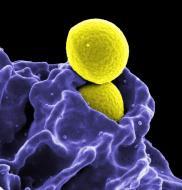
An Institut Pasteur-CNRS research team has characterized a Staphylococcus aureus gene involved in virulence, biofilm formation and resistance to certain antibiotics. These results open up new avenues for understanding the control of S. aureus virulence mechanisms. This work was recently published in the journal PLoS Pathogens.

Staphylococcus aureus is part of the natural skin flora, preferentially colonizing external mucosa in 30 to 50% of the population, healthy carriers who develop no symptoms. But it is also a major human pathogen, causing diseases ranging from skin lesions (boils, impetigo, etc.) to endocarditis, acute pneumonia, osteomyelitis or sepsis. It is the leading Gram-positive bacterium responsible for nosocomial infections (hospital acquired infections). The most dangerous strains are those that display resistance to multiple antibiotics. This is the case of MRSA, resistant to Methicillin, widespread in hospitals and posing a major public health concern.

Research – Staphylococcus aureus: A new mechanism involved in virulence and antibiotic resistance

Science Daily 


An Institut Pasteur-CNRS research team has characterized a Staphylococcus aureus gene involved in virulence, biofilm formation and resistance to certain antibiotics. These results open up new avenues for understanding the control of S. aureus virulence mechanisms. This work was recently published in the journal PLoS Pathogens.

Staphylococcus aureus is part of the natural skin flora, preferentially colonizing external mucosa in 30 to 50% of the population, healthy carriers who develop no symptoms. But it is also a major human pathogen, causing diseases ranging from skin lesions (boils, impetigo, etc.) to endocarditis, acute pneumonia, osteomyelitis or sepsis. It is the leading Gram-positive bacterium responsible for nosocomial infections (hospital acquired infections). The most dangerous strains are those that display resistance to multiple antibiotics. This is the case of MRSA[1], resistant to Meticillin, widespread in hospitals and posing a major public health concern.

UK -Global antibiotic consumption soars feeding spread of UK ‘super-bugs’

The Telegraph 


Drug-resistant superbugs are rising in the UK because of lack of regulation of antibiotics in developing countries, experts have warned.

One of the biggest studies of antibiotic use around the world has established that while antibiotic use in Britain has slowed, global consumption jumped by 65 percent, to 34.8 billion daily doses between 2000 and 2015.

The analysis, led by the Center for Disease Dynamics, Economics & Policy (CDDEP) in Washington DC, found the rise is being driven by skyrocketing use in low to middle income countries such as India, China and Turkey where consumption was up by 114%.

Europe – European surveillance shows high levels of drug resistance in zoonotic bacteria

CIDRAP

A surveillance report today from European health and food safety agencies indicates that antibiotic resistance in zoonotic bacteria from humans, food, and animals on the continent remains at high levels, with notable levels of multidrug resistance in two common causes of foodborne illness in humans.

The report is based on 2016 data provided by 28 EU member states and jointly analyzed by the European Centre for Disease Prevention and Control (ECDC) and the European Food Safety Authority (EFSA). It addresses resistance in bacterial isolates of zoonotic Salmonella and Campylobacter from humans, food, and poultry, along with resistance levels and mechanisms in indicator Escherichia coli and methicillin-resistant Staphylococcus aureus (MRSA) in animals and food.

Zoonotic bacteria are organisms that are transmissible between animals and humans, either through direct exposure or through consumption of contaminated meat. The ECDC and EFSA have been collecting and analyzing data submitted by EU countries on these bacteria to monitor for levels of antibiotic resistance since 2013.

Research – How Bacteria Survive Antibacterial Treatment

Science Directpseud
The mechanism by which some bacteria are able to survive antibacterial treatment has been revealed for the first time by Hebrew University of Jerusalem researchers. Their work could pave the way for new ways to control such bacteria.

The research on persistent bacteria has been conducted in Prof. Balaban’s lab for several years, focusing on the development of a biophysical understanding of the phenomenon. It will be combined with other work being done in Prof. Glaser’s laboratory focusing on combating persistent bacteria, in the hope of leading to more effective treatment for bacterial infections.


Germany – Symposium on Antimicrobial Resistance in Food

BfR

The BfR invites stakeholders to the international symposium “Antimicrobial Resistance in the Food Chain” which will take place in Berlin-Marienfelde on 11 and 12 November 2013.

Link

Resistance of pathogens to antimicrobials is on the increase and experts agree that the use of antibiotics must be reduced to an absolute minimum.  On 11 and 12 November 2013, the Federal Institute for Risk Assessment (BfR) invites representatives from the worlds of science, politics and business from different countries to discuss in detail the state of affairs as well as necessary strategies to control antimicrobial resistance in the food chain. “Where antibiotics are used, resistance is on the increase as well. This applies both to animal husbandry as much as to hospitals”, says Professor Dr. Dr. Andreas Hensel. “For the first time ever we now have representative data on the use of antibiotics and the resistance situation in animal production in the whole of Germany. On this basis, risks can be objectified before being assessed. Measures for improving the situation can then be suggested.”


Research – Salmonella Antibiotic Resistance

Food Safety NewsSalm

The number of antimicrobial-resistant Salmonella serotypes hasn’t increased drastically in recent years, but drug-resistant Salmonella continues to pose a public health threat in the United States, particularly as resistance spreads across classes of drugs, necessitates the use of more expensive drugs, makes treatment less effective, and, in worse-case scenarios, leaves infections untreatable.

A recent Centers for Disease Control and Prevention study identified increasing resistance to a class of drugs called Cephalosporins, which are commonly used to treat severe Salmonella infections in adults and are the main drug of choice when treating children, for whom the fluoroquinolone class of drugs is not recommended. Currently, about five percent of Salmonella strains are resistant to Cephalosporins, mostly in cases of Salmonella Heidelberg and Salmonella Newport.

Europe Research – Action Plan Against the Rising Threats from Antimicrobial Resistance

European CommisionEUC

When micro-organisms become resistant to antimicrobial agents such as antibiotics, they develop antimicrobial resistance (AMR).

AMR is a health concern for human and non-human antimicrobial usage. Its management and prevention have become more difficult over the past few decades because of excessive use of antimicrobial medicines and the slower marketing of new classes of antimicrobials.

AMR RoadMap

EC