Monthly Archives: April 2012

Peru – Police Base Hit by Food Poisoning – 90+ Cases

BBC News 

More than 90 police officers at a jungle base in Peru have been taken to hospital with food poisoning.

The officers developed fever, nausea and stomach ache after eating chicken soup at Mazuco police base in Tambopata province, officials say.

Police said they would investigate the suppliers of the meals.

US Study – 50% Retail Chicken Contaminated with Faecal Matter

Food Poisoning Bulletin

A study conducted by Physicians Committee for Responsible Medicine (PCRM)found that almost half of the chickens sold in supermarkets in the United States are contaminated with faeces.

The study looked at chickens produced by Pilgrim’s, Sanderson Farms, Perdue, and 22 other brands. The tests found that “48% of the chicken samples tested positive for faecal contamination, indicated by the presence of coliform bacteria commonly found in chicken dung.”

Chicken samples from every city and every grocery store chain tested positive. In Dallas, 100 percent of the chicken bought at the Kroger’s store tested positive for faecal matter. In Washington, D.C., 83 percent of the chicken bought at a Giant store and 67 percent of the chicken bought at a Safeway tested positive. Samples were also tested in Charleston, S.C., Milwaukee, Phoenix, Chicago, Denver, Houston, Miami, and San Diego.

Scientific Study on Salmonella Survival in High Sugar Low aW Candy

Science Direct

Survival of Salmonella in a high sugar, low water-activity, Peanut Butter Flavoured Candy Fondant

This study examined the survival of a two strain mixture of Salmonella serovar Typhimurium in peanut butter flavoured candy fondant during ingredient mixing and after storage up to 7 weeks. The sample was further tested for the presence or absence of Salmonella after six and twelve months of storage. Fondant ingredients mixed with inoculated peanut butter at a starting temperature of 70 °C led to 2.2 and 2.9 log cfu reduction in level of surviving Salmonella after 10 and 20 min of mixing respectively. A lower mixing temperature (65 °C) resulted in 1.2 log cfu reduction at both 10 and 20 min. Flavoured fondant from both mixing temperatures were then stored at room temperature. During storage for up to 7 weeks, there was reduction in the level of surviving salmonellae by an average of 0.58 log cfu/week. The combination of heated mixing and storage for 5 weeks resulted in a 5-log reduction in the colony counts of salmonellae. In comparison, the average reduction of the inoculum in peanut butter was 0.45 log cfu per week totalling 3.16 log cfu after 7 weeks of storage. This study suggests that common candy industry mixing temperatures will not lead to a significant lethality of Salmonella in this product. Although the heated mixing followed by storage of flavoured fondant for five weeks at room temperature provided a 5-log reduction in Salmonella survival, there was a presence of Salmonella in samples for up to twelve months of room temperature storage. Therefore, the need for good sanitation practices exists.

UK and US Cryptosporidium Outbreaks

Health in Wales

Public Health Wales and Torfaen County Borough Council with the Animal Health and Veterinary Laboratories Agency are investigating an outbreak of cryptosporidium associated with a farm in Cwmbran. Four people who have worked at Greenmeadow Community Farm have tested positive for cryptosporidium, and a further 13 possible cases in staff and volunteers are under investigation.
 
The one adult and three teenagers who have tested positive had all bottle fed lambs and kid goats that had diarrhoea. There have been no reported cases of illness among members of the general public who visited the farm.
 
Dr Lika Nehaul, Consultant in Communicable Disease Control for Public Health Wales, said: “Cryptosporidium is a disease that is very common in young farm animals and can easily be passed to people who come into contact with those animals.
 
“It causes watery diarrhoea, stomach pain, nausea and vomiting, and can last for up to a month.  Healthy people will usually make a full recovery. “Everyone who has been unwell had direct contact with the bottle fed lambs and kid goats at Greenmeadow Community Farm. As part of our investigations, we are checking on all those whom we believe had contact with these animals. We are not aware of cases of illness in any visitors to the farm who did not feed these animals. However, as a precaution, the affected animals have been removed from the farm.
 
 
There has been an outbreak of Cryptosporidiumat two Minnesota water parks. This parasite causes a gastrointestinal diseasewith diarrhea. While most people recover in a couple of weeks, some people can develop life-threatening complications.Children, the elderly, those with compromised immune systems, and anyone with a chronic illness are most susceptible to complications. The parasite’s oocysts can resist many different disinfectants. Transmission is from faecal contamination in the water; swimmers swallow water that contains the parasite.


UK Boom in Norovirus ‘Free’ Oysters

The Grocer 

Sales of norovirus-free oysters at the Cornish Shellfish Co have grown by 100% since an FSA study in November revealed that three quarters of all UK oysters carried the virus.

Cornish Shellfish has been selling its Cornish Assured shellfish for three years. But sales had grown to 3,500 oysters a week since September, a spokesman told The Grocer.

“Chefs like to serve oysters, but you cannot have customers falling ill, especially in high-profile, prestigious restaurants,” said a spokesman.

New ‘More Dangerous’ Salmonella

Science Daily

UC Santa Barbara researchers have discovered Salmonella bacteria that are up to 100 times more capable of causing disease. Their findings may help prevent food poisoning outbreaks that continue to plague public health and the food industry.

Now that scientists know what to look for, they are developing methods to discriminate them from their less-virulent cousins. The researchers have been successful in forcing the bacteria to reveal their weapons in the laboratory — the first step in combating them.

USDA – Calzone Pizza – Listeria monocytogenes

USDA

Albie’s Foods, a Gaylord, Mich. establishment, is recalling approximately 311 pounds of pizza calzone products due to possible contamination with Listeria monocytogenes, the U.S. Department of Agriculture’s Food Safety and Inspection Service (FSIS) announced today.

The fully cooked, ready-to-eat, calzone products were produced on April 10, 2012, and then shipped to institutions in Indiana and Michigan.

The problem was discovered during routine FSIS testing. FSIS and the company have received no reports of illnesses associated with consumption of these products.

Salmonella From Rats Used for Pet Food

Food Safety News

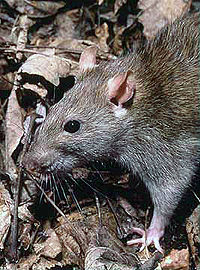
Along with reports of Salmonella infection outbreaks involving contact with chicks and ducks, tiny turtles and pet frogs, add 46 cases of Salmonella I 4,[5],12:i:- infection linked to handling rodents sold as food for pet reptiles and amphibians.
 
The Centers for Disease Control and Prevention, in its April 20 Morbidity and Mortality Weekly Report “Notes from the Field,” says 22 states are reporting the illnesses, and that the median age of those stricken is 11 years old. More than one third of those ill are younger than 5. At least 6 case patients have been hospitalised.

CIFA – Recall Salted Cured Fish – Clostridium botulinum

CIFA

The Canadian Food Inspection Agency (CFIA) is warning the public not to consume the salted and cured fish product (fesikh) described below because it may be contaminated with Clostridium botulinum. Toxins produced by this bacteria may cause botulism, a life-threatening illness.

The affected product, whole fesikh mullet, was sold in clear vacuum-packaged bags of varying count and weight, bearing no code or date information.

This product was sold from Lotus Catering and Fine Food, 1960 Lawrence Ave. E, Toronto, ON, on or before April 17, 2012.

There have been 3 reported illnesses associated with the consumption of this product.

Canadians Open to Food Irradiation for Food Safety

CTV News

A new survey shows Canadians might be willing to eat food with small doses of radiation to prevent foodborne illnesses.

The survey was conducted by Angus Reid Public Opinion for the Consumers Association of Canada. It found that while Canadians are concerned about food contamination, most don’t know much about food irradiation.

The online survey of 1,006 Canadians found 57 per cent of respondents had not heard of irradiation, which is a process that exposes foods to minute doses of radiation like X-rays to kill off bacteria.

And yet when the Canadians polled in the survey were given a brief explanation of the process, most said they would support having irradiated food at the grocery store as a choice.