Category Archives: Uncategorized

USA – Salmonella Outbreak Linked to Kratom Products Ends With 199 Sick

Food Poisoning Bulletin

The Salmonella outbreak that is linked to kratom containing products is over, according to the Centers for Disease Control and Prevention (CDC), with 199 sick in 41 states. People should be aware that kratom could be contaminated with Salmonella bacteria and contaminated products may still be available for purchase. The investigation did not identify a single, contaminated source of kratom.

Flanders – Salmonella scandal Flemish schools expands

Hot Recent News Salmonella kswfoodworld

At least ninety students in the west and east of Flanders have contracted salmonella and have become ill. According to the Agency for Care and Health, at least thirty schools have already been affected by salmonella contamination.The Federal Food Agency FAVV has closed the company that supplies meals to 120 schools as a precaution. On Thursday, at least fourteen students were taken to the hospital. There is a chance that the number of infections is still rising.

It is not certain whether the company is responsible for the contamination. FASFC has not found a cause at the supplier for the time being. Samples were taken that are examined in a laboratory. Next week, new tests will be conducted and the agency will decide whether the caterer may reopen.

The symptoms of a Salmonella infection are nausea, vomiting and diarrhea. Sometimes fever can occur. In case of dehydration symptoms, a hospital admission may be necessary.

Research – Worldwide emergence of resistance to antifungal drugs challenges human health and food security

Science Mag  


The recent rate of emergence of pathogenic fungi that are resistant to the limited number of commonly used antifungal agents is unprecedented. The azoles, for example, are used not only for human and animal health care and crop protection but also in antifouling coatings and timber preservation. The ubiquity and multiple uses of azoles have hastened the independent evolution of resistance in many environments. One consequence is an increasing risk in human health care from naturally occurring opportunistic fungal pathogens that have acquired resistance to this broad class of chemicals. To avoid a global collapse in our ability to control fungal infections and to avoid critical failures in medicine and food security, we must improve our stewardship of extant chemicals, promote new antifungal discovery, and leverage emerging technologies for alternative solutions.

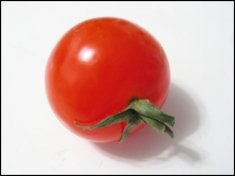
Research – Modeling the growth of Salmonella in cut red round tomatoes as a function of temperature.

NCBI cherry-tomato-pristine-variety

Tomato-associated Salmonella outbreaks have recently become a significant food safety concern. Temperature abuse of cut tomatoes may have played a role in some of these outbreaks. The purpose of this study was to develop a mathematical model to describe the growth of Salmonella on cut tomatoes at various temperatures. Four Salmonella serotypes (Typhimurium, Newport, Javiana, and Braenderup) obtained from previous tomato-linked cases of salmonellosis were used in this study. These four serotypes were cultured separately, combined into a cocktail, and inoculated onto whole red round tomatoes and allowed to dry overnight. The tomatoes were then cut into pieces and incubated at a predetermined range of temperatures (10, 12.5, 15, 17.5, 20, 22.5, 25, 27.5, 30, and 35 degrees C). Salmonella concentration was measured at specified time intervals to determine the growth curve for Salmonella on cut tomatoes at each temperature. The growth rates were calculated using DMFit and used to build a mathematical model to illustrate the relationship between the growth rates of Salmonella on tomatoes and incubation temperatures from 10 to 35 degrees C. The resulting model compared favorably with a Salmonella growth model for raw poultry developed by our laboratory. The Pathogen Modeling Program underpredicted growth at low temperatures and overpredicted growth at high temperatures. ComBase predicted consistently slower growth rates than were observed in tomatoes but showed parallel increases in growth rate with increasing temperature.

Research – Rising antibiotic resistance caused by pollutants needs action

Chemistry World

Our environment is contaminated with antibiotics. While this is often at a dilute level, sometimes the concentrations are surprisingly high. There is a growing recognition that this is a public health issue.

Antibiotic resistance accounts for hundreds of thousands of deaths each year and is a major global health threat. While attention has focused on antibiotic overuse, hospital outbreaks and new drug-resistant superbugs, antibiotics in waterways and soils is now viewed as stoking a rise of antibiotic resistance.

How do bacteria become resistant to antibiotics?

Mutation and evolution. Much of the resistance in disease-causing bacteria originate from existing genes. Antibiotics are part of many microorganisms’ natural armoury, so all sorts of resistance genes have always existed. What has changed is that these genes, one by one, jump from harmless bacteria to those that cause disease.

A bacterium may mutate and gain a small advantage in the presence of an antibiotic. And a gene that confers a competitive advantage can spread fast amongst bacteria because of their high rate of replication.

Having locations where bacteria can mingle in a thin soup of antibiotics and resistance genes is a recipe for resistance transferring between different species… and potentially creating new superbugs.

Research – A Quantitative Risk Assessment of Human Salmonellosis from Consumption of Pistachios in the United States

Journal of Food Protection

We developed a quantitative risk assessment model to assess the risk of human nontyphoidal salmonellosis from consumption of pistachios in the United States and to evaluate the impact of Salmonella treatments (1- to 5-log reductions). The exposure model estimating prevalence and contamination levels of Salmonella at consumption included steps in pistachio processing such as transport from grower to huller, removal of the hull through wet abrasion, separation of pistachio floaters (immature, smaller nuts) and sinkers (mature, larger nuts) in a flotation tank, drying, storage, and partitioning. The risks of illness per serving and per year were evaluated by including a Salmonella dose-response model and U.S. consumption data. The spread of Salmonella through float tank water, delay in drying resulting in growth, increased Salmonella levels through pest infestation during storage (pre- and posttreatment), and a simulation of the 2016 U.S. salmonellosis outbreak linked to consumption of pistachios were the modeled atypical situations. The baseline model predicted one case of salmonellosis per 2 million servings (95% CI: one case per 5 million to 800,000 servings) for sinker pistachios and one case per 200,000 servings (95% CI: one case per 400,000 to 40,000 servings) for floater pistachios when no Salmonella treatment was applied and pistachios were consumed as a core product (>80% pistachio) uncooked at home. Assuming 90% of the pistachio supply is sinkers and 10% is floaters, the model estimated 419 salmonellosis cases per year (95% CI: 200 to 1,083 cases) when no Salmonella treatment was applied. A mean risk of illness of less than one case per year was estimated when a minimum 4-log reduction treatment was applied to the U.S. pistachio supply, similar to the results of the Salmonella risk assessment for almonds. This analysis revealed that the predicted risk of illness per serving is higher for all atypical situations modeled compared with the baseline, and delay in drying had the greatest impact on consumer risk.

Research – Understanding Preferences for Interventions To Reduce Microbiological Contamination in Dutch Vegetable Production

Journal of Food Protection

Understanding growers’ preferences regarding interventions to improve the microbiological safety of their produce could help to design more effective strategies for the adoption of such food safety measures by growers. The objective of this survey study was to obtain insights for the design of interventions that could stimulate growers to increase the frequency of irrigation water sampling and water testing to reduce possible microbiological contamination of their fresh produce. The results showed that price intervention, referring to making the intervention less costly by reducing the price via discounts, is the most effective strategy to change growers’ intentions to increase their frequency of irrigation water testing. Moreover, a sense of urgency affects their intentions to increase the frequency of irrigation water testing. The findings of this survey support the hypothesis that, to date, safety is not perceived as a quality control issue under normal circumstances, but safety becomes an overriding attribute in a food crisis

Research – A microbiological study to investigate the carriage and transmission-potential of Clostridium difficile spores on single-use and reusable sharps containers

American Journal of Infectious Control Clostridium_difficile_01

Background

A 2015 study matching use of disposable and reusable sharps containers (DSCs, RSCs) with Clostridium difficile infection (CDI) incidence found a decreased incidence with DSCs. We conducted microbiologic samplings and examined the literature and disease-transmission principles to evaluate the scientific feasibility of such an association.

Methods

(i) 197 RSCs were sampled for C. difficile at processing facilities; (ii) RSCs were challenged with high C. difficile densities to evaluate efficacy of automated decontamination; and (iii) 50 RSCs and 50 DSCs were sampled in CDI patient rooms in 7 hospitals. Results were coupled with epidemiologic studies, clinical requirements, and chain-of-infection principles, and tests of evidence of disease transmission were applied.

Results

C. difficile spores were found on 9 of 197 (4.6%) RSCs prior to processing. Processing completely removed C. difficile. In CDI patient rooms, 4 of 50 RSCs (8.0%) and 8 of 50 DSCs (16.0%) had sub-infective counts of C. difficile (P = .27). DSCs were in permanent wall cabinets; RSCs were removed and decontaminated frequently.

Conclusion

With C. difficile bioburden being sub-infective on both DSCs and RSCs, sharps containers being no-touch, and glove removal required after sharps disposal, we found 2 links in the chain of infection to be broken and 5 of 7 tests of evidence to be unmet. We conclude that sharps containers pose no risk of C. difficile transmission.

Research – Blood type affects severity of diarrhea caused by E. coli

Science Daily 


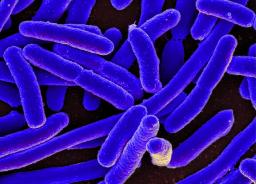
A new study shows that a kind of E. coli most associated with “travelers’ diarrhea” and children in underdeveloped areas of the world causes more severe disease in people with blood type A.

The bacteria release a protein that latches onto intestinal cells in people with blood type A, but not blood type O or B, according to a study led by researchers at Washington University School of Medicine in St. Louis. A vaccine targeting that protein could potentially protect people with type A blood against the deadliest effects of enterotoxigenic E. coli (Escherichia coli) infection.

“We think this protein is responsible for this blood-group difference in disease severity,” said senior author James Fleckenstein, MD, an associate professor of medicine at Washington University. “A vaccine targeting this protein would potentially protect the individuals at highest risk for severe disease.”

The study is published May 17 in The Journal of Clinical Investigation. The work was conducted in collaboration with investigators at Johns Hopkins University, the National Institutes of Health (NIH), and the Naval Medical Research Center.

Research – Antibiotic resistance increases with local temperature

Nature

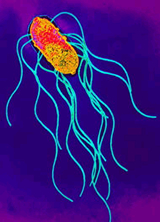
Bacteria that cause infections in humans can develop or acquire resistance to antibiotics commonly used against them1,2. Antimicrobial resistance (in bacteria and other microbes) causes significant morbidity worldwide, and some estimates indicate the attributable mortality could reach up to 10 million by 20502,3,4. Antibiotic resistance in bacteria is believed to develop largely under the selective pressure of antibiotic use; however, other factors may contribute to population level increases in antibiotic resistance1,2. We explored the role of climate (temperature) and additional factors on the distribution of antibiotic resistance across the United States, and here we show that increasing local temperature as well as population density are associated with increasing antibiotic resistance (percent resistant) in common pathogens. We found that an increase in temperature of 10 °C across regions was associated with an increases in antibiotic resistance of 4.2%, 2.2%, and 2.7% for the common pathogens Escherichia coli, Klebsiella pneumoniae and Staphylococcus aureus. The associations between temperature and antibiotic resistance in this ecological study are consistent across most classes of antibiotics and pathogens and may be strengthening over time. These findings suggest that current forecasts of the burden of antibiotic resistance could be significant underestimates in the face of a growing population and climate change4.