Category Archives: Salmonella

More Pet Food Contaminated with Salmonella

FDA 

Kaytee Pet Products is recalling a single manufacturing batch of Kaytee Forti-Diet Pro Health Mouse, Rat and Hamster due to possible contamination with Salmonella.

No human or pet illnesses have been reported to-date. The recall notification is being issued based on a single manufacturing batch wherein a sample with the “Best Before” date of (lot) 03APR13K61 had a positive result for Salmonella in a random sample test conducted by the U.S. Food and Drug Administration. The Kaytee Forti-Diet Pro Health Mouse, Rat & Hamster product was originally manufactured on January 5 and 6, 2012.  Kaytee is taking immediate action to remove the product from all retail stores and distribution centers, and to fully investigate the cause.

Salmonella can affect animals eating the products and there is a risk to humans from handling contaminated pet products, especially if they have not thoroughly washed their hands after having contact with the products or any surfaces exposed to these products.

England and Wales Restaurant Risks Research

Cambridge Journals Online

The food service sector continues to be the most common setting for reported foodborne disease outbreaks in England and Wales. Using restaurant-associated foodborne outbreaks reported in England and Wales from 1992 to 2009, cuisine-specific risk factors were examined. Of 677 restaurant outbreaks, there were 11 795 people affected, 491 hospitalizations, and seven deaths; and Chinese, Indian, British and Italian cuisines were the most commonly implicated (26%, 16%, 13% and 10%, respectively). Salmonella spp. accounted for most outbreaks of all cuisine types, and particularly Chinese (76%, 133/175) and Italian (55%, 38/69). Poultry meat was the most frequently implicated food vehicle in outbreaks associated with Indian (30%), Chinese (21%), and British (18%) cuisines while for Italian cuisine, desserts and cakes were more frequently implicated (33%). Rice dishes were also a common outbreak food vehicle in those restaurants serving Chinese (22%) and Indian (16%) cuisine. Cross-contamination was the biggest contributory factor associated with Chinese (46%), British (33%) and Indian (30%) cuisines whereas inadequate cooking (38%) and use of raw shell eggs in lightly cooked or uncooked food (35%) were more often associated with Italian cuisine. Over the surveillance period, the proportion of Salmonella Enteritidis PT4 outbreaks in restaurants serving Chinese cuisine significantly decreased (P<0·0001) and this was mirrored by an increase in S. Enteritidis non-PT4 outbreaks (P<0·0001). Despite this change in proportion, contributory factors such as cross-contamination have continued to cause outbreaks throughout the 18 years. The results show that by stratifying the risks associated with restaurants by cuisine type, specific evidence of food control failures can be used to target foodborne illness reduction strategies.


US Salmonella paratyphi Outbreak

WYFF4COM

More than two dozen people have become ill in a salmonella outbreak in Western North Carolina, according to the Buncombe County Department of Health.

The Department of Health is investigating an outbreak of Salmonella Paratyphi B infection in Buncombe County.

Communicable disease nurses and environmental health specialists are conducting interviews with people who currently have or have had the infection, reviewing laboratory reports and inspecting food sources that may be linked to the outbreak.

Communicable disease experts from the North Carolina Division of Public Health and the Centers for Disease Control and Prevention, as well as food specialists from the N.C. Department of Agriculture, are assisting with the investigations.

US-Diamond Pet Food Salmonella Recall Expanded

FDA

 Diamond Pet Foods is expanding a voluntary recall to include one production run and four production codes of Chicken Soup for the Pet Lover’s Soul Adult Light formula dry dog food. One bag of the product has tested positive for Salmonella, and the recall of the four production codes is being conducted as a precautionary measure. No dog illnesses have been reported.

CDC – Salmonella Bareilly Outbreak Report – 200 Cases

CDC

  • Based on an epidemiological link and results of laboratory testing, CDC has combined this Salmonella Bareilly investigation with an ongoing multistate outbreak investigation of Salmonella serotype Nchanga infections. The two associated PFGE patterns have been grouped together as the “outbreak strains.”
  • A total of 200 persons infected with the outbreak strains of Salmonella Bareilly or SalmonellaNchanga have been reported from 21 states and the District of Columbia.
    • 190 persons infected with the outbreak strain of Salmonella Bareilly have been reported from 21 states and the District of Columbia. The number of ill persons with the outbreak strain of Salmonella Bareilly identified in each state is as follows: Alabama (2), Arkansas (1), Connecticut (8), District of Columbia (2), Florida (1), Georgia (9), Illinois (15), Louisiana (3), Maryland (20), Massachusetts (24), Mississippi (2), Missouri (4), New Jersey (18), New York (33), North Carolina (3), Pennsylvania (7), Rhode Island (6), South Carolina (3), Texas (4), Virginia (9), Vermont (1), and Wisconsin (15).
    • 10 persons infected with the outbreak strain of Salmonella Nchanga have been reported from 5 states. The number of ill persons with the outbreak strain of Salmonella Nchanga identified in each state is as follows: Georgia (2), New Jersey (1), New York (5), Virginia (1), and Wisconsin (1).
    • 28 ill persons have been hospitalized, and no deaths have been reported.

New Salmonella Infection Research

PhysOrg

BBSRC-funded researchers at Cambridge University have shed new light on a common food poisoning bug. Using real-time video microscopy, coupled with mathematical modelling, they have changed our assumptions about Salmonella and how it infects human cells. The research was published in Interface.

Their research found that many incorrect assumptions had been made about Salmonella infection, particularly that macrophages are highly susceptible to infection. Their data showed that infection occurrences after initial contact between a bacterium and macrophage were low. The probability of that bacterium infecting the cell is less than 5 per cent. However, they also showed that an infected macrophage can be reinfected by a second bacterium. The concept of reinfection by Salmonella had not been considered before and this previously overlooked mechanism may make an important contribution to total bacterial numbers in infection studies.

The study also highlighted the fact that some cells are far more susceptible to infection than others. Rather than grouping all macrophages together in terms of their susceptibility to infection, the research shows that there is a spectrum of susceptibility.

RASFF Alerts – Pork Sausage – Listeria/Suckling Pig – Salmonella/ Soy Bean – Salmonella

RASFF

Listeria monocytogenes (1200 CFU/g) in pork sausage from Spain

RASFF 

Salmonella spp. (presence /25g) in frozen suckling pig racks from France

RASFF

Salmonella Agona (presence /25g) in soya bean meal from Argentina

UK – Salmonella Control for Pigs

Farming UK 

Animal nutrition specialists Optivite have launched a new salmonella control programme for pigs. The programme looks at meeting an overall need rather than looking at problems in isolation.

The programme includes:

1. Good bacterial control in feed and the intestine which helps the sow maintain a more positive intestinal microflora.

Preparing the sow is an important part of the programme. A piglets first contact with the outside environment is through the sow as birth involves the passing of the piglet from a sterile environment within the sow, through the birth canal and into the farrowing house where the Salmonella cell count will be much higher.

2. Enabling a successful continuity through the life cycle. It is important to ensure the protection of the baby pigs once they have lost the passive protection of their mothers’ milk.

Powerful water disinfectants can also be included in the drinking water as part of the programme to remove other potential sources of salmonella infection, especially in older systems where exposed header tanks may become contaminated.

New ‘More Dangerous’ Salmonella

Science Daily

UC Santa Barbara researchers have discovered Salmonella bacteria that are up to 100 times more capable of causing disease. Their findings may help prevent food poisoning outbreaks that continue to plague public health and the food industry.

Now that scientists know what to look for, they are developing methods to discriminate them from their less-virulent cousins. The researchers have been successful in forcing the bacteria to reveal their weapons in the laboratory — the first step in combating them.

Salmonella From Rats Used for Pet Food

Food Safety News

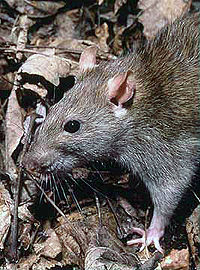
Along with reports of Salmonella infection outbreaks involving contact with chicks and ducks, tiny turtles and pet frogs, add 46 cases of Salmonella I 4,[5],12:i:- infection linked to handling rodents sold as food for pet reptiles and amphibians.
 
The Centers for Disease Control and Prevention, in its April 20 Morbidity and Mortality Weekly Report “Notes from the Field,” says 22 states are reporting the illnesses, and that the median age of those stricken is 11 years old. More than one third of those ill are younger than 5. At least 6 case patients have been hospitalised.