Category Archives: Salmonella

Research – Salmonella: It’s More Pervasive Than You May Think

Quality Assurance Mag

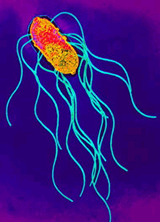
kswfoodworld Salmonella

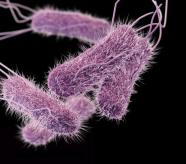
Image CDC

In late 2018, the Interagency Food Safety Analytics Collaboration (IFSAC) published a report on foodborne illness source attribution from 1998 through 2016. The report used outbreak data to produce new estimates for foods responsible for foodborne illnesses caused by four pathogens in 2016: Salmonella, E. coli O157, Listeria monocytogenes, and Campylobacter.

While all these pathogens are of concern because of the frequency and/or severity of the illnesses they cause, the results of the Salmonella illness assessment are of particular interest: Unlike the other pathogens which were most often linked to specific foods, Salmonella illnesses were broadly attributed across multiple food categories. As stated in the report, “The attribution of Salmonella illnesses to multiple food categories suggests that interventions designed to reduce illnesses from these pathogens need to target a variety of food categories.” Such interventions should include a combination of detection, prevention, and control.

USA – Salmonella Sushi from the “Big Easy” will likely make you Queasy – Salmonella

Food Poison Journal

CDC, public health and regulatory officials in several states, and the U.S. Food and Drug AdministrationExternal are investigating a multistate outbreak of Salmonella Newport infections.

As of April 15, 2019, 13 people infected with the outbreak strain of Salmonella Newport have been reported from 7 states. A list of the states and the number of cases in each is on the Map of Reported Cases page.

USA – Jensen Tuna of Louisiana is Voluntarily Recalling Frozen Ground Tuna Imported from JK Fish, Because it may Potentially be Contaminated with Salmonella

FDA

Jensen Tuna of Louisiana is voluntarily recalling frozen ground tuna imported from JK Fish, because it may potentially be contaminated with Salmonella.

The frozen product, individually packaged in clear plastic one-pound bags, is sold in white wax 20 lb. boxes. The product is only sold as a wholesale case with twenty bags in each case. The lot numbers are z266, z271 and z272.

No other tuna products are impacted or part of this recall.

The product was sold to wholesalers in Connecticut, Iowa, Illinois, Minnesota, North Dakota, New York, and Washington. These wholesalers further distribute the product to restaurants and retail locations. The product was distributed from November 30, 2018 to March 15, 2019.

Restaurants and retailers should check with their suppliers and not sell or serve recalled frozen ground tuna and should wash and sanitize locations where recalled ground tuna was stored. Consumers with concerns should ask their restaurants and retailers whether the tuna dish they are purchasing contained the recalled ground tuna.

The voluntary recall is in response to the CDC and FDA’s investigation of 13 illnesses caused by Salmonella, confirmed to date. As of today, the ground tuna samples were found negative for Salmonella.

Salmonella is an organism that can cause serious and sometimes fatal infections in young children, frail or elderly people, and others with weakened immune systems. Most people infected with Salmonella develop symptoms within 12 to 72 hours after infections, according to the FDA. The illness, marked by diarrhea, fever and abdominal cramps, usually lasts 4 to 7 days.

Please contact Jensen Tuna at 985-868-8809 (Monday-Friday, 8am to 3pm, Central time) or email at info@jensentuna.com with questions.

Canada – Salmonella triggers recall of coconut meat in Canada

Food Safety News Salmonella kswfoodworld

Feeding Change Canada is recalling Feeding Change brand Young Thai Coconut Meat from the marketplace because of a risk of possible Salmonella contamination.

According to the recall notice posted on the Canadian Food Inspection Agency (CFIA) website, the recall was triggered by CFIA test results.

“The CFIA is conducting a food safety investigation, which may lead to the recall of other products. If other high-risk products are recalled, the CFIA will notify the public through updated Food Recall Warnings,” the agency statement said.

The CFIA said it is verifying that industry is removing the recalled product from the marketplace.

Australia – Recall: Steve’s Farm Fresh Eggs – Salmonella

The NSW Food Authority advises:

Steve’s Fresh Farm Eggs is conducting a recall of Fresh Eggs From My Farm products. The products have been available for sale at butchers and independent stores in NSW.

Product details:

  • Fresh Eggs From My Farm 12 Free Range Eggs, 700g, cardboard box
  • Fresh Eggs From My Farm Cage Eggs, 700g, cardboard box
  • Use By 6-5-2019

Problem: The recall is due to potential microbial Salmonella Enteritidis contamination.

Food safety hazard: Food products contaminated with Salmonella may cause illness if consumed.

Country of origin: Australia

What to do: Any consumers concerned about their health should seek medical advice and should return the products to the place of purchase for a full refund.

For further information please contact Steve’s Fresh Farm Eggs on 0438 081 860.

See also: all current NSW food alerts


USA – Salmonella Carrau Outbreak Linked to Caito Foods Precut Melons

Food Poisoning Bulletin

A Salmonella Carrau outbreak is linked to Caito Foods precut melons, and has sickened at least 93 people in 9 states, according to the Centers for Disease Control and Prevention (CDC). Twenty-three people are hospitalized because their illnesses are so severe.

Salmonella Carrau Caito Foods Melon Outbreak 41219

The patient case count by state is: Alabama (1), Illinois (5), Indiana (18), Kentucky (16), Michigan (19), Minnesota (3), Missouri (3), Ohio (27), and Wisconsin (1). Illness onset dates range from March 4, 2019 to March 31, 2019. The patient age range is from less than one to 98. No deaths have been reported in this outbreak.

Research – Bacteria flip an electric switch to worsen food poisoning

Science Daily

Salmonella bacteria flip an electric switch as they hitch a ride inside immune cells, causing the cells to migrate out of the gut toward other parts of the body, according to a new study publishing on April 9 in the open-access journal PLOS Biology by Yaohui Sun and Alex Mogilner of New York University and colleagues. The discovery reveals a new mechanism underlying the toxicity of this common food-borne pathogen.

Salmonella are among the commonest, and deadliest, causes of food poisoning, causing over 400,000 deaths every year. Many of those deaths result when the bacteria escape the gut inside immune cells called macrophages. Macrophages are drawn to bacteria in the gut by a variety of signals, most prominently chemicals released from the site of infection. Once there, they engulf the bacteria as a regular part of their infection-fighting job. However, rather than remaining there, bacteria-laden macrophages often leave the site and enter the bloodstream, disseminating the bacteria and greatly increasing the gravity of the infection.

Tissues such as the gut often generate small electrical fields across their outer surfaces, and these electrical fields have been known to drive migration of cells, including macrophages. In the new study, the authors first showed that the lining of the mouse cecum (the equivalent of the human appendix) maintains a cross-membrane electrical field, and that Salmonella infection altered this field and contributed to the attraction of macrophages. Measurements of the polarity of the local charge indicated that the macrophages were attracted to the anode, or positively charged pole within the field. Once they engulfed bacteria, however, they became attracted to the cathode and reversed their migratory direction, moving away from the gut lining, toward vessels of the circulatory system. This switch was driven by a in the composition of certain charged surface proteins on the macrophages; the mechanism by which bacterial engulfment triggers this change is still under investigation.

“Dissemination, rather than localized infection, is the greatest cause of mortality from Salmonella (and other food-borne bacteria), and so understanding more about this polarity switch is likely to help develop new treatments to reduce deaths from food-borne bacterial infections,” said Mogilner.

Canada – Salmonella Enteritidis Outbreak in Canada Sickens 63; No Source Found

Food Poisoning Bulletin

Salmonellaa

Image CDC

A Salmonella Enteritidis outbreak in Canada has sickened at least 63 people in six provinces, but public health officials have not identified a source of the pathogen. Officials are sharing this information to inform consumers how to avoid Salmonella infections. There is another Salmonella outbreak in that country that has sickened more than 500 people. That outbreak is linked to frozen breaded raw chicken and other raw chicken products.

RASFF Alerts – Salmonella – Sesame Seeds – Whole Egg Powder – Chicken – Raw Sausage – Broiler

RASFF-Logo

RASFF – Salmonella enterica ser. salamae (presence /25g) in sesame seeds from Ethiopia, via the United Arab Emirates in Greece

RASFF – Salmonella in whole egg powder from Sweden in Germany

RASFF – Salmonella enterica ser. Enteritidis (present /25g) in frozen chicken from Poland in the Czech Republic

RASFF – Salmonella enterica ser. Infantis (presence /25g) in chilled chicken breast fillets from Poland in the Czech Republic

RASFF – Salmonella enterica ser. Typhimurium monophasic (1 ,4, [5], 12:i:-) (present /25g) in frozen raw sausage from Germany in Finland

RASFF – Salmonella enterica ser. Enteritidis (presence /25g) in chilled chicken broiler fillets from Poland in Lithuania

RASFF – Salmonella enterica ser. Indiana (presence /25g) and Salmonella enterica ser. Newport (presence /25g) in chilled chicken quarters from Poland in the Czech Republic

RASFF – Salmonella in sesame seeds from Nigeria, processed in Turkey in Greece

RASFF – Salmonella (presence /25g) in sesame seeds from Nigeria in Greece

RASFF – Salmonella (presence /25g) in sesame seeds from Nigeria in Poland

RASFF – Salmonella (presence /25g) in sesame seeds from India in Romania

RASFF Alerts- Animal Feed – Salmonella – Organic Soya – Fish Meal

RASFF-Logo

RASFF – Salmonella enterica ser. Senftenberg (present /25g) in organic soya from Denmark in Sweden

RASFF – Salmonella (presence /25g) and too high count of Enterobacteriaceae (400 CFU/g) in fish meal from the United States in Germany