Category Archives: Pet Food Salmonella

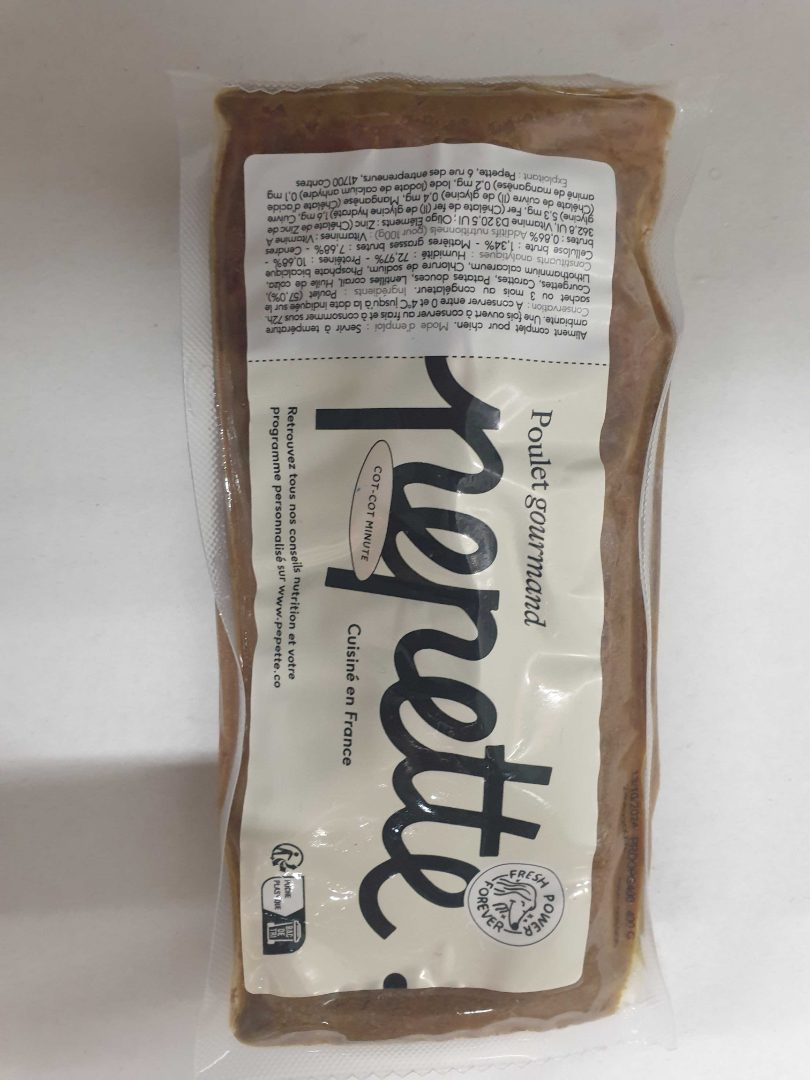
France – Pet Food- Gourmet chicken dog 300g and 400g – Salmonella

Gov France

Product Category
Food
Product subcategory
Pet food
Product brand name
Pepette
Model names or references
Gourmet chicken dog 300g and 400g from the Pepette brand
Product identification
Batch Date
240805000197 Expiry date 09/26/2024
240805000196 Expiry date 09/26/2024
Packaging
Vacuum plastic bag
Start/End of marketing date
From 08/10/2024 to 08/15/2024
Storage temperature
Product to be kept in the refrigerator
Geographic area of ​​sale
Whole France
Distributors
None – Direct sales via the internet to individuals

Research -Investigation of outbreak of multidrug-resistant Salmonella shows link to pet treats

Food Safety News

A new study investigating a multistate outbreak of multidrug-resistant Salmonella infections linked to pig ear pet treats highlights the interconnectedness of human health and pet ownership, emphasizing the need for stringent surveillance of pet food products.

The study was funded by the Food and Drug Administration’s Animal Feed Regulatory Program Standards and the FDA’s Veterinary Laboratory Investigation and Response Network (Vet-LIRN).

From June 2015 to Sept. 2019, 154 human cases of Salmonella infection were reported across 34 states. The investigation identified seven Salmonella serotypes genetically related to samples from pig ear pet treats. Whole genome sequencing (WGS) of isolates was used to predict antimicrobial resistance. Notably, 107 of 122 patients interviewed reported dog contact, and 65 of 97 reported contact with pig ear pet treats. Salmonella was isolated from 137 pig ear treats, including imports from Argentina, Brazil, and Colombia, and from four dogs. WGS predicted that 77 percent of human isolates and 43 percent of pig ear treat isolates were resistant to three or more antimicrobial classes.

RASFF Alerts- Animal Feed – Salmonella – Haemoglobin Powder – Pork Animal Protein – Pet Food

RASFF

Salmonella Livingstone in Haemoglobin powder from Germany in Finland

RASFF

Salmonella in processed animal protein from porcine for pet food production from Belgium in Germany and the Netherlands

RASFF

Salmonella in poultry meal for petfood production from United Kingdom in Belgium and Northern Ireland

France – Pet Food – EXPERT + Sterilized cat – Croquettes rich in chicken 1.5kg – Salmonella

Gov France

Product category
Food
Product subcategory
Pet food
Product brand name
Carrefour EXPERT+
Model names or references
CARREFOUR EXPERT + Sterilized cat – Croquettes rich in chicken 1.5kg
Product identification
GTIN Batch Date
3560070926787 C2312150053 Minimum durability date 12/15/2024
Packaging
bag 1.5 kg
Start/end date of marketing
From 12/22/2023 to 05/31/2024
Storage temperature
Product to be stored at room temperature
Health mark
FR 49 180 032
Geographical sales area
Whole France
Distributors
CROSSROADS

RASFF Alerts – Animal Feed – Salmonella – Pet Food – Poultry Meal for Pet Food – Fodder Yeast

RASFF

Salmonella in pet food from Belgium in Belgium, Cyprus, Czech Republic, France, Germany, Greece, Luxembourg, Netherlands, Poland.

RASFF

Salmonella in poultry meal for pet food production, from Northern Ireland in Belgium

RASFF

Salmonella spp. in fodder yeast from Russia in Lithuania

RASFF Alert- Animal Feed – Salmonella – Lambs Ear Dog Chews

RASFF

Salmonella Kottbus, Salonella Mishmarmaek and Salmonella Abony in Lamb Ears (dog chew) from Türkiye via Denmark in Finland and Sweden

Research – Scientists call for more awareness of raw pet food risks for people

Food Safety News

A study has added to evidence of the risk posed by contaminated raw pet food to human health.

Researchers investigated whether dog food, including raw meat-based diets (RMBD), available in Portugal can be a source of Salmonella or other Enterobacteriaceae strains resistant to last-line antibiotics such as colistin.

Since 2020, there have been more than 20 reports or recalls of pet food and RMBD in the EU because of the detection of pathogens.

Fifty-five samples from 25 brands of various meat and dog food types from 12 suppliers were screened by standard cultural methods between September 2019 and January 2020. Forty-one of the 55 samples were processed, and 14 were raw, according to the study published in the journal Eurosurveillance.

France – Chopped Kangaroo- Pet Food- Salmonella

Gov France

Product category
Food
Product subcategory
Pet food
Product brand name
PAEX
Model names or references
Chopped kangaroo 500g
Product identification
Batch Date
D391, D051, D124, D451, D483, D411, D122, D315, D492 Use-by date between 08/01/2025 and 03/31/2026
Packaging
500 grams
Start/end date of marketing
From 01/04/2024 to 05/02/2024
Storage temperature
Product to keep in the freezer
Health mark
DE01059000413
Further information
Chopped kangaroo in 500 gram pouch
Geographical sales area
Regions: Grand-Est
Distributors
Barf Dogs

Research-Raw meat-based diet for pets: a neglected source of human exposure to Salmonella and pathogenic Escherichia coli clones carrying mcr, Portugal, September 2019 to January 2020

Eurosurveillance

The pet industry has evolved in recent decades due to increasing pet populations, stronger human–pet bonds and demand for high-quality pet food products [1,2]. Processed pet food manufactured with various processing methods (e.g. grinding, cooking, extrusion and dehydration) has traditionally been considered microbiological safe and nutritionally suitable for feeding pets [1,3]. However, since some pet owners consider unprocessed food healthier, raw meat-based diets (RMBDs) for dogs have gained popularity [1,2,4]. The RMBDs are mainly composed of uncooked or minimally processed meat, bones and organs, with freezing as the primary treatment, and are considered to be more natural than conventional processed pet food [1,5]. Nevertheless, the scientific evidence supporting RMBD benefits is scarce, and many veterinary professional organisations (e.g. the World Small Animal Veterinary Association) and international public health agencies (e.g. the United States (US) Centers for Disease Control and Prevention (CDC)) view them as potential health hazards for both animals and humans [1,5]; awareness of this issue appears less evident in Europe [6]. The safety concerns associated with RMBDs are related to the potential contamination of raw ingredients with zoonotic pathogenic bacteria and parasites [1,3,4]. Such contamination could lead to the spread of these pathogens to both pets and humans cohabitating with pets, through direct contact with the pet or its feed, or indirectly through contact with contaminated household surfaces or hands during feed preparation.

In the European Union (EU), legal requirements for the use of animal by-products and derived products not intended for human consumption are established, including those to produce processed or raw pet food, helping to ensure microbiological safety [7]. Nevertheless, since 2020, there have been more than 20 notifications or recalls of pet food and RMBD in the EU due to the detection of zoonotic pathogens, particularly  and pathogenic  [8], and also cases of human infections with  and Shiga toxin-producing  (STEC) linked to exposure to RMBDs [911]. Several studies have also established a correlation between the microbiota of pets and their owners, including the presence of antibiotic-resistant strains, with pet food as a potential source [12,13]. However, certain antibiotic-resistant bacteria and genes of public health concern, such as the  gene conferring resistance to the last-line antibiotic colistin, have not been extensively studied in pet food and RMBDs [1,1416]. Consequently, these antibiotic-resistant strains and genes have not been recognised as notable food safety issues in the context of the pet food industry [6]. To address this knowledge gap, we aimed to investigate the occurrence of and further characterise  and other  resistant to critical antibiotics, such as colistin, in dog food, including RMBDs, that is available in stores in Portugal to investigate if they represent a possible source of these hazards to public health.

Research – Antibiotic Resistant Escherichia coli in Uncooked Meat Purchased from Large Chain Grocery Stores and in Raw Dog Food Purchased From Pet Stores in the Same City

BIORXIV

Abstract

Although previous studies have associated feeding dogs uncooked meat with their carriage and excretion of antibiotic resistant (ABR) Escherichia coli, this practice remains popular amongst dog owners in some countries, including the UK. Uncooked meat fed to dogs is purchased from stores selling meat primarily for human consumption, or it is a brand of commercial raw dog food (RDF), which is commonly sold frozen and thawed prior to feeding. We tested 58 packets of uncooked meat (beef, chicken, lamb and pork) purchased from large chain grocery stores (15 stores) and 15 packets of thawed, chicken-based RDF (11 brands) for the presence of ABR E. coli. All samples were purchased from the city of Bristol, UK. Among grocery store-purchased meat, chicken samples were significantly more likely to be positive for E. coli resistant to amoxicillin, spectinomycin, streptomycin, and the critically important antibiotics cefotaxime and ciprofloxacin, than other types of meat. When comparing grocery store chicken to chicken-based RDF we found no significant difference in sample-level positivity for resistant E. coli, which, for RDF was 80% (amoxicillin), 80% (spectinomycin), 87% (streptomycin), 27% (amoxicillin-clavulanate), 27% (cefotaxime) and 47% (ciprofloxacin). We conclude that despite it having been purchased frozen and thawed prior to testing according to the manufacturer’s instructions, contamination of RDF with ABR E. coli is similar to that of uncooked meat primarily intended for human consumption after cooking, and so the same strict hygiene practices are advised when handling RDF as uncooked meat. Our findings provide a rationale to explain why feeding uncooked meat or RDF to dogs in the city of Bristol is associated with them excreting E. coli resistant to critically important antibiotics.