Category Archives: Microbiology

USA – Conagra Brands, Inc. Recalls Canned Beef Products Due to Possible Processing Defect

USDA

WASHINGTON, July 31, 2019  – Conagra Brands, Inc., a Milton, Pa. establishment, is recalling approximately 32,400 pounds of canned beef products due to a potential processing defect, resulting in the potential survival of bacterial pathogens in the products, the U.S. Department of Agriculture’s Food Safety and Inspection Service (FSIS) announced today.

The canned beef items were produced on July 18, 2019. The following products are subject to recall: [View labels (PDF only)]

  • 15-oz. canned items of “Kaskey’s BEEFY MAC PASTA IN TOMATO & MEAT SAUCE” with Best By JUL 07 2021.

The products subject to recall bear establishment number “EST. 794” inside the USDA mark of inspection. These items were shipped to distribution centers and retail locations in Indiana, Kentucky, Maryland and Texas.

The problem was discovered by the establishment on July 27, 2019 during routine activities.

There have been no confirmed reports of adverse reactions due to consumption of these products. Anyone concerned about an injury or illness should contact a healthcare provider.

Consumers who have purchased these products are urged not to consume them. These products should be thrown away or returned to the place of purchase.

Research -Toxin responsible for Legionella growth identified

Science Daily

Legionella A

Enter a caption

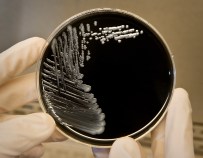
Pneumonia resulting from exposure to Legionella — although uncommon and affecting only 1 in 100,000 in Europe — has a higher than 10% fatality rate. The pathogenic bacterium Legionella pneumophila has more than 300 toxins that it uses to infect humans. Once the aerosols containing the bacteria are inhaled, Legionella enters the lungs where it starts infecting human cells, causing pneumonia.

Legionella toxins especially target the innate immune pathways facilitating the survival of the bacteria inside human cells and allowing the replication of the bacteria. Due to the large number of toxins it is difficult to see the effects of deleting one or multiple of these toxins on the Legionella infection capacities. This is further complicated by the fact that several toxins with similar functions exist inside the bacteria. This makes Legionella hard to target with specific drugs.

RASFF Alerts – Animal Feed – Salmonella – Rape Seed Meal – Soya Bean Meal – Fish Meal

RASFF-Logo

RASFF – Salmonella enterica ser. Münster (presence /25g) and Salmonella enterica ser. Tennessee (presence /25g) in rape seed meal from Russia in Finland

RASFF – Salmonella enterica ser. Tennessee (presence /25g) in rape seed meal from Germany in Finland

RASFF – Salmonella (presence /25g) in soya bean meal from Brazil in Poland

RASFF – Salmonella enterica ser. Kalina (in 3 out of 5 samples /25g) in fish meal from Mauritania in Greece

RASFF – Salmonella (presence /25g) in soybean meal from Brazil, via Italy, via Slovenia and via Austria in Croatia

Research – Listeria and Pregnancy

Food Poisoning Bulletin

Why are Pregnant Women So at Risk for Listeria Infections?

One theory is that in pregnancy, the immune system is suppressed so the body doesn’t reject the embryo and fetus. This reduction in immunity may be why these women are so susceptible to listeriosis and why the complications can be so severe. Researchers at Berkeley, however, discovered that Listeria monocytogenes bacteria use the immune system suppression to invade the placenta where they are protected from the mother’s immune system.

Once the bacteria are in the placenta, they can grow rapidly, then emerge to infect the maternal liver and spleen. One theory is that miscarriage occurs as a defense mechanism so the body is protected from the source of the bacteria’s growth. It is difficult for any bacteria to cross the placental barrier, but once they do, complications can be very serious. Scientists think that the bacteria can cross the endothelium of the maternal blood vessels, and get into the fetal circulatory system of the placental villi.

Food Poisoning Bulletin

Listeria May be Serious Miscarriage Threat in Early Pregnancy

New research conducted at the University of Wisconsin-Madison and published in the journal mBio has found that Listeria monocytogenes food poisoning can be a serious miscarriage threat in early pregnancy. Scientists at the university’s School of Veterinary Medicine studied how pathogens affect fetal development and change pregnancy outcomes.

USA – Pigs Ears – Salmonella

Food Poisoning Bulletin

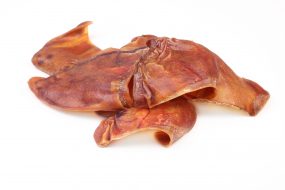
Lennox INtl Inc, located in Edison, New Jersey, is expanding its voluntary recall of its Natural pig ear dog treats for possible Salmonella contamination. The press release states, “To date, Lennox is aware of cases of human illnessrelated to an ongoing Salmonella outbreak in which several people identified Lennox pig eat treats as the brand they purchased. Individually shrink-wrapped product tested by FDA tested positive for Salmonella. Lennox’s pig ears are also sold bulk unwrapped.”

CDC

Latest Outbreak Information
Illustration of a clipboard with check marks on it.
At A Glance
Photo of some pet treats.
  • CDC and FDA are now advising people not to buy or feed any pig ear dog treats to pets, including any that may already be in homes.
  • People can get sick after handling the treats or caring for dogs who ate the treats. Dogs might get sick after eating them.
  • Since the last update on July 17, 2019, a total of 34 ill people have been added to this investigation.
  • A total of 127 people infected with the outbreak strains of Salmonella have been reported from 33 states.
    • 26 ill people (30%) have been hospitalized. No deaths have been reported.
    • 24 illnesses (21%) are among children younger than 5 years.
  • Epidemiologic, laboratory and traceback evidence indicates that contact with pig ear dog treats from many different suppliers is the likely source of this outbreak.
  • State health and regulatory officials in several states and the FDA have tested pig ear dog treats at various suppliers and identified many different strains of Salmonella. No single supplier, distributor or common brand of pig ear treats has been identified that could account for all the illnesses. This is why CDC and FDA are now advising people to not buy or feed any pig ear dog treats to pets.
  • This investigation is ongoing and CDC will provide updates when more information is available.

Research – Physiological traits and relative abundance of species as explanatory variables of co-occurrence pattern of cultivable bacteria associated with chia seeds

Canadian Journal of Microbiological Research

Deciphering the rules defining microbial community assemblage is envisioned as a promising strategy to improve predictions of pathogens colonization and proliferation in food. Despite the increasing number of studies reporting microbial co-occurrence patterns, only a few attempts have been made to challenge them in experimental or theoretical frameworks. Here, we tested the hypothesis that observed variations in co-occurrence patterns can be explained by taxonomy, relative abundance, and physiological traits of microbial species. We used PCR amplicon sequencing of taxonomic markers to assess distribution and co-occurrence patterns of bacterial and fungal species found in 25 chia (Salvia hispanica L.) samples originating from eight different sources. The use of nutrient-rich and oligotrophic media enabled isolation of 71 strains encompassing 16 bacterial species, of which five corresponded to phylotypes represented in the molecular survey. Tolerance to different growth inhibitors and antibiotics was tested to assess the physiological traits of these isolates. Divergence of physiological traits and relative abundance of each pair of species explained 69% of the co-occurrence profile displayed by cultivable bacterial phylotypes in chia. Validation of this ecological network conceptualization approach to more food products is required to integrate microbial species co-occurrence patterns in predictive microbiology.

Research – Slow growth causes bacterial persistence

Science Mag

Abstract

Bacterial persisters survive antibiotic treatment and can cause chronic infections. In this issue of Science Signaling, Pontes and Groisman suggest that there is no specific molecular pathway responsible for persister formation in Salmonella and that slow growth is the decisive factor.

UK – Raw Treat Pet Food Ltd recalls Frozen Raw Beef, Chicken, Lamb, and Chicken & Tripe Pet Food due to the presence of Listeria monocytogenes

FSA Listeria cdc

Raw Treat Pet Food Ltd is recalling four batches of frozen raw pet food because Listeria monocytogenes has been found in the products.

Product details

Frozen Raw Beef

Pack size 500g
Batch code 1544
Best before date 2021-06-17
Best before 17 June 2021
Frozen Raw Chicken

Pack size 500g
Batch code 1533
Best before date 2021-06-13
Best before 13 June 2021
Frozen Raw Lamb

Pack size 500g
Batch code 1545
Best before date 2021-06-13
Best before 13 June 2021
Frozen Raw Chicken & Tripe

Pack size 500g
Batch code 15331547
Best before date 2021-06-13
Best before 13 June 2021

No other Raw Treat Pet Food Ltd products are known to be affected.

Risk statement

The presence of Listeria monocytogenes in the products listed above. Listeria monocytogenes is a bacterium that can cause illness in humans and animals. The product could therefore carry a potential risk either through direct handling of the pet food, or indirectly, for example from pet feeding bowls, utensils or contact with the faeces of animals.

In humans, symptoms caused by this organism can be similar to flu and include high temperature, muscle ache or pain, chills, feeling or being sick and diarrhoea. However, in rare cases, the infection can be more severe, causing serious complications, such as meningitis.

Some people are more vulnerable to listeria infections, including those over 65 years of age, pregnant women and their unborn babies, babies less than one month old and people with weakened immune systems.

Action taken by the company

Raw Treat Pet Food Ltd is recalling the above products from their customers. Point of sale notices will be displayed in all retail stores that are selling these products. These notices explain to customers why the products are being recalled and tell them what to do if they have bought the product. Please see the attached notice.

USA – The Lennox Recalls Pig Ears For Salmonella Contamination; Dog Illnesses

Food Poisoning Bulletin

The Lennox Intl Inc, in Edison, New Jersey, is recalling its Natural Pig ears dog treats because they may be contaminated with Salmonella bacteria. The company is aware of two cases of their pig ears that caused dog illnesses that may be related to the Salmonella contamination the FDA is investigating in connection with a multistate outbreak. The recall notice did not state that there were any human illnesses associated with this product.


UK – Salmonella raw pet food recall: Homeland By Products

Pet Food Industry

Ceredigion, Wales, U.K.-based pet food company Homeland By Products Ltd. has recalled three batches of its frozen raw pet food in 500-gram package sizes, all with the best before date May 2020, after Salmonella was found in the products