Archives
-
Join 341 other subscribers
KSWFoodWorld
Blog Stats
- 427,342 Views
Category Archives: Microbiological Risk Assessment
Research – Microbiological quality of plant-based meat alternatives in Switzerland
The aim of this study was to assess the microbiological quality and occurrence of foodborne pathogens in plant-based meat alternative (PBMA) products collected at retail level in Switzerland. A total of 100 PBMA (84 vegan and 16 vegetarian products) were qualitatively analysed for the presence of Salmonella , Listeria monocytogenes and quantitatively for Staphylococcus aureus , members of the Bacillus cereus group , Enterobacteriaceae and total viable count. In addition, pH measurements were performed and the AW value was determined.
This study provides data that are relevant to the Hazard Analysis and Critical Control Point (HACCP) concepts of companies producing plant-based meat alternatives and helps define the microbiological parameters to be included when testing these products.
Isolates were analysed by whole genome sequencing. Total viable counts before the expiration date ranged from <2 log to 7 log CFU/g (mean: 5.97 log CFU/g). Enterobacteriaceae with 2 log to 3 log CFU/g were detected in six (6%) samples. Salmonella and Listeria monocytogenes were not detected . However, seven products (7%) were contaminated with other Listeria spp. (six L. inocua and one L. seeligeri ). Other findings included two (2%) Staphylococcus aureus ST8 with presence of selx and tsst-1 genes, and five (5%) members of the Bacillus cereus group (three B. paranthracis , one B. cereus sensu stricto and one B. cytotoxicus ) which were strains associated with diarrhoea.
Characteristics of plant-based meat alternative products, such as high water activity, high nutrient content, and high pH, make them susceptible to microbial spoilage. Therefore, these products must be kept refrigerated. Since the products in this study were purchased at the retail level, there was no control over their storage conditions prior to testing. This lack of control may have contributed to the variability of the microbial load, as inconsistent storage practices can affect microbial findings. The predominance of members of the lactic acid bacteria group in PBMA may be relevant to product stability.
PBMA products are usually subjected to a heating stage that would control contamination. However, unlike raw meat, heating does not result in a colour change of PBMA, which makes it sometimes difficult for the consumer to determine whether it has been sufficiently heated. In addition, consumers should be aware that compliance with basic hygiene measures to avoid cross-contamination is especially important when handling foods that are not ready to eat immediately. Increasing consumer awareness regarding food handling and storage is recommended.
UK – Morrisons recalls Morrisons Crushed Garlic because an ingredient has been omitted that prevents microbiological growth
Morrisons is recalling Morrisons Crushed Garlic because an ingredient has been omitted from the product that prevents microbiological growth and therefore presents a potential risk to consumers.
Product details
| Pack size | 75g |
|---|---|
| Best before | 19 October 2025 |
Risk statement
An ingredient has been omitted from the product that prevents microbiological growth making the product potentially unsafe to eat.
Action taken by the company
Morrisons is recalling the above product. Point of sale notices will be displayed in stores where the product was sold. These notices explain to customers why the product is being recalled and tell them what to do if they have bought the product. Please see the attached recall notice.
Our advice to consumers
If you have bought the above product do not eat it. Instead return it to the store from where it was bought for a full refund.
Posted in Decontamination Microbial, Food Micro Blog, Food Microbiology, Food Microbiology Blog, Food Microbiology Testing, food recall, microbial contamination, Microbial growth, Microbial Spoilage, Microbiological Risk Assessment, Microbiology, Microbiology Investigations, Microbiology Risk, product recall, Recall
Tagged food, music, recipe, recipes, van-morrison
France – COLOR FOREST BUCKWHEAT, VEGETABLES AND CHICKPEAS FOREST STYLE – Microbiological Contamination

Product Category
Food
Product subcategory
Prepared meals and snacks
Product brand name
FOREST COLOR
Model names or references
COLOR FOREST BUCKWHEAT, VEGETABLES AND CHICKPEAS FOREST STYLE
Product identification
GTIN Batch Date
3770008754713 08102024 Expiry date 07/02/2026
Packaging
transparent doypack in a cardboard case
Start/End of marketing date
From 10/17/2024 to 11/08/2024
Storage temperature
Product to be stored at room temperature
Geographic area of sale
Regions: Brittany
Distributors
see list of points of sale
Research – Machine Learning and Predictive Microbiology: Enhancing Food Safety Models
The field of food safety is critical in ensuring that the food supply remains safe and nutritious from production to consumption. One of the most pressing challenges in this area is controlling microbial growth, which can significantly reduce the shelf life of food products and pose health risks. The composition and physicochemical characteristics of food can either inhibit or promote the growth of foodborne pathogens. Traditional microbial growth models, often used in laboratory settings, do not always translate well to real-world food environments due to the unique conditions present in food systems. Predictive microbiology has emerged as a valuable tool in this context, allowing researchers to predict the behavior of pathogenic and spoilage microorganisms under various controlled conditions. Despite advancements, there remain significant gaps in our understanding of how to effectively apply these models across different stages of the food processing chain. The need for more comprehensive and adaptable models is evident, particularly as the food industry continues to evolve its processing techniques to enhance food safety and shelf life.
This research topic aims to explore the development and application of predictive models in food safety throughout the processing chain. The primary objectives include understanding how new processing conditions impact microbial safety, examining the interactions between food ingredients and antimicrobials, and developing robust models that can predict microbial behavior in diverse food environments. Specific questions to be addressed include: How do changes in food composition affect microbial growth? What are the best practices for integrating machine learning into predictive microbiology? How can we construct and validate models that are applicable across various stages of food production?
To gather further insights into the boundaries of predictive models in food safety, we welcome articles addressing, but not limited to, the following themes:
– Impact of new food processing conditions on the microbial safety of the final product
– Interaction of added antimicrobials and food ingredients on food safety
– Use of growth/no growth models for the growth of pathogens
– Impact of food composition modifications on the growth of pathogens or concentration of toxins
– Development of empirical or theoretical models for assessing microbial growth under food system conditions
– Machine learning applications in predictive microbiology
– Construction and validation of tertiary predictive models
Posted in Food Micro Blog, Food Microbiology, Food Microbiology Blog, Food Microbiology Research, Food Microbiology Testing, microbial contamination, Microbial growth, Microbial Spoilage, Microbiological Risk Assessment, Microbiology, Microbiology Investigations, Microbiology Risk, Predictive Modelling, Research
Research – EPA Approves First Antimicrobial Treatment of Foodborne Pathogens in Preharvest Agricultural Water
The first-ever registration of an antimicrobial treatment for foodborne pathogens in preharvest agricultural water has been approved by the U.S. Environmental Protection Agency (EPA), setting a new precedent for preharvest agricultural water treatments specifically intended to reduce the presence of pathogens that affect food safety.
The successful registration of SANIDATE 12.0 is the result of a collaborative effort between EPA and the U.S. Food and Drug Administration (FDA) to develop and refine an efficacy protocol to support such registrations. Using the revised efficacy protocol, the University of Arizona and industry members worked together to register SANIDATE 12.0 for use against foodborne pathogens like Escherichia coli and Salmonella in preharvest agricultural water, and to provide feedback on the protocol that informed updates regarding testing parameters and to clarify the protocol for future users.
Austria – Animal Feed – Fiffy meadow hay 700g – Microbiological Deviation
SPAR continuously monitors the products of the SPAR brands to ensure the highest quality. During a routine quality control, a microbiological deviation was found in the “Fiffy Wiesenheu 700g” with the best before date (BBD) 09/2026 (batch number 6-94688). For this reason, SPAR is recalling all of the products mentioned with the above batch number. The affected goods with the batch number 6-94688 (BBD 09/2026) have already been withdrawn from circulation.
Customers are asked not to use or feed the “Fiffy Meadow Hay 700g” with the batch number 6-94688 (best before 09/2026) to their pets. All other Fiffy products or meadow hay from other brands are not affected by this recall.
All customers who have purchased said products can of course return them to the nearest SPAR, EUROSPAR or INTERSPAR store or Maximarkt. Customers will receive a refund of the purchase price even without a receipt.
Customers who have any questions are welcome to contact customer service at office@spar.at or by calling the toll-free number 0800 / 22 11 20 .
Posted in Animal Feed, Animal Feed Recall, Animal Feed Testing, Food Micro Blog, Food Microbiology, Food Microbiology Blog, Food Microbiology Testing, microbial contamination, Microbial growth, Microbial Spoilage, Microbiological Risk Assessment, Microbiology, Microbiology Investigations, Microbiology Risk
USA – Youngstown Grape Distributors Inc. Recalls Happy Moose Juice Tropical Roots and Happy Moose Strawberry Fields Because of Possible Health Risk – HPP Failed
Company Announcement
Youngstown Grape Distributors Inc., a co-manufacturer for Happy Moose Juice, is voluntarily recalling Happy Moose Tropical Roots Juice (Lot# H240903-E BEST BY 12/02/2024) and Happy Moose Strawberry Fields (Lot# H240903-H, BEST BY 12/02/2024) because a portion of the production made did not complete the High Pressure Processing (HPP) treatment, which is used to prolong the product shelf-life, prevent spoilage, and significantly reduce the risk of pathogens such as Salmonella, Listeria monocytogenes and diarrheagenic E. coli. Those organisms could lead to serious illness if consumed. Please refer to https://www.fda.gov/food/outbreaks-foodborne-illness/foodborne-pathogens for symptoms descriptions on the pertinent microorganisms.
It is important to note that there have been no reports of illness associated with these products to date. No other production codes or products are affected.
The products affected are indicated below:
|
Brand |
Flavor |
UPC (label) |
Enjoy by Date / Bet by Date |
Quantity produced |
|---|---|---|---|---|
| Happy Moose | Tropical Roots 12 fl.oz | 860012096503 | 12/02/2024 | 1,701 bottles |
| Happy Moose | Strawberry Fields 12 fl.oz. | 866175000388 | 12/02/2024 | 1,017 bottles |
The products affected were sold in a 12 fl . oz. RPET plastic bottle shipped in 9ct. corrugated boxes to distributors. The “Enjoy by 12/02/2024” date is located on the bottom part of the bottle, below the label.
This recall has been initiated after complaints of spoiled juices were received.
Consumers who have purchased Happy Moose Juice Tropical Roots 12 fl oz, “Enjoy by: 12/02/2024” or Happy Moose Juice Strawberry Fields 12 fl oz, “Enjoy by: 12/02/2024” are urged to return them to the place of purchase for a full refund.
Consumers with questions may contact the company at 559-797-0252 between 8am and 4:30 pm PST.
Company Contact Information
- Consumers:
- 559-797-0252
Product Photos
Food Poisoning Concerns Following Natural Disasters: A Look at Hurricane Helene’s Potential Impact on Florida, Georgia, and North Carolina
Natural disasters, such as hurricanes, can create significant public health challenges, particularly regarding food and water safety. When Hurricane Idalia hit Florida, Georgia, and North Carolina in late September 2023, it not only brought destruction through powerful winds and floods but also triggered concerns about foodborne illnesses. Now survivors are contending with the aftermath of Helene – having survived the storm, they now need to focus on preventing further harm to their families and themselves.
Food poisoning is a common aftermath of hurricanes due to compromised food storage, contamination of food and water supplies, and lack of sanitation in areas affected by widespread power outages and flooding.
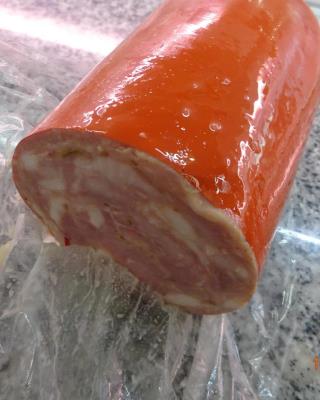
Czech Republic – HAM SALAMI – Microbial Spoilage

Food group: Meat and meat products / Heat-treated perishable products
HAM SALAMI
Category: Dangerous foods
Invalid parameter:
appearance
scent
changes caused by microbial activity
The food smelled of spoilage and had a slimy and sticky surface. Food is not considered safe if it shows signs of spoilage. The food had an unknown expiration date.
| Packaging: | intestine (open technological package) |
| Date of sample collection: | 14/08/2024 |
| Reference number: | 24-000482-SZPI-CZ |
The sample was detected by the official control of the State Agricultural and Food Inspection.
Czech Republic – Polish salami – Microbial Activity

Food group: Meat and meat products / Heat-treated perishable products
Polish salami
Category: Dangerous foods
Invalid parameter:
appearance
scent
changes caused by microbial activity
The food smelled of spoilage and had a slimy and sticky surface. Food is not considered safe if it shows signs of spoilage. The food had an unknown expiration date.
| Packaging: | intestine (open technological package) |
| Date of sample collection: | 14/08/2024 |
| Reference number: | 24-000481-SZPI-CZ |
The sample was detected by the official control of the State Agricultural and Food Inspection
Posted in food contamination, food handler, Food Hazard, Food Hygiene, Food Inspections, Food Micro Blog, Food Microbiology, Food Microbiology Blog, Food Microbiology Testing, Food Quality, food recall, Food Spoilage, microbial contamination, Microbial growth, Microbial Spoilage, Microbiological Risk Assessment, Microbiology, Microbiology Investigations, Microbiology Risk