Category Archives: lactic acid bacteria

Research – The Effects of Fat Content on the Shelf-Life of Vacuum-Packed Red Meat

MDPI

Abstract

When stored at chill temperatures, vacuum-packed (VP) lamb has a much shorter shelf-life than VP beef, primarily due to its higher pH, which could be linked to the higher fat content. The higher pH would create more favourable conditions for the growth of spoilage bacteria, resulting in a shorter shelf-life of meat. To determine the effects of fat on meat shelf-life as it relates to pH, a series of shelf-life trials at 2 °C were conducted using VP beef and lamb mince with varying fat contents (i.e., control with ~5%, 20%, and 50%) as a model system to red meat primal cuts. The results showed that higher fat content reduced the shelf-life of VP beef mince by 24% and lamb mince by 12.5%. This reduction was accompanied by significantly (p < 0.05) decreased glucose and lactic acid levels. Throughout storage, a higher fat content in beef and lamb mince generally resulted in a higher pH by 0.1 (p < 0.05) compared to the respective controls. Higher fat content mince also had faster lactic acid bacteria growth rates (by up to 0.13 Log10 CFU/g/day) and higher maximum populations of presumptive enteric bacteria up to 1.3 Log10 CFU/g (p < 0.05). These results suggest that fat content can negatively influence the shelf-life of VP red meat through lowering glucose and lactic acid levels, raising the pH, and increasing LAB growth rate and maximum population levels of presumptive enteric bacteria.
Research – Anti-Biofilm Effects of Z102-E of Lactiplantibacillus plantarum against Listeria monocytogenes and the Mechanism Revealed by Transcriptomic Analysis

MDPI

Abstract

Lactic acid bacteria (LAB) are the most common probiotics, and they present excellent inhibitory effects on pathogenic bacteria. This study aimed to explore the anti-biofilm potential of the purified active substance of Lactiplantibacillus plantarum, named Z102-E. The effects of Z102-E on Listeria monocytogenes were investigated in detail, and a transcriptomic analysis was conducted to reveal the anti-biofilm mechanism. The results indicated that the sub-MIC of Z102-E (3.2, 1.6, and 0.8 mg/mL) decreased the bacterial growth and effectively reduced the self-aggregation, surface hydrophobicity, sugar utilization, motility, biofilm formation, AI-2 signal molecule, contents of extracellular polysaccharides, and extracellular protein of L. monocytogenes. Moreover, the inverted fluorescence microscopy observation confirmed the anti-biofilm effect of Z102-E. The transcriptomic analysis indicated that 117 genes were up-regulated and 214 were down-regulated. Z102-E regulated the expressions of genes related to L. monocytogenes quorum sensing, biofilm formation, etc. These findings suggested that Z102-E has great application potential as a natural bacteriostatic agent.

RASFF Alert – Lactic Acid Bacteria – Tomato Ketchup

RASFF

Too high lactic acid bacteria in tomato ketchup from the Netherlands in Belgium, Curaçao, Germany, Suriname.

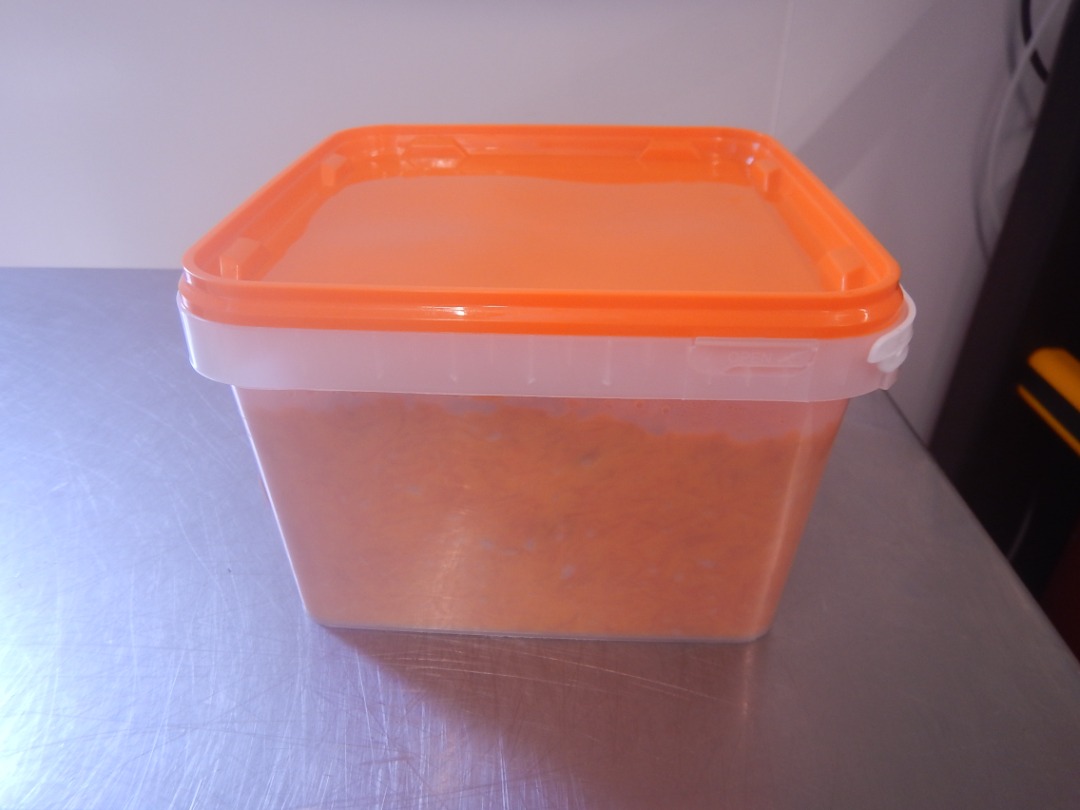
France – Grated carrots vinaigrette – Spoilage Lactic Acid Bacteria

Gov France

Product category
Food
Product subcategory
Prepared meals and snacks
Product brand name
THE MARKET CHEF
Model names or references
packaged in 2.8kg multi-portion clipped tray packaged in 100g single-portion heat-sealed tray
Product identification
GTIN Batch Date
347996000981 242413 Use-by date 07/04/2024
3479960006846 242413 Use-by date 06/28/2024
Products List
201101_grated_carrots_vinaigrette_2.8kg.PDFAttachment
Packaging
multi-portion clipped tray 2.8kg single-portion heat-sealed tray 100g
Start/End of marketing date
From 06/17/2024 to 06/20/2024
Storage temperature
Product to be kept in the refrigerator
Geographic area of ​​sale
Whole France
Distributors
Leclerc HARLY Maisons HOFER VIVALYA TGFL CDC DISPERE SERVIDIS HOSPITALS OF PARIS

RASFF Alert- Lactic Acid Bacteria – Organic Follow on Formula

RASFF  – Organic follow-up formula containing non-authorized novel food lactic acid bacteria (Limosilactobacillus fermentum hereditum) from Germany

Research – Biocontrol of L. monocytogenes with Selected Autochthonous Lactic Acid Bacteria in Raw Milk Soft-Ripened Cheese under Different Water Activity Conditions

MDPI

Abstract

The effect of selected autochthonous Lactic Acid Bacteria (LAB) against Listeria monocytogenes was evaluated in two elaborations of soft-ripened cheese performed under high and low relative humidity (RH) elaborations, to achieve aw ranging from 0.97 to 0.94 in ripened cheeses. Two selected autochthonous strains of Lacticaseibacillus casei 31 and 116 were used. In each elaboration, 8 batches were physicochemically and microbiologically evaluated throughout the ripening process. The aw and pH decreased during ripening to final values ranging from 0.944 to 0.972 aw and 5.0 to 5.3 pH, respectively. LAB was the only microbial group that increased throughout the ripening in high and low RH elaborations. In batches that were uninoculated with LAB strains, L. monocytogenes was either maintained at the initial inoculation level or showed a slight reduction by the end of the ripening process. However, in LAB-inoculated batches in the two elaborations, steady decreases of L. monocytogenes were observed throughout maturation. L. casei 31 alone or in combination with strain 116 provoked reductions of 2 to 4 log CFU/g in L. monocytogenes over 60 days of ripening, which could be enough as a strategy for biocontrol to deal with the usual contamination by L. monocytogenes during cheese processing.

Denmark – Lactic acid bacteria in mayonnaise

Foedevarestyrelsen

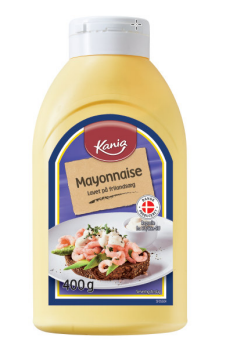
Lidl Denmark is recalling Kania mayonnaise, as growth of lactic acid bacteria has been detected in the product.

If you have the product, you should discard it or return it to the store where it was purchased.

Kania mayonnaise
Image of the product

Which food is recalled

Kania mayonnaise
Net content 400 g
Best-before date 27-02-2024

Where is the product sold

The product is sold in Lidl stores throughout the country.

Why is the product being recalled?

Growth of lactic acid bacteria makes the product unsuitable as food.

What should you do as a consumer?

The Danish Veterinary and Food Administration advises consumers to return the product to the store where it was purchased or to discard it.

Who recalls the product

Lidl Denmark K/S, Carl Blochs Gade 89, 8000 Aarhus C.

Denmark – Lactic acid bacteria in Harboe Exotic ZERO sugar

Foedevarestyrelsen

Harboes Bryggeri A/S is recalling a batch of Harboe Exotic Zero Sugar, as the development of lactic acid bacteria has been detected in the product. If you have the product, you should discard it or return it to the store where it was purchased.

Which food is recalled
Harboe Exotic ZERO Sugar
Net content: 1.5 L
Best before date: 29.05.2024
LOT no. 290524
EAN barcode no.: 5711018035742

Where is the product sold
The product is sold in: Rema1000 stores throughout the country

Why is the product being recalled?
Lactic acid bacteria make the product unsuitable as food.

What should you do as a consumer?
The Danish Veterinary and Food Administration advises consumers to return the product to the store where it was purchased, or to discard it.

Who recalls the product
Harboes Bryggeri A/S
Spegerborgvej 34
4230 Skælskør

Research – Characterization of the Bacterial Composition of 47 Fermented Foods in Sweden

MDPI

Abstract

Fermentation has long been utilized to preserve and enhance the flavor and nutritional value of foods. Recently, fermented foods have gained popularity, reaching new consumer groups due to perceived health benefits. However, the microbial composition of many fermented foods re-mains unknown. Here, we characterized the bacterial composition, diversity, and richness of 47 fermented foods available in Sweden, including kombucha, water kefir, milk kefir, yogurt, plant-based yogurt alternatives, kimchi, sauerkraut, and fermented vegetables. Via 16S rRNA gene sequencing, we identified 2497 bacteria (amplicon sequence variants). The bacterial composition was strongly associated with the type of fermented food, and lactic acid bacteria and/or acetic acid bacteria dominated most samples. However, each fermented food had a unique composition, with kombucha and water kefir having the highest diversity across and within samples. Few bacteria were abundant in multiple foods and food groups. These were Streptococcus thermophilus in yogurts and plant-based yoghurts; Lactococcus lactis in milk kefirs and one water kefir; and Lactiplantibacillus plantarum in kimchi, sauerkraut, and fermented cucumber. The broad range of fermented foods included in this study and their diverse bacterial communities warrant further investigation into the implications of microbial compositions for product traits and potential impact on human health.

RASFF Alert- Lactobacilli – Curry Ketchup

RASFF

Lactobacilli in curry ketchup from the Netherlands in Aruba, Canada, Portugal and Spain