Category Archives: Food Illness

Research – Prolonged multi-country outbreak of Listeria monocytogenes ST173 linked to consumption of fish products 2012-2024

EFSA

Abstract

Between 2012 and 2024, a prolonged outbreak of 73 cases of L. monocytogenes ST173 infections (‘My2’ -cluster) has been ongoing in Belgium (5), Czechia (1), Germany (39), Finland (2), Italy (1), the Netherlands (20), and the United Kingdom (UK) (5). Fourteen deaths have been recorded as associated with this outbreak. Males aged over 60 years represent the most affected population group. Most patients with available information from case interviews report consuming various fish products before illness. Among 73 cases, an ongoing ‘My2’ sub-cluster 1 was identified with 38 cases reported in six EU countries and the UK.

The ‘My2’ sub-cluster 1 includes 83 non-human isolates, of which 48 are food isolates and six are environmental isolates with traceability data corresponding to 37 fish products (different typologies) and 12 fish manufacturers (located in six EU countries and one third country). The epidemiological and traceability information did not allow identification of a single common point or food business operator in the traceability of all products. Five countries reported the implementation of control measures.

The whole genome analysis (WGS) analysis, the tracing evidence, and the detection in fish products between 2017 and 2024 suggest that the strain has been geographically spread in Europe for several years, most likely originated from a past single source high up in the production chain, and has been established in different fish processing plants. Overall, the evidence supports the hypothesis of fish products as the vehicle of infections.

Given the detection of the outbreak strain in multiple types of fish products and its wide circulation in the EU/EEA fish production chain, new cases are likely to be reported. Corrective measures should be implemented in the plants where the contamination is detected, and further investigations should be carried out to identify the point of entry and prevent possible re-contamination.
Grand Hyatt Hong Kong linked to 15 food poisoning cases involving tainted ice cream

SCMP

Health authorities have identified eight linked food poisoning clusters involving 15 people who ate vanilla ice cream at three restaurants at the Grand Hyatt hotel in Hong Kong earlier this month.

The Centre for Health Protection said on Friday that the clusters included three earlier linked to the same hotel in Wan Chai, where all the affected people fell ill after eating the ice cream at the three venues on June 1 and 2.

“They developed abdominal pain, fever, nausea, vomiting and diarrhoea about 15 to 65 hours after consuming the food concerned,” it said.

“The stool specimens of six affected people were positive for Salmonella upon laboratory testing. Four of the Salmonella isolates belong to the same group of Salmonella enteritidis,” it said.

“In view of the epidemiological investigations and test results, the affected people’ symptoms were very likely related to consumption of the concerned ice cream provided by the hotel.”

UK E. coli O145 Outbreak hits 256 sick

Food Poison Journal

As of 18 June, there have been a further 45 cases associated with the recent outbreak of STEC O145 since the last update (14 June), bringing the total number of confirmed cases to 256 in the UK. All currently confirmed cases had symptom onset dates before 31 May. Although the rate of cases has now slowed, we expect the figure to rise as NHS laboratories refer specimens to UKHSA for genomic sequencing which can link cases to this outbreak strain.

Confirmed case totals:

  • 168 in England
  • 56 in Scotland
  • 29 in Wales
  • 3 in Northern Ireland (evidence suggests that they acquired their infection in England)

Based on information from 227 cases to date, 38% were admitted to hospital.

Investigations have highlighted pre-packaged sandwich products containing lettuce as the likely source of the outbreak.

USA- CDC – Salmonella Outbreak Linked to Fresh Basil is Over

CDC

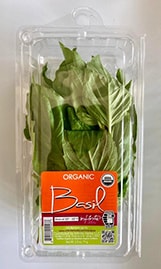
Basil product photo

Fast Facts
  • Illnesses: 36
  • Hospitalizations: 4
  • Deaths: 0
  • States: 14
  • Recall: Yes
  • Investigation status: Closed

Epidemiologic and traceback data showed that Infinite Herbs brand organic basil might have been contaminated with Salmonella and made people sick. Recalled basil is no longer available for sale and the use-by dates have passed.

Always follow the four food safety steps to prevent getting sick from Salmonella:

  • Clean: Wash your hands, utensils, and surfaces often.
  • Separate: Keep food that won’t be cooked separate from raw meat, poultry, and seafood.
  • Cook: Use a food thermometer to make sure you have cooked your food to a temperature high enough to kill germs.
  • Chill: Refrigerate perishable food (food that goes bad) within 2 hours. If the food is exposed to temperatures above 90°F (like a hot car or picnic), refrigerate it within 1 hour. Thaw food in the refrigerator, not on the counter.

Research – Minced Beef Identified as Likely Source of Deadly 2023 E. Coli Outbreak in UK

Food Poisoning News

A severe outbreak of E. coli that swept across the United Kingdom in the summer of 2023, resulting in one death and dozens of severe illnesses, has now been traced back to a probable source – minced beef products.

The outbreak, according to a recent article in The Sun, which was initially detected by the UK Health Security Agency’s (UKHSA) surveillance systems in June 2023, was caused by a rare strain of Shiga toxin-producing Escherichia coli, or STEC.  This strain is known for causing severe gastrointestinal symptoms, including bloody diarrhea, abdominal pain, fever, and vomiting.

While the precise source of contamination remains elusive, the investigation has narrowed down the likely culprit to minced beef products.  Ten of the patients filled out questionnaires to provide a detailed account of their food history for the two weeks leading up to the onset of sickness.  All 10 reported eating either beef burgers, beef mince prepared at home, or other beef mince products.

Denmark – More outbreaks of Salmonella in 2023

SSI

In Denmark, the number of salmonella outbreaks increased from 2022 to 2023. This is evident from the annual report on zoonoses in Denmark, prepared by the DTU Food Institute, the Danish Food and Drug Administration and the Staten Serum Institut.

In Denmark, 18 salmonella outbreaks were registered in 2023, which is a significant increase from 2022, when there were 11 outbreaks. This appears from the annual report for 2023 on the incidence of zoonoses – diseases that can be transmitted from animals and food to humans.

The largest salmonella outbreak in 2023 in Denmark counted 31 registered cases of illness and was caused by Salmonella Munich. 8 of the Salmonella outbreaks in Denmark in 2023 are due to Salmonella Enteritidis. In total, around 200 patients were infected with different types of salmonella.

Increase in outbreaks with Salmonella Enteritidis also in Europe

The increasing number of outbreaks is also seen elsewhere in Europe and follows a general trend. Four of the 11 outbreaks of Salmonella Enteritidis detected in Denmark in 2023 can be traced back to larger international outbreaks.

EFSA, the European Food Safety Authority, reports that European countries have reported several outbreaks in 2023. EFSA’s database contains results from genetic analyzes of the bacteria, which have contributed to clarifying and tracing both the meat and the companies where the salmonella originates.

“When several countries in Europe contribute to the same database, we have a better chance of clarifying more European foodborne outbreaks. And we can see that salmonella can be linked to imported chicken meat,” says research group leader Marianne Sandberg from the DTU Food Institute. Salmonella Enteritidis is more often found in hens, chickens and eggs than in foods of other animal origin. Humans can become infected through contact with animals or food that is infected with the bacteria.

“Salmonella Enteritidis is an infection we most often see after people have traveled. It was therefore surprising that the number of Salmonella Enteriditis outbreaks within the country’s borders increased from 1-3 per year in 2017-2022, to 8 in 2023,” says Luise Muller, epidemiologist from the Statens Serum Institut.

The source of infection for one outbreak was fried chicken meat for kebabs. That particular outbreak was part of an international outbreak and involved over 200 patients in 13 countries. There are no indications that Danish-produced eggs or chicken meat were the cause of the salmonella outbreak.

“In Denmark, we have a very fine-tuned control for salmonella in the production of broilers and eggs for human consumption. If we find salmonella, eggs or chicken meat from the flocks must not be sent out to consumers, but must be heat treated,” says specialist consultant Gudrun Sandø from the Danish Food and Drug Administration.

Russia – Over 120 people hospitalized, 30 in ICU, with suspected botulism in Moscow; criminal probe launched

CBS News

A suspected outbreak of a rare and extremely dangerous food poisoning in Moscow left more than 120 people seeking medical help and at least 30 in intensive care, health officials said on Monday.

The patients were admitted to hospital with suspected foodborne botulism, a life-threatening condition that attacks the nervous system and can cause respiratory failure and paralysis.

Russian authorities said the toxic outbreak came from salads distributed by a popular online delivery service, which on Sunday temporarily suspended its operations amid a criminal investigation.

“In total 121 people sought medical help,” state news agencies quoted Anastasia Rakova, the deputy mayor of Moscow, as saying on Monday.

“At the moment 55 people are in a serious condition, 30 of them in intensive care,” she added.

The city’s consumer and health watchdog, Rospotrebnadzor, said on Saturday it was conducting an “epidemiological investigation into suspected cases of botulism.”

Netherlands – Norovirus behind outbreak that sickened almost 1,000 people in the Netherlands

Food Safety News

Officials have revealed findings from an investigation after hundreds of people reported feeling sick after going to a celebration in the town of Berkel en Rodenrijs.

GGD Rotterdam-Rijnmond and NVWA looked into the source of illnesses. The biggest cause of gastrointestinal complaints appeared to be norovirus. A total of 918 people reported being sick after attending the event but no serious illnesses were recorded.

GGD Rotterdam-Rijnmond visited the site where King’s Day was celebrated in Berkel en Rodenrijs several times and stool samples from 11 people were examined in the laboratory.

UKSHA – E. coli advice issued amid rise in cases.

Gov UK

As of 11 June, there have been a further 98 cases associated with this outbreak of STEC O145 in the UK, bringing the total number of confirmed cases to 211. All cases had sample dates before 31 May, but we expect this figure to rise as whole genome sequencing is ongoing to find any further cases which may be linked to the outbreak.

  • 147 in England
  • 27 in Wales
  • 35 in Scotland
  • 2 in Northern Ireland (for these cases, evidence suggests that they acquired their infection while visiting England)

Based on information from 160 cases to date, 42% were admitted to hospital.

UKHSA has worked closely with the Food Standards Agency (FSA), Food Standards Scotland and the devolved public health agencies to investigate the incident, carrying out epidemiological investigations and whole genome sequence analysis to help identify foods commonly consumed by the cases.

As a result of evidence gathered to date, product recall information notices have been published by FSA as a precaution.

Trish Mannes, Incident Director at UKHSA, said:

We would like to thank all the cases who have provided information that has enabled us, through epidemiological analysis of questionnaire data and food tracing investigations, to narrow down the likely food product linked to this outbreak.

Symptoms of infections with STEC include severe and sometimes bloody diarrhoea, stomach cramps, vomiting and fever. If you are unwell, have eaten salad leaves recently and are concerned about any symptoms, follow NHS.uk guidance on when to seek help and the steps you can take to avoid further spread to family and friends.

While diarrhoea and vomiting can have a range of causes, there are simple steps you can take to reduce your risk and risk of infecting others. Washing your hands with soap and warm water and using disinfectants to clean surfaces will help stop any further spread of infection. If you are unwell with diarrhoea and vomiting, you should not prepare food for others while unwell and avoid visiting people in hospitals or care homes to avoid passing on the infection in these settings. Do not return to work, school or nursery until 48 hours after your symptoms have stopped.

Darren Whitby, Head of Incidents at the FSA, said:

Sandwich manufacturers are taking a precautionary measure to recall various sandwiches, wraps, subs and rolls in response to findings from investigations by the Food Standards Agency (FSA), Food Standards Scotland (FSS) and UK Health Security Agency (UKHSA) who are working to identify the cause of an ongoing outbreak caused by shiga toxin-producing E.coli (STEC). The full list of products can be found in the product recall information notice (PRIN).

This is a complex investigation, and we have worked swiftly with the relevant businesses and the local authorities concerned to narrow down the wide range of foods consumed to a small number of salad leaf products that have been used in sandwiches, wraps, subs and rolls. Following thorough food chain analysis, these products are being recalled as a precaution.

Infections caused by STEC bacteria can cause severe bloody diarrhoea and, in some cases, more serious complications. We therefore advise any consumers who have any of these products not to eat them.

The FSA is here to ensure that food is safe. If there are products on the market that are not, we won’t hesitate to take action to remove them.

Research- Chine -Pre-planned Studies: Pathogenic Surveillance of Foodborne Illness-Related Diarrhea — Beijing Municipality, China, 2013–2023

China CDC

  • Summary

    What is already known about this topic?Foodborne diseases present a significant public health concern, particularly in China, where they represent a significant food safety challenge. Currently, there is a need for a thorough and systematic analysis of the extended epidemiological patterns of foodborne diseases in Beijing Municipality.

    What is added by this report?Monitoring results show that Norovirus and diarrheagenic Escherichia coli (DEC) are the most commonly identified foodborne diarrheal pathogens. Individuals aged 19–30 are at a higher risk of foodborne diarrhea in Beijing, with Salmonella infection being associated with fever symptoms.

    What are the implications for public health practice?This study analyzes 11 years of consecutive monitoring data to enhance understanding of the epidemiological and clinical features of foodborne diarrhea in Beijing. It aims to identify high-risk populations, assist in clinical pathogen identification and treatment, and support the development of tailored preventive strategies.