Category Archives: Bacillus cereus

Australia- Recall Favor Swallow Bean Sauce – Bacillus cereus

FSANZFSANZ

Delin (Australia) Trading Pty Ltd has recalled Favor Swallow Bean Sauce from some Asian supermarkets in Victoria due to microbial contamination (Bacillus cereus). Food products contaminated with Bacillus cereus  may cause illness if consumed. Consumers should not eat this product and should return it to the place of purchase for a full refund.

Microbial safety and quality of various types of cooked chilled foods

Science Direct

Refrigerated Processed Foods of Extended Durability (REPFEDs) are a diverse group of food products. Their production process consists of a variable sequence of different processing steps leading to various types of REPFEDs being introduced to the market. To assure microbial safety, the food industry relies on a combination of mild heat treatment (i.e. pasteurization), appropriate product formulation (i.e. pH, water activity, modified atmosphere packaging, preservatives), cold storage and shelf life limitation. In this paper a classification of REPFED food types is presented and their microbiological safety is evaluated. REPFEDs were classified according (i) to the production process and (ii) to the expected consumer’s reheating practices. To evaluate the microbiological safety, historical data on the microbial contamination of REPFEDS were collected from five companies, 706 analyses on the day of production (T0) and 2912 analyses at the end of shelf life (TEoS). Results demonstrated that the microbial safety of the products is overall satisfactory. The number of samples exceeding the acceptable levels for Bacillus cereus/sulfite reducing Clostridia (T0: 103 CFU/g, TEoS: 105 CFU/g) was 4.07%/1.94% at T0 and 2.04%/0.69% at TEoS. None of the samples exceeded the acceptable levels for Listeria monocytogenes (T0: Absent in 25 g, TEoS: max 102 CFU/g). In addition the temperature of 38 products was monitored during reheating according to instructions of the manufacturer. The pasteurization values obtained during reheating are very heterogeneous, and only 7 products obtained a P70 of 2 min throughout the entire product. To assess the effect of reheating on L. monocytogenes a challenge test (including reheating) of paella with L. monocytogenes was performed. This demonstrated that L. monocytogenes can grow up to 0.63 log CFU/g in 6 days at 4 °C and that reheating the paella according to the instructions on the label does not guarantee absence of L. monocytogenes. These findings demonstrate the microbial food safety of the tested REPFEDs is satisfactory, and that producers should not rely on the reheating at consumer level to eliminate L. monocytogenes.


RASFF Alerts


RASFF – Listeria monocytogenes Sweden Cheese Raw material from France

RASFF – Salmonella typhimurium Norway Beef from Uruguay.

RASFF – Salmonella and Bacillus cereus in All Spice in Austria orginating in Germany.

US Salmonella paratyphi Outbreak

WYFF4COM

More than two dozen people have become ill in a salmonella outbreak in Western North Carolina, according to the Buncombe County Department of Health.

The Department of Health is investigating an outbreak of Salmonella Paratyphi B infection in Buncombe County.

Communicable disease nurses and environmental health specialists are conducting interviews with people who currently have or have had the infection, reviewing laboratory reports and inspecting food sources that may be linked to the outbreak.

Communicable disease experts from the North Carolina Division of Public Health and the Centers for Disease Control and Prevention, as well as food specialists from the N.C. Department of Agriculture, are assisting with the investigations.

Bacillus Spore Germination

Physorg.com

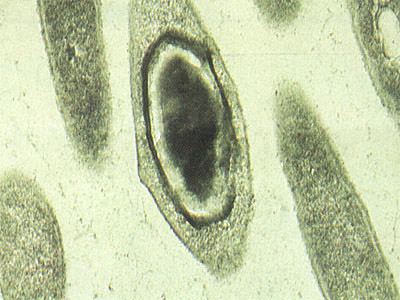
Some bacteria can form spores (survival capsules) that are particularly resistant to heat. Since sporogenous bacteria can also cause food poisoning and a reduction in food quality, they constitute a significant threat to the food industry.

If spores are to pose a risk, they have to “wake up” from a state of hibernation and return to their normal growth cycle through a process called germination.

Refrigerated foods with a shelf-life of several weeks are often heat-processed at temperatures between 65 – 95 C. This kills the majority of bacteria, but Bacillus spores can survive, germinate and develop into growing bacteria. Thermal treatment of this kind will in fact improve the growth potential of sporogenous bacteria because the heat kills competing bacteria flora and stimulates the surviving spores so that germination can commence more rapidly. The thermal treatment can increase the risk of spore germination in food and result in subsequent bacterial growth and a risk of quality deterioration and food poisoning.

Løvdal has investigated how the germination characteristics of the spores of four different Bacillus species are affected by heat treatment. She has used knowledge about the spores’ response to temperature to experiment with a method which can reduce the spore level without increasing the overall thermal treatment of the food product.