Archives
-
Join 346 other subscribers
KSWFoodWorld
Blog Stats
- 445,595 Views


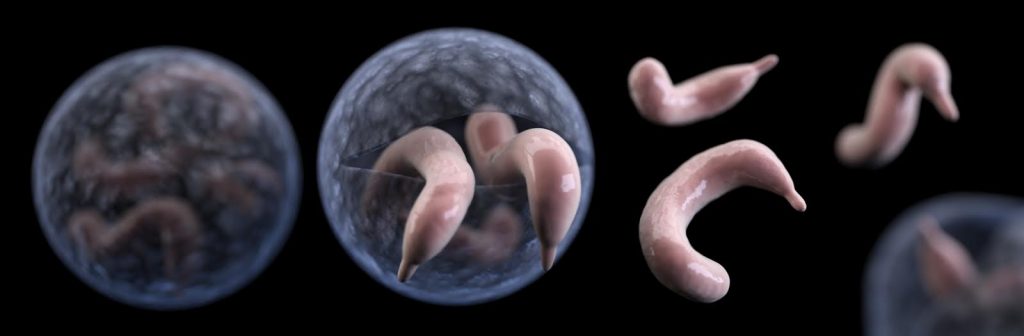
When the European Food Safety Authority published a review of the public health risk of foodborne parasites in 2018, it focused on three, which it considers to be the most pressing today and in the future immediate, either for current production systems, the effectiveness of control measures, eating habits or because of their severity. The selection included Cryptosporidium spp., Toxoplasma gondii and Echinococcus ssp. These parasites are resistant in the environment, they do not have specific controls, and the food industry’s awareness of them is variable, in contrast to what happens with Trichinella spiralis and Anisakidae .
Cryptosporidiosis is generally associated with acute gastrointestinal conditions, has no specific treatment, and outbreaks have occurred related to the consumption of contaminated fresh produce.
Microorganisms exhibit intricate interconnections with tea trees plants; however, despite the well-established role of microorganisms in crop growth and development, research on microbes within the tea plant remains insufficient, particularly regarding endophytic microorganisms. In this study, we collected samples of leaves and rhizosphere soils were collected from ‘Zhuyeqi’, ‘Baojing Huangjincha#1Baojing Huangjinchayihao’, ‘Anjibaicha’Baiye#1’, and ‘Jinxuan’ varieties planted. Our analyses revealed significant variations in tea polyphenol contents among tea varieties, particularly with the ‘Zhuyeqi’ variety exhibiting higher levels of tea polyphenols (>20% contents). Microbiome studies have revealed that endophytic microbial community in tea plants exhibited higher host specificity compared to rhizospheric microbial community rhizosphere microbial community. Analyses of across-ecological niches of the microbial community associated with tea plants of the microbiota associated with tea plants revealed that soil bacteria serve as a significant reservoir for endophytic bacteria in tea plants, Balneola Bacillus may play a crucial role in shaping the bacterial community across-ecological niche within the tea plants with higher tea polyphenol levels. In the aforementioned analyses, the microbial community of ‘Zhuyeqi’ exhibited a higher degree of host specificity for leaf endophytic microorganisms, the topological structure of the co-occurrence network is also more intricate, harbouring a greater number of potential core microorganisms within its nodes. A closer examination was conducted on the microbial community. A more intricate examination was conducted on the microbial community of ‘Zhuyeqi’, further analyses of its endophytic bacteria indicated that its endophytic microbial community harbored a greater abundance of biomarkers, particularly among bacteria, and the enriched Methylobacterium and Sphingomonas in ‘Zhuyeqi’ may play distinct roles in disease resistance and drought resilience in tea plants. In summary, this study has shed light on the intricate relationships of tea plant varieties with their associated microbial communities, unveiling the importance of microorganisms and tea varieties with higher tea polyphenols, and offering valuable insights to the study of microorganisms and tea plants. this study shaded light on the intricate relationship between tea plant varieties and their associated microbial community and unveiled the importance of the tea varieties with higher tea polyphenols in microbial studies, offered valuable insights for the studies of microorganism-tea plants.
The Food Safety Authority of Ireland (FSAI) Scientific Committee has published a scientific report on the safety assessment of micro-organisms (“probiotics”) used in food supplements which aims to help companies assess the safety of “probiotics” , in the absence of specific legal criteria.
“Probiotics” are defined by FAO/WHO* as “live micro-organisms which when administered in adequate amounts confer a health benefit on the host”. The term “probiotic”, however, is currently an unauthorized health claim under EU law. Applications for health claims on “probiotics” have been submitted for evaluation to the European Food Safety Authority (EFSA) and so far, no application has received a positive opinion and subsequent authorization. Although the term is not permitted on food product or dietary supplement labels, the term is used in this scientific report because it is widely used by industry and the scientific community.
The Committee found that reported adverse events associated with “probiotics” are few and tend to be ad hoc reports of infections, including bacteremia, sepsis, or endocarditis in people with belonging to different risk groups.
The report makes recommendations on the criteria for safety assessment and the evidence that a producer of food supplements should use to demonstrate the micro-organism safety of their products.
Posted in Food Microbiology Research, Probiotic, Research
Going to the farmers market is a weekly staple for many, and markets are available across the country both seasonally and year-round. Farmers markets offer a wide variety of fresh local products like fruits, vegetables, meats, cheeses and beverages. When shopping at the farmers market, it’s important to keep food safety in mind to avoid foodborne illness from tagging along.
Read more at the link above.
The food industry plays a crucial role in global health and economy, offering a wide range of products that sustain human populations. However, ensuring food safety and preventing foodborne illnesses remain significant challenges. A critical issue is the presence of bacterial persister cells – dormant cells within bacterial populations that exhibit remarkable tolerance to various stressors, including antibiotics and sanitizers. This dormancy state allows them to survive unfavorable conditions and potentially become active again if under favorable conditions.
Persister cells are implicated in recurrent contamination and outbreaks within food production environments. Unlike antibiotic resistance, which involves genetic changes, persistence is a phenotypic adaptation that poses unique challenges for detection and control. Understanding the mechanisms of persistence, its triggers, and implications in the food industry is essential for developing effective strategies to mitigate food safety risks.
This Research Topic aims to consolidate current knowledge on bacterial persister cells in the food industry, including the fundamental mechanisms that underlie bacterial persistence, their role in foodborne diseases, and innovative approaches for detection and management.
Posted in Food Microbiology Research, Research, Salmonella
This work reports on the validation of a liquid chromatography–tandem mass spectrometric method for the simultaneous quantification of more than 700 mycotoxins and other secondary fungal metabolites and plant toxins in pasta, biscuits, crackers and musli. The “dilute and shoot” approach was found to be fully applicable to these complex matrices, as only 7–14% of the analytes exhibited significant matrix effects while recoveries of the extraction were outside the target range of 70–120% for only 26 compounds. Data on repeatability (based on 7 brands per matrix) and on intermediate precision was compliant to the related < 20% criterion for 95–98% and 99% of all analytes, respectively. The limits of quantification were much lower than the related regulatory limits set for mycotoxins in cereal products. Application of the method to 157 samples from the European market revealed the presence of enniatins and deoxynivalenol in the majority of the samples. No regulatory limits were exceeded except the sum of ergot alkaloids being higher in a few samples than the 50–150 µg/kg to be implemented as of July 2024.
Posted in Food Microbiology Research, Mycotoxin, Research