Monthly Archives: October 2018

Frozen berries should be boiled

Barf Blog

Hepatitis A virus is an important cause of food-borne diseases and has been associated with several European outbreaks linked to berries [14]. Here, we describe an ongoing outbreak of hepatitis A virus (HAV) in Sweden and Austria and the confirmation of frozen strawberries imported from Poland as the source of infection. The aims are to highlight the importance of sequencing in outbreak investigations and, due to the long shelf-life of the food vehicle, to increase awareness and warnings towards HAV infections related to frozen strawberries in Europe.


Research – Outbreak of multiple strains of non-O157 Shiga toxin-producing and enteropathogenic Escherichia coli associated with rocket salad, Finland, autumn 2016

Eurosurveillance  

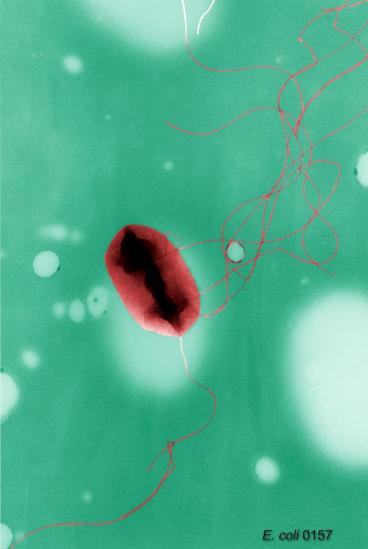
kswfoodworld E.coli O157

Image CDC


are Gram-negative rod-shaped bacteria and part of the normal bacterial flora in the gastrointestinal tract, while diarrhoeagenic pathotypes such as Shiga toxin-producing (STEC) and enteropathogenic (EPEC) are able to cause gastrointestinal infections [1]. STEC can lead to a severe disease, such as haemolytic-uraemic syndrome (HUS) [2]. The risk of HUS has been related especially to children under 5 years and to elderly people. HUS is characterised by acute onset of microangiopathic haemolytic anaemia, renal injury and low platelet count.

More than 400 STEC serotypes have been recognised, of which the best-known serotype is O157:H7 [1]. The most common non-O157:H7 serotypes causing human infections are O26, O103, O111 and O145 [3]. The virulence of STEC is largely based on the production of Shiga toxin 1 or 2 and is identified by detecting the presence of 1 or 2 genes [1,4]. The virulence of EPEC is caused by its capability to form attaching and effacing (A/E) lesions in the small intestine. This capability requires the presence of virulence genes called the locus of enterocyte effacement (LEE) in a pathogenity island (PAI) that encodes intimin [4]. Unlike STEC, EPEC do not produce Shiga toxin. EPEC are divided into two distinct groups by the presence of EPEC adherence factor plasmid (pEAF) expressing bundle-forming pili (BFP), which is a virulence determinant of typical EPEC (tEPEC) [5]. Thus atypical EPEC (aEPEC) are defined as that produce A/E lesions but do not express BFP. Typical EPEC are best known as a cause of infantile diarrhoea, especially in developing countries [6]. Diarrhoea-causing aEPEC have been shown to be separate group without a close relation to tEPEC, but some serotypes are genetically related to STEC [5]. The pathogenity of aEPEC has been questioned but their involvement with diarrhoeal outbreaks supports the idea that certain strains are diarrhoeagenic [1,7].

Both STEC and EPEC are transmitted through the faecal-oral route, and outbreaks caused by STEC and aEPEC have been described after ingestion of contaminated food or water [7,8]. STEC is common in ruminants and can be found in foods contaminated by ruminant faeces [9]. Most studies on STEC have focused on the serotype O157:H7, but infections and outbreaks caused by non-O157 strains are increasingly reported in Europe and elsewhere [1013]. Atypical EPEC strains are found in animals used for food production, such as cattle, sheep, goat, pig and poultry, in contrast to tEPEC that has been found only in humans [1,14].

Since 1995, clinicians and clinical microbiology laboratories have been obliged to report culture-confirmed STEC infections to the Finnish Infectious Disease Registry (FIDR) maintained by the National Institute for Health and Welfare (THL) in Finland. EPEC infections are not reportable. Since PCR instead of culture became the standard for screening of diarrhoeal patients in 2013, the incidence of reported STEC infections has increased in Finland to 1.2–1.8 per 100,000 population between 2013 and 2015 compared with 0.2–0.6 per 100,000 between 2000 and 2012. From 1997 to 2015, six food- or waterborne STEC outbreaks were detected in Finland


Research -Adoption of Neutralizing Buffered Peptone Water Coincides with Changes in Apparent Prevalence of Salmonella and Campylobacter of Broiler Rinse Samples

Journal of Food Protection

Buffered peptone water is the rinsate commonly used for chicken rinse sampling. A new formulation of buffered peptone water was developed to address concerns about the transfer of antimicrobials, used during poultry slaughter and processing, into the rinsate. This new formulation contains additives to neutralize the antimicrobials, and this neutralizing buffered peptone water replaced the original formulation for all chicken carcass and chicken part sampling programs run by the Food Safety and Inspection Service beginning in July 2016. Our goal was to determine whether the change in rinsate resulted in significant differences in the observed proportion of positive chicken rinse samples for both Salmonella and Campylobacter. This assessment compared sampling results for the 12-month periods before and after implementation. The proportion of carcass samples that tested positive for Salmonella increased from approximately 0.02 to almost 0.06. Concurrently, the proportion of chicken part samples that tested for Campylobacter decreased from 0.15 to 0.04. There were no significant differences associated with neutralizing buffered peptone water for the other two product-pathogen pairs. Further analysis of the effect of the new rinsate on corporations that operate multiple establishments demonstrated that changes in the percent positive rates differed across the corporations, with some corporations being unaffected, while others saw all of the establishments operated by the corporation move from passing to failing the performance standard and vice versa. The results validated earlier concerns that antimicrobial contamination of rinse samples was causing false-negative Salmonella testing results for chicken carcasses. The results also indicate that additional development work may still be required before the rinsate is sufficiently robust for its use in Campylobacter testing.

USA -Salmonella and Listeria monocytogenes cause Salad with Bacon and Corn to be Recalled

Food Poison Journal

Prime Deli Corporation, a Lewisville, Texas establishment, is recalling approximately 217 pounds of ready-to-eat salad with bacon products that contain a corn ingredient that may be contaminated with Salmonella and Listeria monocytogenes, the U.S. Department of Agriculture’s Food Safety and Inspection Service (FSIS) announced today.

The ready-to-eat salads with bacon were produced on October 13. The following products are subject to recall:

  • 11.2-oz. clear plastic clamshell packages containing “7-ELEVEN™ BISTRO SOUTHWEST STYLE SALAD WITH BACON” and best by date of “Tuesday 1016”.
  • 9.6-oz. clear plastic clamshell packages containing “7-ELEVEN™ BISTRO SOUTHWEST STYLE SALAD WITH BACON” and best by date of “Tuesday 1016”.

The products subject to recall bear establishment number “EST. 13553” inside the USDA mark of inspection. These items were shipped to retail locations in Texas.

The problem was discovered on October 14, 2018 when Prime Deli Corporation received notification that the corn used in the production of their Southwest Style Salad with Bacon was being recalled by their corn supplier due to Listeria monocytogenes and Salmonella concerns.

Research – What pneumococcus says to make you sick?

Science Daily

Carnegie Mellon University researchers have identified a molecule that plays a key role in bacterial communication and infection. Their findings add a new word to pneumococcus’ molecular dictionary and may lead to novel ways to manipulate the bacteria and prevent infection. The findings, from the lab of Associate Professor of Biological Sciences Luisa Hiller, are published in the Oct. 11 issue of PLOS Pathogens.

Organisms worldwide communicate in their own unique ways: humans use words, bees dance, and fireflies glow. Decoding a community’s common language provides the ability to understand and influence the community’s behavior.

What if bacteria also have their own language? If we understood that syntax, could we simply ask the bacteria to stop making us sick?

These questions are at the core of Hiller’s research. Her lab is investigating “bacterial linguistics,” attempting to identify the “words” that bacteria use to communicate. They hope to assemble a dictionary that will give researchers the vocabulary they need to manipulate deadly pathogens.

The Hiller lab is unraveling how bacterial communication contributes to disease and antibiotic resistance, focusing on the bacterium pneumococcus.

USA – Updated Food Recall Warning – Certain Abbott brand formulated liquid nutrition products in 235 mL metal cans recalled due to possible bacterial contamination

CFIA

Recall details

Ottawa, October 15, 2018 – The food recall warning issued on September 23, 2018 has been updated to include additional product information. This additional information was identified during the Canadian Food Inspection Agency’s (CFIA) food safety investigation in collaboration with Abbott.

Abbott is recalling certain Abbott brand formulated liquid nutrition products in 235 mL metal cans from the marketplace due to possible bacterial contamination. Consumers should not consume and distributors, retailers and food service establishments such as hospitals and nursing homes should not sell or use the recalled products

Global Handwashing Day – Yesterday?

CDChandwashing

Celebrate Global Handwashing Day to promote handwashing with soap in your community and around the world.

Established by the Global Handwashing Partnership in 2008, Global Handwashing Day is celebrated each year on October 15 as a way to increase awareness and understanding of the benefits of handwashing with soap. Global Handwashing Day is an opportunity to get involved in creative ways to encourage people to wash their hands with soap at critical times.

Handwashing(https://www.cdc.gov/handwashing/index.html) is one of the most important steps we can take to avoid getting sick and spreading germs to others. Many germs that can make people sick are spread by not washing hands with soap and clean, running water. Handwashing is especially important during key times(https://www.cdc.gov/handwashing/when-how-handwashing.html), such as after using the bathroom or before preparing food.

USA – Valley Fine Foods Recalls Meat and Poultry Products due to Possible Adulteration

FSIS USDA USDA

WASHINGTON, Oct. 11, 2018 – Valley Fine Foods, a Forest City, N.C. establishment, is recalling approximately 35,516 pounds of heat-treated, not fully cooked meat and poultry products that may be adulterated due to presence of spoilage organisms that have rendered it unwholesome and unfit for human food, the U.S. Department of Agriculture’s Food Safety and Inspection Service (FSIS) announced today.

The heat-treated, not fully cooked, refrigerated meat and poultry products were produced on various dates from Aug. 15, 2018 through Oct. 4, 2018. The following products are subject to recall:  [View Labels here (PDF only)]

  • 12-oz. tray packages containing “SIMPLE DISHES™ Chicken Penne Alfredo” with case code #19034, case UPC code 1-07-42753-34709-0, and “BEST IF USED BY” “10/09/18” through “11/25/18”. Unit UPC 7-42753-34709-3.
  • 12-oz.  tray packages containing “SIMPLE DISHES™ Chicken Primavera” with case code #19033, case UPC code 1-07-42753-34708-3, and “BEST IF USED BY” “10/09/18” through “11/25/18”. Unit UPC 7-42753-34708-6.
  • 12-oz. tray packages containing “SIMPLE DISHES™ Italian Sausage Ziti” with case code #19035, case UPC code 1-07-42753-34711-3, and “BEST IF USED BY” “10/09/18” through “11/25/18”. Unit UPC 7-42753-34711-6.
  • 12-oz.  tray packages containing “SIMPLE DISHES™ Rigatoni with Meatballs and a Mushroom Cream Sauce” with case code #19036, case UPC Code of 1-07-42753- 34710-6 and “BEST IF USED BY” “10/09/18” through “11/25/18”.  Unit UPC 7-42753-34710-9.

The products subject to recall bear the establishment number “ P-22102B” or “M-22102B” on the side of the product package. These items were shipped retail locations in California, Connecticut, Maryland, Massachusetts, Michigan and North Carolina.

The problem was discovered on Oct. 4, 2018 by the establishment’s research and development department during routine internal testing. FSIS was notified on Oct. 10, 2018.

There have been no confirmed reports of adverse reactions due to consumption of these products. Anyone concerned about an injury or illness should contact a healthcare provider.

Europe – EU countries send ‘clear signals’ on lack of resources for safety efforts

Food Safety News  EUC

European member states have sent clear signals that staff resources for official controls are increasingly limited, according to a report.

Any potential further reduction risks negatively affecting the levels and quality of controls and capacity to respond to emergencies. Resource shortage also concerned equipment in some member states for laboratories, or means of transport for staff, affecting performance of controls.

The report covers the outcome of official controls in member states during 2014 to 2016.

The European Commission said it took note of these signals and will consider such issues when developing legislation. It added member states will likely aim to address the problem with new IT systems, re-organization and optimized procedures.

The Official Controls Regulation (EU) 2017/625 applied from April 2017 with rules gradually coming into force and a main application date of Dec. 14, 2019.

India – FSSAI, ICMSF, CHIFSS organise symposium on microbiological food safety

FNBNews images

FSSAI, ICMSF, CHIFSS organise symposium on microbiological food safety
Saturday, 13 October, 2018, 08 : 00 AM [IST]
Our Bureau, New Delhi
FSSAI, the International Commission on Microbiological Specifications for Foods (ICMSF) and the Confederation of Indian Industry (CII)-Hindustan Unilever Ltd (HUL) Initiative on Food Safety Sciences (CHIFSS) jointly organised a two-day International Symposium on Microbiological Food Safety: Sampling and Testing in Food Safety Management.

It was done in order to promote the latest approaches in microbiological sampling, testing and statistical interpretation and to further strengthen capacity building of trained resources in India in the area of microbiological limits and criteria to microorganisms associated with food and food production.

The FSSAI-industry collaboration aims to strengthen science-based food safety capability building in India and this is progressing rapidly. With the advent of the globalisation of the food supply chains, there is an impact on the food safety and quality aspects of food across global markets.

Effective food safety management systems and standards are, therefore, important from a public health as well as an economic standpoint as national government seek to protect their consumers while facilitating trade.

The Codex Alimentarius Commission (CAC), the global organization responsible for establishing international food standards, has been key in promoting effective use of microbiological sampling and testing to help drive continuous improvement in food safety and public health.

As one of the FSSAI’s collaborations to promote science behind food safety, CHIFSS has been contributing in an impactful way since 2016.

With an aim to bring in global best practices in microbiological food safety assurance for public health protection and safe food production, FSSAI and CHIFSS partnered with ICMSF.