Tag Archives: Escherichia coli O157:H7

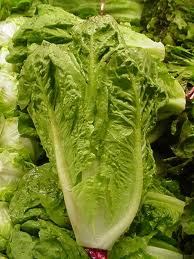
Canada – CFIA – Public Health Notice – Leafy Greens – E.coliO157

CFIA Ecoli Istock

The Public Health Agency of Canada is collaborating with federal and provincial public health partners to investigate an outbreak of Escherichia coli O157:H7, commonly called E.coli, with a possible link to leafy greens. A specific product has not been identified yet, and the investigation is ongoing.

At this time, the risk to Canadians is low. However, Canadians are reminded to follow safe food handling practices to avoid illness.

E. coli are bacteria that live naturally in the intestines of cattle, poultry and other animals. Most E. coli are harmless to humans, but some varieties carry genes that allow them to cause illness.

While most people made ill by E. coli experience a few days of upset stomach and then recover fully, infections can sometimes be life threatening.

Research – Bacterial Contamination in Saeng-go-gi, a Ready-to-Eat Fresh Raw Beef Dish Sold in Restaurants in South Korea

ingentaconnect

This study investigated the bacterial contamination levels in ready-to-eat fresh raw beef, Saeng-go-gi in Korean, sold in restaurants. A total of 462 samples were analyzed by performing an aerobic bacterial plate count, a coliform count, and an Escherichia coli O157:H7 count. Aerobic bacterial plate counts of fresh raw beef obtained from Seoul, Cheonan, Daegu, Gunsan, and Gwangju retail store restaurants were 6.46, 6.89, 6.39, 6.58, and 6.67 log CFU/g, respectively, and coliforms were 4.05, 4.97, 4.76, 3.62, and 3.32 log CFU/g, respectively. Among the 462 assessed samples, suspected E. coli O157:H7 colonies were found in 32, 24, 20, 22, and 16 samples obtained from Seoul, Cheonan, Daegu, Gunsan, and Gwangju, respectively. The identity of these isolated colonies was further assessed by using a latex agglutination kit. The agglutination assay data showed that the isolates were not E. coli O157:H7. The data from this study could be used to design better food handling practices for reducing foodborne illnesses linked to fresh raw beef consumption.

USA – Report E.coli O157 Outbreak 2013 – Cucumbers

Food Poisoning Journal

Friday the Colorado Department of Public Health and Environment (“CDPHE”) and several Denver metropolitan area public health departments released a report of their investigation of an outbreak of Escherichia coli O157:H7 (E. coli O157:H7) that occurred in October 2013 at Denver Jimmy John’s restaurants.

Research – Survival of Escherichia coli on Strawberries Grown Under Greenhouse Conditions

Science Direct strawberry

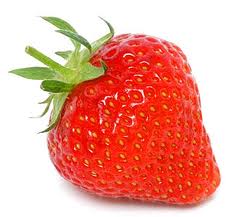
Strawberries are soft fruit that are not recommended to have a post-harvest wash due to quality concerns. Escherichia coli O157:H7 has been linked to outbreaks with strawberries but little is known about the survival of E. coli during the growth cycle of strawberries. The survival of E. coli on strawberry plants during growing under greenhouses conditions was evaluated. Soil, leaves, and strawberries (if present) were artificially contaminated with an E. coli surrogate either at the time of planting, first runner removal (4 wk), second runner removal (8 wk), or one week prior to harvest. At harvest E. coli was recovered from the leaves, soil, and strawberries regardless of the contamination time. Time of contamination influenced (P < 0.05) numbers of viable E. coli on the plant. The highest survival of E. coli (P < 0.0001) was detected in soil that was contaminated at planting (4.27 log10 CFU g soil−1), whereas, the survival of E. coli was maximal at later contamination times (8 wk and 1 wk prior to harvest) for the leaves (4.40 and 4.68 log10 CFU g leaves−1) and strawberries (3.37 and 3.53 log10 CFU strawberry−1). Cross contamination from leaves to fruit was observed during this study, with the presence of E. coli on strawberries which had not been present at the time of contamination. These results indicate that good agricultural best practices to avoid contamination are necessary to minimize the risk of contamination of these popular fruit with enteric pathogens. Practices should include soil testing prior to harvest and avoiding contamination of the leaves.


Research – Multistate Outbreak of Escherichia coli O157:H7 Associated with Bagged Salad

Mary Ann Leibert

Shiga toxin–producing Escherichia coli O157:H7 (STEC O157) is the most commonly identified serotype of STEC in the United States. An estimated 63,000 STEC O157 infections occur annually. Infection typically results in diarrhea, bloody stool, abdominal cramps, and, in some cases, hemolytic uremic syndrome. Recent outbreaks of STEC O157 have increasingly been associated with consumption of leafy greens such as lettuce and spinach. We investigated an outbreak of STEC O157 associated with the consumption of bagged salad with cases clustered in various institutional settings. A case–control study was conducted among cases from selected schools with controls matched by school and grade. Seventeen cases from three U.S. states were identified. The median age of cases was 23 years (range: 3–88) and 13 (76%) were female. Six cases were hospitalized and two died. Onset dates ranged from April 29 to May 12, 2012. The matched case–control analysis identified a single significant food service exposure: consumption of lettuce provided by a school cafeteria (median odds ratio=9.4, 95% confidence interval: 1.4–∞, p=0.0469). The implicated bagged salad product was traced back to a single production facility. Implicated growing areas were scheduled for heightened inspection for the upcoming growing season. A combination of analytical epidemiologic studies among subclusters of cases, surveillance, and traceback implicated bagged salad in this outbreak investigation.


Research – Blueberry Decontamination – Pulsed Light – Reduced E.coli in Cows – Natural Antimicrobials

Fresh Plaza

In recent years, the application of pulsed light (PL) technology for fresh produce decontamination has been limited because it causes the produce heating with serious consequences on organoleptic properties and impacts adversely the surface colour (= shadowing effect).

Scientists at University of Delaware (USA) have evaluated the efficacy of PL technology in inactivating Escherichia coli O157:H7 and Salmonella growth on blueberries. Moreover, they try to set up this novel technology to minimize the adverse effects of PL, such as heating and shadowing, on the physical and sensorial properties of blueberries.

Growing Georgia

A new biological treatment could help dairy cattle stave off uterine diseases and eventually may help improve food safety for humans, a University of Florida study shows.

Kwang Cheol Jeong, an assistant professor in animal sciences and UF’s Emerging Pathogens Institute, examined cattle uterine illnesses because they can make cows infertile, lower milk production and because those maladies are often linked to bacteria, he said. The UF researchers did their experiments in labs and at the Dairy Unit on the Gainesville campus.

Jeong and his research team infused chitosan microparticles ─ an antimicrobial material derived from dissolved shrimp shells ─ into diseased cow uteri.


Research – Impact of Temperature Abuse of Leafy Greens in Transport – Safety Impact

Ingenta ConnectEurofins Food Testing UK

Temperature abuse during commercial transport and retail sale of leafy greens negatively impacts both microbial safety and product quality. Consequently, the effect of fluctuating temperatures on Escherichia coli O157:H7 and Listeria monocytogenes growth in commercially-bagged salad greens was assessed during transport, retail storage, and display. Over a 16-month period, a series of time-temperature profiles for bagged salads were obtained from five transportation routes covering four geographic regions (432 profiles), as well as during retail storage (4,867 profiles) and display (3,799 profiles). Five different time-temperature profiles collected during 2 to 3 days of transport, 1 and 3 days of retail storage, and 3 days of retail display were then duplicated in a programmable incubator to assess E. coli O157:H7 and L. monocytogenes growth in commercial bags of romaine lettuce mix. Microbial growth predictions using the Koseki-Isobe and McKellar-Delaquis models were validated by comparing the root mean square error (RMSE), bias, and the acceptable prediction zone between the laboratory growth data and model predictions. Monte Carlo simulations were performed to calculate the probability distribution of microbial growth from 8,122,127,472 scenarios during transport, cold room storage, and retail display. Using inoculated bags of retail salad, E. coli O157:H7 and L. monocytogenes populations increased a maximum of 3.1 and 3.0 log CFU/g at retail storage. Both models yielded acceptable RMSEs and biases within the acceptable prediction zone for E. coli O157:H7. Based on the simulation, both pathogens generally increased <2 log CFU/g during transport, storage, and display. However, retail storage duration can significantly impact pathogen growth. This large-scale U.S. study—the first using commercial time/temperature profiles to assess the microbial risk of leafy greens—should be useful in filling some of the data gaps in current risk assessments for leafy greens.

Research – Growth of Escherichia coli O157:H7 and Listeria monocytogenes in Packaged Fresh-Cut Romaine Mix at Fluctuating Temperatures during Commercial Transport, Retail Storage, and Display

Ingentaconnect

Temperature abuse during commercial transport and retail sale of leafy greens negatively impacts both microbial safety and product quality. Consequently, the effect of fluctuating temperatures on Escherichia coli O157:H7 and Listeria monocytogenes growth in commercially-bagged salad greens was assessed during transport, retail storage, and display. Over a 16-month period, a series of time-temperature profiles for bagged salads were obtained from five transportation routes covering four geographic regions (432 profiles), as well as during retail storage (4,867 profiles) and display (3,799 profiles). Five different time-temperature profiles collected during 2 to 3 days of transport, 1 and 3 days of retail storage, and 3 days of retail display were then duplicated in a programmable incubator to assess E. coli O157:H7 and L. monocytogenes growth in commercial bags of romaine lettuce mix. Microbial growth predictions using the Koseki-Isobe and McKellar-Delaquis models were validated by comparing the root mean square error (RMSE), bias, and the acceptable prediction zone between the laboratory growth data and model predictions. Monte Carlo simulations were performed to calculate the probability distribution of microbial growth from 8,122,127,472 scenarios during transport, cold room storage, and retail display. Using inoculated bags of retail salad, E. coli O157:H7 and L. monocytogenes populations increased a maximum of 3.1 and 3.0 log CFU/g at retail storage. Both models yielded acceptable RMSEs and biases within the acceptable prediction zone for E. coli O157:H7. Based on the simulation, both pathogens generally increased <2 log CFU/g during transport, storage, and display. However, retail storage duration can significantly impact pathogen growth. This large-scale U.S. study—the first using commercial time/temperature profiles to assess the microbial risk of leafy greens—should be useful in filling some of the data gaps in current risk assessments for leafy greens.

Research – Listeria in Cheese sites – E.coli O157/Salmonella on Spinach

Science Direct

Inhibition of Escherichia coli O157:H7 and Salmonella enterica on spinach and identification of antimicrobial substances produced by a commercial Lactic Acid Bacteria food safety intervention
The microbiological safety of fresh produce is of concern for the U.S. food supply. Members of the Lactic Acid Bacteria (LAB) have been reported to antagonize pathogens by competing for nutrients and by secretion of substances with antimicrobial activity, including organic acids, peroxides, and antimicrobial polypeptides. The objectives of this research were to: (i) determine the capacity of a commercial LAB food antimicrobial to inhibit Escherichia coli O157:H7 and Salmonella enterica on spinach leaf surfaces, and (ii) identify antimicrobial substances produced in vitro by the LAB comprising the food antimicrobial. Pathogens were inoculated on freshly harvested spinach, followed by application of the LAB antimicrobial. Treated spinach was aerobically incubated up to 12 days at 7 °C and surviving pathogens enumerated via selective/differential plating. l-Lactic acid and a bacteriocin-like inhibitory substance (BLIS) were detected and quantified from cell-free fermentates obtained from LAB-inoculated liquid microbiological medium. Application of 8.0 log10 CFU/g LAB produced significant (p < 0.05) reductions in E. coli O157:H7 and Salmonella populations on spinach of 1.6 and 1.9 log10 CFU/g, respectively. It was concluded the LAB antimicrobial inhibited foodborne pathogens on spinach during refrigerated storage, likely the result of the production of metabolites with antimicrobial activity.

Mary Ann Leibert

Collaborative Survey on the Colonization of Different Types of Cheese-Processing Facilities with Listeria monocytogenes

Cross-contamination via equipment and the food-processing environment has been implicated as the main cause of Listeria monocytogenes transmission. The aim of this study, therefore, was to determine the occurrence and potential persistence of L. monocytogenes in 19 European cheese-processing facilities. A sampling approach in 2007–2008 included, respectively, 11 and two industrial cheese producers in Austria and the Czech Republic, as well as six Irish on-farm cheese producers. From some of the producers, isolates were available from sampling before 2007. All isolates from both periods were included in a strain collection consisting of 226 L. monocytogenes isolates, which were then typed by serotyping and pulsed-field gel electrophoresis (PFGE). In addition, metabolic fingerprints from a subset of isolates were obtained by means of Fourier-transform infrared (FTIR) spectroscopy. PFGE typing showed that six processing environments were colonized with seven persistent PFGE types of L. monocytogenes. Multilocus sequence typing undertaken on representatives of the seven persisting PFGE types grouped them into distinct clades on the basis of country and origin; however, two persistent strains from an Austrian and an Irish food processor were shown to be clonal. It was concluded that despite the fact that elaborate Hazard Analysis and Critical Control Point concepts and cleaning programs are applied, persistent occurrence of L. monocytogenes can take place during cheese making. L. monocytogenes sanitation programs could be strengthened by including rapid analytical tools, such as FTIR, which allow prescreening of potentially persistent L. monocytogenes contaminants.