
Category Archives: Uncategorized

Research – Street foods in Beirut city: An assessment of the food safety practices and of the microbiological quality

Wiley Online Library

Abstract

Street food is a prevalent part of the food service industry. It is convenient in terms of accessibility and cost, but perceived as potential risk of foodborne illness. Accordingly, the safety of street foods in Beirut, Lebanon was assessed using an observational checklist and microbiological analyses. A total of 30 vendors were observed for their food safety parameters and 60 samples were analyzed for their content of Escherichia coli, Staphylococcus aureus, Listeria spp., and Salmonella spp., then, statistical analyses were performed for possible correlations. Results showed unsatisfactory levels of foodborne pathogens. Microbiological contamination was significantly correlated to unproper environmnental surroundings, deficiency of potable water, money handling, inappropriate methods of refrigeration, and the limited access to improper disposal facilities near stalls. These findings reveal the microbiological quality of street foods served in Beirut, and highlight on the practices to be ameliorated to provide safe street food products to consumers.

Practical applications

Street food emerges as a social adaptation in urban areas due to its rapid lifestyle hence it may present a public health risk due to various factors. The current study is the first of its kind to be conducted in Beirut and its results present solid basis for further practices at different levels. Divulgation of its results would lead to new governmental laws to protect the public health and reduce the economic burdens related to hospitalization due to foodborne pathogens and poisoning. Educational institutions would also be involved in applications related to training and awareness sessions for street food handlers, to teach them the good hygienic practices. This study will also help consumers identify good and bad hygienic practices thus choose appropriate street food handlers.

Research – Norovirus – Applied math reveals the key to stopping Norovirus lies — literally — in our own hands

Science Daily 


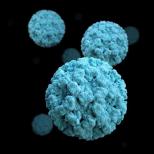
From stately cruise ships to Olympic host cities, recent headline-grabbing outbreaks prove that norovirus, an incapacitating stomach bug, can strike anywhere and anytime. A new study uses mathematical modelling and data from real-world cruise ship outbreaks to find the best way of stopping the disease’s spread. Their surprising results reveal that washing your hands is more effective than surface cleaning or even quarantine at breaking the chain of transmission.

Research – Fruit Flies as Potential Vectors of Foodborne Illness

NCBI 


Abstract

Fruit flies are a familiar sight in many food service facilities. Although they have been long considered as “nuisance pests,” some of their typical daily activities suggest they may pose a potential public health threat. The aim of this study was to provide evidence of the ability of small flies to transfer bacteria from a contaminated source, food, or waste to surfaces or ready-to-eat food. Laboratory experiments were conducted by using purpose-built fly enclosures to assess the bacterial transfer capability of fruit flies. Drosophila repleta were capable of transferring Escherichia coli O157:H7, Salmonella Saint Paul, and Listeria innocua from an inoculated food source to the surface of laboratory enclosures. In addition, using an inoculated doughnut and noncontaminated lettuce and doughnut surfaces, fly-mediated cross-contamination of ready-to-eat food was demonstrated. Fruit flies were shown to be capable of accumulating approximately 2.9 × 10³ log CFU of E. coli per fly within 2 h of exposure to a contaminated food source. These levels of bacteria did not decrease over an observation period of 48 h. Scanning electron micrographs were taken of bacteria associated with fly food and contact body parts and hairs during a selection of these experiments. These data, coupled with the feeding and breeding behavior of fruit flies in unsanitary areas of the kitchen and their propensity to land and rest on food preparation surfaces and equipment, indicate a possible role for fruit flies in the spread of foodborne pathogens

USA – CDC – FDOSS – Foodborne Disease Outbreak Surveillance System (FDOSS)

1aaaaCDC 

The Foodborne Disease Outbreak Surveillance System (FDOSS) collects information from state and local health departments about foodborne disease outbreaks. Outbreaks are occurrences in which two or more people get the same illness from the same contaminated food or drink.

Outbreaks provide important insights into how germs are spread, which illness-causing germ are typically found in which foods, and how to prevent food poisoning.

Each year, CDC summarizes FDOSS data in an annual surveillance report(https://www.cdc.gov/fdoss/annual-reports/index.html) and makes it available through the National Outbreak Reporting System (NORS) Dashboard.

USA – Mechanically tenderized sirloins recalled for possible Salmonella contamination

Food Safety News

The Texas-based Standard Meat Company, located in Sagina, late Thursday recalled up to 53,154 pounds of raw beef products that may be contaminated with Salmonella, according to the U.S. Department of Agriculture’s Food Safety and Inspection Service (FSIS). The raw beef products incorporated a non-meat ingredient, Au Jus Seasoning, that was found positive for the presence of Salmonella.

UK – Pub company’s response to 62 people falling ill with food poisoning symptoms

Bristol Post

The company in partnership with a pub currently under investigation after diners fell ill with food poisoning symptoms has said it is supporting the venue.

It is understood 62 people have reported suffering from diarrhoea and vomiting after eating at The Old Farmhouse in Nailsea on Sunday.

An investigation is now underway and North Somerset Council environmental health officers have visited the venue in Trendlewood Way.

The kitchen at the pub, operated by pub chain Hall and Woodhouse, has been closed voluntarily while investigations continue. And Public Health England is now working with North Somerset Council to investigate the source of the sickness and diarrhoea outbreak.

RASFF Alerts – Aflatoxin – Peanuts – Pistachios – Groundnuts – Millet Flour – Blanched Hazelnuts

kswfoodworld food safety poisoning

RASFF-aflatoxins (B1 = 13; Tot. = 15.8 µg/kg – ppb) in peanuts from Nigeria in Spain

RASFF-aflatoxins (B1 = 18.3; Tot. = 20.9 µg/kg – ppb) in peanuts without shell from Senegal in Spain

RASFF-aflatoxins (B1 = 20.8; Tot. = 22.2 µg/kg – ppb) in pistachios in shell from Iran in Germany

RASFF-aflatoxins (B1 = 56 µg/kg – ppb) in groundnuts from Egypt in the Netherlands

RASFF-aflatoxins (B1 = 20; Tot. = 22 µg/kg – ppb) in groundnuts from Egypt in the Netherlands

RASFF-aflatoxins (B1 = 4.4 µg/kg – ppb) in shelled groundnuts from Bolivia in the Netherlands

RASFF-aflatoxins (B1 = 1.5; Tot. = 7.8 / B1 = 3.1; Tot. = 3.6 µg/kg – ppb) in groundnuts kernels from Argentina in the UK

RASFF-aflatoxins (B1 = 14.01; Tot. = 14.51 µg/kg – ppb) in pistachios in shell from Iranin Germany

RASFF-aflatoxins (B1 = 23.9; Tot. = 28.2 / B1 = 50.6; Tot. = 80.8 µg/kg – ppb) in groundnut kernels from China in Greece

RASFF-aflatoxins (B1 = 72.3; Tot. = 78.6 µg/kg – ppb) in pistachios in shell from Iran in Germany

RASFF-aflatoxins (B1 = 8.7 µg/kg – ppb) in pistachios in shell from Iran, via Germany in the Netherlands

RASFF-aflatoxins (B1 = 18; Tot. = 21 µg/kg – ppb) in groundnuts from Argentina in the Netherlands

RASFF-aflatoxins (B1 = 80.21; Tot. = 86.51 µg/kg – ppb) in millet flour from India  in Germany

RASFF-aflatoxins (B1 = 120; Tot. = 140 / B1 = 200; Tot. = 230 µg/kg – ppb) in groundnuts from Argentina in the Netherlands

RASFF-aflatoxins (B1 = 24; Tot. = 28 / B1 = 9.3; Tot. = 12 µg/kg – ppb) in groundnuts kernels from Egypt in the Netherlands

RASFF-aflatoxins (B1 = 19; Tot. = 29 µg/kg – ppb) in groundnuts from Bolivia in the Netherlands

RASFF-aflatoxins (B1 = 7.7 µg/kg – ppb) in groundnuts from Bolivia in the Netherlands

RASFF-aflatoxins (B1 = 79; Tot. = 94 µg/kg – ppb) in groundnut kernels from Egypt in the Netherlands

RASFF-aflatoxins (B1 = 5.6 µg/kg – ppb) in groundnut kernels from India  in the Netherlands

RASFF-aflatoxins (B1 = 28; Tot. = 34 / B1 = 26; Tot. = 30 µg/kg – ppb) in groundnut kernels from Egypt in the Netherlands

RASFF-aflatoxins (Tot. = 25.14 µg/kg – ppb) and unauthorised substance carbofuran in roasted pistachios from Turkey in Germany

RASFF-aflatoxins (B1 = 7.5; Tot. = 7.5 µg/kg – ppb) in groundnuts from Argentina in the Netherlands

RASFF-aflatoxins (B1 = 4.6; Tot. = 5.2 / B1 = 4.7; Tot. = 5.0 µg/kg – ppb) in peanuts without shell from the United States in Spain

RASFF -aflatoxins (B1 = 17.62; Tot. = 20.14 µg/kg – ppb) in roasted pistachios from Turkey in Germany

RASFF-aflatoxins (B1 = 5.2; Tot. = 6.5 µg/kg – ppb) in groundnuts from Argentina in the Netherlands

RASFF-aflatoxins (B1 = 16; Tot. = 17 / B1 = 94; Tot. = 110 µg/kg – ppb) in groundnut kernels from Egypt in the Netherlands

RASFF-aflatoxins (B1 = 11; Tot. = 14 µg/kg – ppb) in groundnuts from India in the Netherlands

RASFF-aflatoxins (B1 = 18; Tot. = 19 µg/kg – ppb) in groundnut kernels from China in the Netherlands

RASFF-aflatoxins (B1 = 200; Tot. = 230 µg/kg – ppb) in groundnuts from Egypt in the Netherlands

RASFF-aflatoxins (B1 = 29; Tot. = 36 µg/kg – ppb) in raw peanuts from Bolivia in the Netherlands

RASFF-aflatoxins (B1 = 12 µg/kg – ppb) in sliced blanched hazelnuts from Turkey in the Netherlands

RASFF-aflatoxins (B1 = 21; Tot. = 24 µg/kg – ppb) in shelled groundnuts from Bolivia in the Netherlands

 

RASFF Alerts – Salmonella – Black Pepper – Sesame Seeds – Fresch Corriander – Chicken Samosa – Beef Strips – Chicken Broiler Legs – Whole Chicken- Chicken Half Breast – Horse Meat – Chorizo

kswfoodworld food safety poisoning

RASFF-Salmonella (presence /25g) in black pepper from Brazil in Spain

RASFF-Salmonella enterica ser. Isangi (presence /25g) and Salmonella enterica ser. Reading (presence /25g) in sesame seeds from Turkey, with raw material from Sudan in Greece

RASFF-Salmonella enterica ser. Hvittingfoss (present /25g) in fresh coriander from Thailand in Norway

RASFF-Salmonella (presence /25g) in frozen chicken samosa from France in France

RASFF-Salmonella enterica ser. Bongori (presence /25g) in sesame seeds from Ethiopia in Greece

RASFF-Salmonella (presence) in frozen beef strips from the Netherlands, with raw material from Germany in the Netherlands

RASFF-Salmonella enterica ser. Infantis (presence /25g) in chilled chicken broiler legs from Poland in Lithuania

RASFF-Salmonella enterica ser. Matadi (in 4 out of 5 samples /25g) in black ground pepper from Slovakia, with raw material from India, Sri Lanka and Ecuador in Slovakia

RASFF-Salmonella enterica ser. Enteritidis (presence /25g) in frozen whole chicken from Poland, via Spain in France

RASFF-Salmonella (O:4,5 /25g) in frozen salted chicken half breasts from Brazil  in Germany

RASFF-Salmonella (presence /25g) in chilled minced horse meat from Belgium in Belgium

RASFF-Salmonella (O:4,5 /25g) in frozen salted chicken half breasts from Brazil in Germany

RASFF-Salmonella (in 4 out of 5 samples /25g) in sesame seeds from Turkey in Greece

RASFF-Salmonella in chorizo from Spain in Italy

RASFF Alerts – Ochratoxin A – Nutmeg – Raisins – Pistachios – Organic Dried Figs

kswfoodworld food safety poisoning

RASFF-ochratoxin A (55 µg/kg – ppb) in nutmeg from Indonesia in the Netherlands

RASFF-ochratoxin A (15.88 µg/kg – ppb) in raisins from Turkey in Poland

RASFF-ochratoxin A (29 µg/kg – ppb) in raisins from Iran, packaged in Slovakia in the Czech Republic

RASFF-ochratoxin A (44 µg/kg – ppb) in pistachios from the United States in the Netherlands

RASFF-ochratoxin A (27 µg/kg – ppb) in organic dried figs from Turkey in the Netherlands

RASFF Alert – Norovirus – Live Oysters

kswfoodworld food safety poisoning

RASFF-foodborne outbreak suspected to be caused by norovirus in live oysters from France in Sweden

RASFF-norovirus (GII /25g) in live oysters from France in Italy

RASFF-norovirus (GII /25g) in live oysters from France in Italy

RASFF-norovirus (GII /25g) in live oysters from France in Italy