Category Archives: Uncategorized

CDC researcher discusses multistate salmonella outbreaks linked to Indiana-grown melons

Food Safety News

TORONTO — Laura Gieraltowski, lead of the Foodborne Outbreak Response Team at the CDC’s Outbreak Response and Prevention Branch, Division of Foodborne, Waterborne, and Environmental Diseases, presented a review of multistate outbreaks of Salmonella infections linked to melons grown in Indiana.

Speaking at the annual conference of the International Association for Food Protection, Gieraltowski highlighted the outbreak in 2012, where Salmonella-contaminated cantaloupes from a farm in southwest Indiana as the beginning of a concerning pattern. The outbreak caused illness in 261 people across 24 states, resulting in 94 hospitalizations and three deaths.

Morocco – Seasonal Fruits Cause Food Poisoning for 60 People Near Casablanca

Morocco World News

Rabat – About 60 people suffered from food poisoning due to seasonal fruits in Sidi Bennour, a city 174 kilometers away from Casablanca.

A statement from local authorities said that the victims of food poisoning were admitted to the Hospital of Sidi Bennour, with preliminary data showing a consumption of seasonal fruits as a possible cause.

Several ambulances have been deployed to ensure the transfer of urgent cases that need medical care.

No information on the specific products consumed by the victims has been revealed.

The people admitted to the hospital are in stable condition, the statement said, noting that services of the National Office for Food Safety (ONSSA) intervened to take samples of the concerned products to submit them for necessary laboratory analyses.

India – Teen from Nepal dies of suspected food poisoning in J-K’s Rajouri

The Print

Rajouri/Jammu, Jul 9 (PTI) In a suspected case of food poisoning, a teenager from Nepal died and his cousin brother was hospitalised in Rajouri district of Jammu and Kashmir, police said on Sunday.

Quoting the statement of the accompanying relatives, the official said the condition of the duo deteriorated shortly after having dinner and they were rushed to hospital.

New Zealand – Products containing tahini recalled due to possible presence of Salmonella – Updated

MPI

New Zealand Food Safety is supporting several importers in their recall of Durra brand products containing tahini due to the possible presence of Salmonella.

“Salmonellosis can be serious, so it is important that people do not eat these products,” says New Zealand Food Safety acting deputy director-general Jenny Bishop.

“Tahini has a long shelf-life, so please check your fridge and throw out the affected products or return them to the place of purchase for a refund.”

The Durra brand products included in this recall are:

  • Durra Tahina (400g, 800g, 18kg)
  • Durra Halawa Plain (350g, 700g)
  • Durra Halawa Pistachio (350g, 700g)
  • Durra Halawa Extra Pistachio (350g, 700g)

As our investigations continue, more products may be posted on the recall page.

The affected products are sold at various stores and retail outlets throughout New Zealand. They have been removed from store shelves.

The products have been imported from Jordan and have not been re-exported.

Salmonellosis symptoms appear within 12 to 72 hours and include abdominal cramps, diarrhoea, fever, headache, nausea and vomiting. Illness usually lasts between 4 and 7 days but, in more severe cases, it can go on for up to 10 days and cause more serious illness.

If you have consumed any of these products and are concerned for your health, contact your health professional, or call Healthline on 0800 61 11 16.

“Tahini is a high-risk food, so New Zealand Food Safety has been keeping a close watch on problems with tahini overseas,” Ms Bishop says.

“When we saw a potential issue with product from a manufacturer in Jordan, we worked with importers here to ensure they assessed the safety of the tahini sourced from this manufacturer. Testing was a part of this, and the tests came back positive for Salmonella.”

We are continuing to trace where this product is used, so additional recalls may follow. Our recall page will be updated as needed with additional products. You can subscribe to our food recall emails to get the latest information.

Research – Determining Microbiological Performance Standards for Food Safety

Food Safety.Com

The food industry continues to be complicated as new food products with unique ingredients are introduced into the marketplace, supply chain interruptions remain a challenge, and the demand for minimally processed foods grows. Ensuring that appropriate food safety parameters are utilized during the manufacture of food products, with the right supporting documentation, is paramount to providing customers with safe and wholesome food.

The Food Safety Modernization Act’s (FSMA’s) Current Good Manufacturing Practice, Hazard Analysis, and Risk-based Preventive Controls for Human Food regulation requires that preventive controls for food are validated. Per the regulation, validation “…must include obtaining and evaluating scientific and technical evidence (or, when such evidence is not available or is inadequate, conducting studies) to determine whether the preventive controls, when properly implemented, will effectively control the hazards.” Validations for thermal processes are conducted to demonstrate that a specific thermal process can adequately eliminate or reduce the pathogen of concern to a reasonably safe level.

Performance standards are the specific pathogen reduction levels that must be attained during processing to ensure that proper food safety has been achieved. In the case of traditional canning, these limits have been established over decades of scientific testing of canned foods. The 12-D concept, which describes a thermal process that results in a 12-log reduction of Clostridium botulinum spores, has been established for low-acid canned foods as an acceptable performance standard that results in a very low health risk for consumers.

However, in the case of non-canning processing (heat treatment or an alternative), these performance standards can vary depending on the product type. For some non-canned products such as meats, poultry, and nuts, the performance standards have been established by previous scientific testing. For other food products where thermal processes such as baking or blanching are applied, sufficient scientific data is not available or is still in development to establish the proper performance standards for those respective items.  Applying previously established high-moisture products’ cook time and temperature parameters to low-moisture products has been proven to be ineffective. Other variables must be considered, such as increased thermal resistance of Salmonella spp. in lower-moisture products, as demonstrated by some recent scientific investigations1 and the effect of impingement cooking on the surfaces of meat products.2,3

Performance standards can be chosen based on available scientific literature, scientific studies performed by the company, or by using risk-based pathogen modeling. In the case where there is no industry-available scientific literature to reference, food companies are expected to provide their own scientific studies and justifications for the safety of their food products.

Outbreak of Salmonella Mbandaka linked to chicken products in Ukraine

WHO

The INFOSAN Secretariat has been following the development of a multi-country outbreak (n=247) of Salmonella Mbandaka ST413 linked to chicken products from Ukraine. According to the European Centre for Disease Prevention and Control, the latest numbers available of the cases reported are Czech Republic (n=5), Estonia (n=3), Finland (n=89), France (n=10), Germany (n=2), Ireland (n=1), Israel (n=4), the Netherlands (n=1), and the United Kingdom (n=132). The latest cases have been detected as of March 2023 in the United Kingdom which have been linked through whole genome sequencing.

Information shared through the European Commission’s Rapid Alert System for Food and Feed (RASFF), implicated products linked to the outbreak has been distributed to nine countries. The INFOSAN Secretariat has promptly engaged WHO Member States outside of the RASFF to inform them of such distribution, seek additional information concerning the international distribution of implicated products and request information on any possible cases linked to the consumption of the implicated products.

Through close collaboration with the INFOSAN Emergency Contact Point and the National Focal Point for IHR in Ukraine, the INFOSAN Secretariat has been notified that no further international distribution from Ukraine to other WHO Member States, beyond those already notified by the RASFF, has been identified to date. Ukrainian authorities initiated an investigation and informed the Network of the risk management measures implemented at the facilities of the implicated manufacturer.

The INFOSAN Secretariat continues to support WHO Member States to facilitate the exchange of information in order to facilitate investigations and implementation of additional risk management measures. Further details will be shared through the Network when available.

About the hazard: Salmonella is 1 of the 4 key global causes of diarrheal diseases. Salmonella is a ubiquitous and hardy bacteria that can survive several weeks in a dry environment and several months in water.

About the disease: Salmonellosis is a disease caused by the bacteria Salmonella. It is usually characterized by acute onset of fever, abdominal pain, diarrhea, nausea and sometimes vomiting. The onset of disease symptoms occurs 6–72 hours (usually 12–36 hours) after ingestion of Salmonella, and illness lasts 2–7 days. For more information, please visit the WHO’s website about Salmonella (non-typhoidal) here.

INFOSAN Quarterly Summary, 2023 #1

WHO

Food safety incidents

The INFOSAN Secretariat was involved in 47 food safety incidents concerning 53 WHO Member States (MS) and territories from all WHO regions during this first quarter of the year. There were twenty-eight incidents involving a biological hazard [Salmonella spp. (9), Listeria monocytogenes (6), E. coli (3), Clostridium botulinum (2), Hepatitis A (2), Anisakis (1), Cronobacter (1), Entamoeba histolytica (1), Leptospira (1)Norovirus (1), and Shigella (1)]; nine involving a chemical hazard [methanol (2), aflatoxins (1), chlorothalonil (1), ergot alkaloids (1), histamine (1), lead (1), nitrogen (1), and patulin (1)]; six involving an undeclared allergen/ingredient [peanuts (2), egg (1), gluten (1), milk (1), soy (1)]; three involving a physical hazard [glass (1), metal (1), stones (1)]; and one of  an unknown hazard.

The food categories most commonly involved in the 47 incidents during the first quarter of 2023 were fish and other seafood (6),  meat and meat products (6), composite foods (5), nuts and oilseeds (5), cereals and cereal based products (3), fruit and fruit products (3), milk and dairy products (3), snacks, desserts, and other foods (3), vegetables and vegetable products (3), alcoholic beverages (2), food for infants and small children (2), herbs spices and condiments (2), legumes and pulses (1), non-alcoholic beverages (1), and two unknown food sources.

Due to the active engagement of INFOSAN members and partners, 53% of incidents were reported to the INFOSAN Secretariat by INFOSAN members (Emergency Contact Points and Focal Points), 28% of those incidents were communicated to the Secretariat through the European Commission’s Rapid Alert System for Food and Feed (RASFF), and 19% through various WHO channels.

These incidents involved 53 WHO Member States and territories from all WHO Regions. The affected Member States were distributed as follows: 23 out of 53 Member States from the European Region, 9 out of 27 in the Western Pacific, 8 out of 35 in the Americas, 7 out of 47 in Africa, 4 out of 11 in South-East Asia, and 2 out of 21 in the Eastern Mediterranean.

Research – Evaluating Survival of Escherichia coli 0157:H7 in Frozen and Thawed Apple Cider: Potential Use of a Hydrophobic Grid Membrane Filter-SD-39 Agar Method

PDF

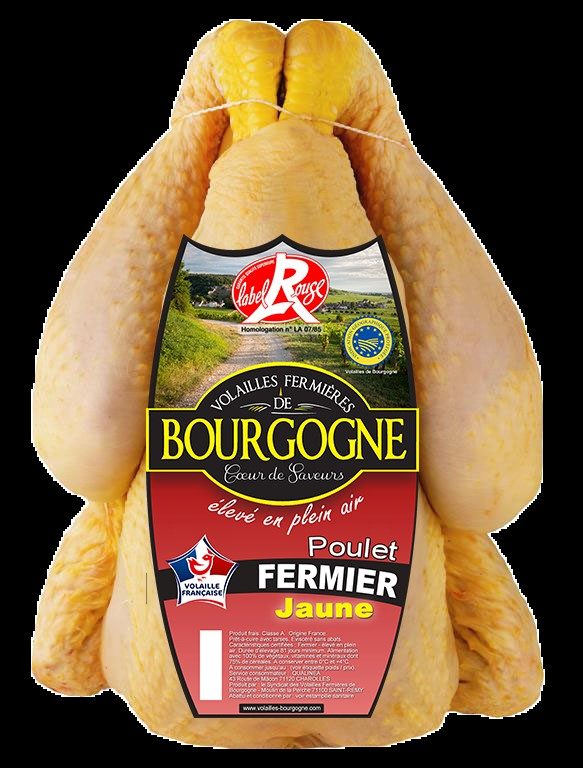
France – CHICKEN FER.BRG.1.4-1.6 NU COMETE – Listeria monocytogenes

Gov france

Identification information of the recalled product

  • Product category Feed
  • Product subcategory Meats
  • Product brand name BURGUNDY-FLAVOR OF BURGUNDY
  • Model names or references CHICKEN FER.BRG.1.4-1.6 NU COMETE
  • Identification of products
    GTIN Batch Date
    3560070980444 0413014087 Use-by date 06/09/2023
  • Packaging BAG
  • Marketing start/end date From 02/06/2023 to 02/06/2023
  • Storage temperature Product to be stored in the refrigerator
  • Health mark FR 71 158 001 EC
  • Geographic area of ​​sale Departments: COTE-D’OR (21), RHONE (69), SAONE-ET-LOIRE (71)
  • Distributors CROSSROADS

France -LARGE PURE PORK ROSETTE, CURVED SAUSAGE, DUCULTY DRY SAUSAGE 300 g – DRY SAUSAGE- DRY SAUSAGE BIROUTIN 280 g – Ash Farm Biquet – STRAIGHT SAUSAGE – LARGE PURE PORK ROSETTE – DUCULTY DRY SAUSAGE 300 g – DUCULTY STRAIGHT SAUSAGE 200 g ETAMINE – ROSETTE- Brewed cooked sausage- THE ROSETTE 420g – CHORIZO-INSPIRED RUBEUS CURVE – DUCULTY STRAIGHT SAUSAGE 200 g – Listeria monocytoenes

Gov france

Identification information of the recalled product

  • Product categoryFeed
  • Product subcategoryMeats
  • Product brand nameDUCULTY
  • Model names or referencesLarge Duculty rosette approx. 800 g Large Duculty rosette 800 g
  • Identification of products
    GTIN Batch Date
    3595570012667 2310304 Recommended best before date between 07/18/2023 and 07/29/2023
    3595570012667 2311003 Recommended best before date between 07/30/2023 and 08/13/2023
    3595570012667 2311704 Recommended best before date between 05/08/2023 and 07/08/2023
    3595570012667 2310304 Best before date 08/06/2023
  • Packaging Naked with label on the buckle.
  • Marketing start/end date From 05/25/2023 to 07/30/2023
  • Storage temperature Product to be stored at room temperature
  • Health mark EN 42.308.001 CE
  • Geographic area of ​​sale Whole France
  • Distributors Miscellaneous customers

Gov france

Identification information of the recalled product

  • Product category Feed
  • Product subcategory Meats
  • Product brand name PILAT SALAISONIERS
  • Model names or references SALAISONNIERS curved sausage 250 g
  • Identification of products
    GTIN Batch Date
    359557000173 2310706 Recommended best before date between 07/11/2023 and 07/16/2023
    359557000173 2311502 Recommended best before date between 07/16/2023 and 07/23/2023
    359557000173 2312905 Recommended best before date between 07/29/2023 and 08/01/2023
    359557000173 2313504 Recommended best before date between 08/01/2023 and 08/12/2023
    359557000173 2314205 Recommended best before date between 08/11/2023 and 08/12/2023
    359557000173 2312207 Recommended best before date between 07/23/2023 and 07/25/2023
  • Packaging Ring label.
  • Storage temperature Product to be stored at room temperature
  • Health mark EN 42.308.001 CE
  • Geographic area of ​​sale Whole France
  • Distributors AUCHAN NETTO LECLERC SYSTEM U_ U EXPRESS CARREFOUR INTERMARCHE

Gov france

Identification information of the recalled product

  • Product category Feed
  • Product subcategory Meats
  • Product brand name DUCULTY
  • Model names or references DUCULTY dry sausage 300 g ETAMINE
  • Identification of products
    GTIN Batch Date
    3595570012111 2310204 Best before date 07/22/2023
    3595570012111 2311606 Recommended best before date between 07/31/2023 and 08/04/2023
    3595570012111 2312208 Best before date 08/07/2023
    3595570012111 2312304 Best before date 05/08/2023
    3595570012111 2312404 Best before date 08/08/2023
  • Packaging ETAMINE POUCH
  • Storage temperature Product to be stored at room temperature
  • Health mark EN 42.308.001 CE
  • Geographic area of ​​sale Whole France
  • Distributors VARIOUS CUSTOMERS

Gov france

Identification information of the recalled product

  • Product category Feed
  • Product subcategory Meats
  • Product brand name PILAT SALAISONIERS
  • Model names or references Salaisonniers du Pilat dried sausage 300 g
  • Identification of products
    GTIN Batch Date
    359557000171 2310204 Recommended best before date between 07/21/2023 and 07/25/2023
    359557000171 2310801 Recommended best before date between 07/25/2023 and 07/29/2023
    359557000171 2310905 Recommended best before date between 07/30/2023 and 08/01/2023
    359557000171 2311606 Recommended best before date between 31/07/2023 and 05/08/2023
    359557000171 2312208 Best before date 07/07/2023
    359557000171 2312304 Recommended best before date between 08/05/2023 and 08/11/2023
    359557000171 2312404 Best before date 08/11/2023
    359557000171 2312907 Best before date 08/11/2023
    359557000171 2313005 Recommended best before date between 08/11/2023 and 08/13/2023
  • Packaging Ring label.
  • Storage temperature Product to be stored at room temperature
  • Health mark EN 42.308.001 CE
  • Geographic area of ​​sale Whole France
  • Distributors AUCHAN LECLERC SYSTEM U_ U EXPRESS CARREFOUR INTERMARCHE

Gov france

Identification information of the recalled product

  • Product category Feed
  • Product subcategory Meats
  • Product brand name PILAT SALAISONIERS
  • Model names or references Dry sausage LE BIROUTIN 280 g
  • Identification of products
    GTIN Batch Date
    359557000093 23110204 Best before date 07/29/2023
    359557000093 23110801 Recommended best before date between 07/29/2023 and 08/01/2023
    359557000093 2310905 Recommended best before date between 08/01/2023 and 08/04/2023
    359557000093 2311605 Recommended best before date between 08/07/2023 and 08/08/2023
    359557000093 2311606 Recommended best before date between 08/01/2023 and 08/11/2023
    359557000093 2312208 Recommended best before date between 08/11/2023 and 08/13/2023
    359557000093 2312404 Best before date 05/08/2023
    359557000093 2313005 Recommended best before date between 08/12/2023 and 08/13/2023
  • Packaging Ring label.
  • Storage temperature Product to be stored at room temperature
  • Health mark EN 42.308.001 CE
  • Geographic area of ​​sale Whole France
  • Distributors AUCHAN NETTO LECLERC SYSTEM U_ U EXPRESS CARREFOUR INTERMARCHE

Gov france

Identification information of the recalled product

  • Product category Feed
  • Product subcategory Milk and dairy products
  • Product brand name not concerned
  • Model names or references Ash farmer biquet lot 77-155 DDM 14/07/2023
  • Identification of products
    GTIN Batch Date
    3770002695173 77-155 Date of minimum durability 07/14/2023
  • Packaging bulk
  • Marketing start/end date From 08/06/2023 to 15/06/2023
  • Storage temperature Product to be stored in the refrigerator
  • Health mark EN 41.043.003 CE
  • Geographic area of ​​sale VATAN GROCERY STORE (36) ISSOUDUN GROCERY STORE (16) ROMORANTIN MARKET (41)
  • Distributors VATAN GROCERY STORE (36) ISSOUDUN GROCERY STORE (16) ROMORANTIN MARKET (41)

Gov france

Identification information of the recalled product

  • Product category Feed
  • Product subcategory Meats
  • Product brand name DUCULTY
  • Model names or references Rosette 420g DUCULTY
  • Identification of products
    GTIN Batch Date
    359557001204 2311002 Recommended best before date between 07/23/2023 and 08/06/2023
    359557001204 2311702 Recommended best before date between 07/30/2023 and 08/01/2023
    359557001204 2312402 Recommended best before date between 05/08/2023 and 06/08/2023
    359557001204 2313102 Best before date between 07/08/2023 and 11/08/2023
  • Packaging Naked with label on the buckle.
  • Marketing start/end date From 05/23/2023 to 08/06/2023
  • Storage temperature Product to be stored at room temperature
  • Health mark EN 42.308.001 CE
  • Geographic area of ​​sale Whole France
  • Distributors Miscellaneous customers

Gov france

Identification information of the recalled product

  • Product category Feed
  • Product subcategory Meats
  • Product brand name PILAT SALAISONIERS
  • Model names or references Rosette Salaisonniers du Pilat 420 g
  • Identification of products
    GTIN Batch Date
    3595570001740 2311002 Recommended best before date between 07/23/2023 and 07/25/2023
    3595570001740 2311702 Recommended best before date between 07/29/2023 and 08/04/2023
    3595570001740 2312402 Recommended best before date between 08/04/2023 and 08/07/2023
    3595570001740 2313102 Best before date between 07/08/2023 and 11/08/2023
  • Packaging Ring label.
  • Storage temperature Product to be stored at room temperature
  • Health mark EN 42.308.001 CE
  • Geographic area of ​​sale Whole France
  • Distributors AUCHAN LECLERC SYSTEM U_ U EXPRESS CARREFOUR INTERMARCHE

Gov france

Identification information of the recalled product

  • Product category Feed
  • Product subcategory Meats
  • Product brand name DUCULTY
  • Model names or references Rosette 420 g DUCULTY ETAMINE
  • Identification of products
    GTIN Batch Date
    3595570012142 2312402 Best before date 04/08/2023
    3595570012142 2313102 Best before date 08/08/2023
  • Packaging ETAMINE POUCH
  • Storage temperature Product to be stored at room temperature
  • Health mark EN 42.308.001 CE
  • Geographic area of ​​sale Whole France
  • Distributors Miscellaneous customers

Gov france

Identification information of the recalled product

  • Product category Feed
  • Product subcategory Meats
  • Product brand name DUCULTY
  • Model names or references DUCULTY RUBEUS CURVE 250 g
  • Identification of products
    GTIN Batch Date
    3595570012159 2310107 Recommended best before date between 03/07/2023 and 13/07/2023
  • Packaging UNDER A VACUUM
  • Storage temperature Product to be stored at room temperature
  • Health mark EN 42.308.001 CE
  • Geographic area of ​​sale Whole France
  • Distributors Miscellaneous customers

Gov france

Identification information of the recalled product

  • Product category Feed
  • Product subcategory Meats
  • Product brand name DUCULTY
  • Model names or references DUCULTY straight sausage 200 g (ref.1202) DUCULTY straight sausage approx. 200 g
  • Identification of products
    GTIN Batch Date
    3555570012029 2310104 Recommended best before date between 07/09/2023 and 07/21/2023
    3555570012029 2310705 Recommended best before date between 07/14/2023 and 07/30/2023
    3555570012029 2311501 Recommended best before date between 07/22/2023 and 07/24/2023
    3555570012029 2312206 Recommended best before date between 07/29/2023 and 08/04/2023
    3555570012029 2312906 Recommended best before date between 08/04/2023 and 08/11/2023
    3555570012029 2313505 Recommended best before date between 08/11/2023 and 08/13/2023
    3595570011022 2310104 Best before date 07/16/2023
    3595570011022 2311501 Best before date 07/23/2023
    3595570011022 2312906 Best before date 08/06/2023
  • Packaging Ring label.
  • Storage temperature Product to be stored at room temperature
  • Health mark EN 42.308.001 CE
  • Geographic area of ​​sale Whole France
  • Distributors VARIOUS CUSTOMERS