Archives
-
Join 341 other subscribers
KSWFoodWorld
Blog Stats
- 425,795 Views
Category Archives: Lactobacillus saki
Research – Special Issue: Beneficial Properties and Safety of Lactic Acid Bacteria
The application of LAB in various sectors, including in the biotechnical and food industry, in human and veterinary practice, and in health-promoting practices and cosmetics, has been the subject of intensive research across the globe, with a range of traditional and innovative methods currently being explored. The rediscovery of old practices, the establishment of new processes based on the production and application of different metabolites produced by LAB, and the formation of novel perspectives on the fermentation processes initiated by LAB, have become areas of significant interest in recent years. Various antimicrobial peptides, including bacteriocins, have been proposed as alternatives to antibiotics or have been suggested for use as their synergistic “partners”. The application field of probiotics is being widened to encompass new innovative areas that are targeted towards personalized practice, with the aim of improving human health. An increasingly extensive understanding of bioactive peptides has heralded their application in practices that are alternative or complementary to Western medicine. Approaches to bio-preservation require fewer chemical preservatives and are, currently, thoroughly explored in food research. The enrichment and fortification of food products with biologically active metabolites, including vitamins, antimicrobials, and immunomodulators, are only some of the research areas that ought to be explored as options for the application of various LAB in the food industry.
The concepts associated with the beneficial properties and safety of LAB have been, and always need to be, jointly explored. Even if several LAB strains have been applied historically as safe and beneficial cultures, various other representatives of LAB have been documented as human and animal pathogens, as phytopathogens, and as also including strains associated with spoilage and deterioration [1]. LAB represent a universe of varied microorganisms, with all of them characterized as Gram-positive, catalase negative, as possessing a common metabolism and as initiating the formation of a similar end product (lactic acid) as a result of carbohydrate fermentation [2]. As a diverse group of microorganisms, they are adapted to various ecosystems and environmental conditions, and can grow at different temperatures and use a variety of carbon sources [1,2]. They are associated with virtually all living forms, from simple eukaryotic organisms and plant material, to the skin and GIT of vertebrates, insects, mollusks, crustaceans, etc. They may be described as either beneficial or as pathogens, but they always possess a clear ecological role in numerous life cycles [2]. Of particular note are species such as Enterococcus spp., some of which are unmistakably opportunistic pathogens and, when associated with vancomycin resistance, pose a serious health threat to humans and to animals [3]; these pathogens are typically associated with nosocomial infections [3]. Simultaneously, however, LAB also comprise species that play a beneficial role in the production of various plants, dairy and meat fermented food products [4], or even as probiotics [5]. It has been suggested that enterococci are producers of bacteriocins, some of which can be applied in the control of food-borne and hospital-associated (human and veterinary) pathogens [6]. However, before proposing a strain, even one belonging to a species with a history of safe application, its safety properties must be appropriately evaluated; this is a necessary and essential step that must be completed prior to its application in food fermentation, as a probiotic for human and animals, in human and veterinary medicine, or in agricultural practices. The novel tools utilized in the evaluation of the safety of microbial cultures, including DNA-associated experimental approaches, have become routine in the last two decades. Considering this, the validation of safety, both of new microbial and currently applied cultures, is now considered essential. In addition to “classical” PCR-based approaches, whole genome sequencing and the appropriate analysis of the generated data have become routine in the evaluation of the safety profile of microbial cultures [7,8,9].
Posted in Food Microbiology Blog, Food Microbiology Research, Food Microbiology Testing, LAB, lactic acid bacteria, Lactobacillus, Lactobacillus casei, Lactobacillus plantarum, Lactobacillus rhamnosus, Lactobacillus sakei, Lactobacillus saki, Lactococcus, microbial contamination, Microbial growth, Microbiological Risk Assessment, Microbiology, Microbiology Investigations, Microbiology Risk
Research – Evaluation of the safety and efficacy of lactic acid to reduce microbiological surface contamination on carcases from kangaroos, wild pigs, goats and sheep
Studies evaluating the safety and efficacy of lactic acid to reduce microbiological surface contamination from carcases of wild game (i.e. kangaroos and wild pigs) and small stock (i.e. goats and sheep) before chilling at the slaughterhouse were assessed. Wild pig and kangaroo hide‐on carcases may have been chilled before they arrive at the slaughterhouse and are treated after removal of the hides. Lactic acid solutions (2–5%) are applied to the carcases at temperatures of up to 55°C by spraying or misting. The treatment lasts 6–7 s per carcass side. The Panel concluded that: [1] the treatment is of no safety concern, provided that the lactic acid complies with the European Union specifications for food additives; [2] based on the available evidence, it was not possible to conclude on the efficacy of spraying or misting lactic acid on kangaroo, wild pig, goats and sheep carcases; [3] treatment of the above‐mentioned carcases with lactic acid may induce reduced susceptibility to the same substance, but this can be minimised; there is currently no evidence that prior exposure of food‐borne pathogens to lactic acid leads to the occurrence of resistance levels that compromise antimicrobial therapy; and [4] the release of lactic acid is not of concern for the environment, assuming that wastewaters released by the slaughterhouses are treated on‐site, if necessary, to counter the potentially low pH caused by lactic acid, in compliance with local rules.
Posted in cross contamination, Decontamination Microbial, food contamination, Food Micro Blog, Food Microbiology, Food Microbiology Blog, Food Microbiology Research, Food Microbiology Testing, LAB, lactic acid bacteria, Lactobacillus, Lactobacillus casei, Lactobacillus plantarum, Lactobacillus rhamnosus, Lactobacillus sakei, Lactobacillus saki, Lactococcus, microbial contamination, Microbiological Risk Assessment, Microbiology, Microbiology Investigations, Research
Research – Role of Lactic Acid Bacteria in Food Preservation and Safety
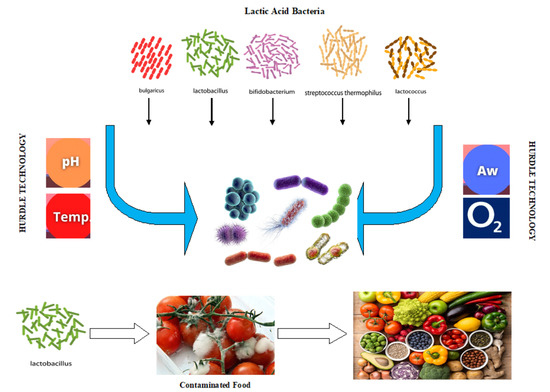
Fermentation of various food stuffs by lactic acid bacteria is one of the oldest forms of food biopreservation. Bacterial antagonism has been recognized for over a century, but in recent years, this phenomenon has received more scientific attention, particularly in the use of various strains of lactic acid bacteria (LAB). Certain strains of LAB demonstrated antimicrobial activity against foodborne pathogens, including bacteria, yeast and filamentous fungi. Furthermore, in recent years, many authors proved that lactic acid bacteria have the ability to neutralize mycotoxin produced by the last group. Antimicrobial activity of lactic acid bacteria is mainly based on the production of metabolites such as lactic acid, organic acids, hydroperoxide and bacteriocins. In addition, some research suggests other mechanisms of antimicrobial activity of LAB against pathogens as well as their toxic metabolites. These properties are very important because of the future possibility to exchange chemical and physical methods of preservation with a biological method based on the lactic acid bacteria and their metabolites. Biopreservation is defined as the extension of shelf life and the increase in food safety by use of controlled microorganisms or their metabolites. This biological method may determine the alternative for the usage of chemical preservatives. In this study, the possibilities of the use of lactic acid bacteria against foodborne pathogens is provided. Our aim is to yield knowledge about lactic acid fermentation and the activity of lactic acid bacteria against pathogenic microorganisms. In addition, we would like to introduce actual information about health aspects associated with the consumption of fermented products, including probiotics.
Posted in Food Micro Blog, Food Microbiology, Food Microbiology Blog, Food Microbiology Research, Food Microbiology Testing, LAB, lactic acid bacteria, Lactobacillus, Lactobacillus casei, Lactobacillus plantarum, Lactobacillus rhamnosus, Lactobacillus sakei, Lactobacillus saki, microbial contamination, Microbiological Risk Assessment, Microbiology, Microbiology Investigations, Research
Research – Lactic Acid Bacteria as Antimicrobial Agents: Food Safety and Microbial Food Spoilage Prevention

In the wake of continual foodborne disease outbreaks in recent years, it is critical to focus on strategies that protect public health and reduce the incidence of foodborne pathogens and spoilage microorganisms. Currently, there are limitations associated with conventional microbial control methods, such as the use of chemical preservatives and heat treatments. For example, such conventional treatments adversely impact the sensorial properties of food, resulting in undesirable organoleptic characteristics. Moreover, the growing consumer advocacy for safe and healthy food products, and the resultant paradigm shift toward clean labels, have caused an increased interest in natural and effective antimicrobial alternatives. For instance, natural antimicrobial elements synthesized by lactic acid bacteria (LAB) are generally inhibitory to pathogens and significantly impede the action of food spoilage organisms. Bacteriocins and other LAB metabolites have been commercially exploited for their antimicrobial properties and used in many applications in the dairy industry to prevent the growth of undesirable microorganisms. In this review, we summarized the natural antimicrobial compounds produced by LAB, with a specific focus on the mechanisms of action and applications for microbial food spoilage prevention and disease control. In addition, we provide support in the review for our recommendation for the application of LAB as a potential alternative antimicrobial strategy for addressing the challenges posed by antibiotic resistance among pathogens. View Full-Text
Posted in antimicrobial resistance, Antimicrobials, Decontamination Microbial, Food Micro Blog, Food Microbiology, Food Microbiology Blog, Food Microbiology Research, Food Microbiology Testing, Food Technology, LAB, lactic acid bacteria, Lactobacillus, Lactobacillus plantarum, Lactobacillus rhamnosus, Lactobacillus sakei, Lactobacillus saki, Lactococcus, microbial contamination, Microbiological Risk Assessment, Microbiology, Research
Research – Control of pathogens in fresh pork sausage by inclusion of Lactobacillus sakei BAS0117
Canadian Journal of Microbiology
ABSTRACT
A pork sausage was produced with low sodium content (1.64%) to which Lactobacillus sakei was added with the aim of developing a meat pork sausage for cooking and having technological, organoleptic, and hygienic advantages. The lactic acid bacteria (LAB) L. sakei, Lactococcus sp., and Pediococcus pentosaceus were submitted to extreme pH, temperature, and NaCl conditions. Lactobacillus sakei was used in pork sausage because of its resistance to different culture conditions and its antimicrobial potential. The food-borne pathogens Listeria monocytogenes Scott A, Enterococcus faecalis, and Staphylococcus aureus were used as indicator microorganisms to evaluate the antimicrobial activity of selected LAB strains. Salmonella enterica serotype Choleraesuis is a common pathogen of pigs. To the raw sausage product containing L. sakei and nonpathogenic endogenous microbiota, we added about >104 and <105 CFU/g of S. enterica serotype Choleraesuis to evaluate the inhibitory potential of L. sakei towards this pathogen. Salmonella Choleraesuis was inhibited in the presence of L. sakei over 7 days of storage of the meat product (about 3.0 log cycles reduction). Lactobacillus sakei significantly increased inhibition when compared with the nonfermented sausage. Thus, L. sakei BAS0117 played an important role as an additional hurdle in the fermented meat pork sausage during storage.
Research – Modelling the interaction of the sakacin-producing Lactobacillus sakei CTC494 and Listeria monocytogenes in filleted gilthead sea bream (Sparus aurata) under modified atmosphere packaging at isothermal and non-isothermal conditions
Highlights
- •
-
L. sakei CTC494 inhibited L. monocytogenes growth in sea bream fillets during chilled and moderate abuse temperature storage.
- •
-
L. sakei CTC494 did not increase deterioration of filleted sea bream at an initial level of ≤4 log cfu/g.
- •
-
L. sakei CTC494 showed potential as bioprotective culture for fish products.
- •
-
An approach from broth to food was developed for modelling microbial interaction.
- •
-
Models simulated the bioprotective effect of L. sakei CTC494 on L. monocytogenes in sea bream.
Abstract
The objective of this work was to quantitatively evaluate the effect of Lactobacillussakei CTC494 (sakacin-producing bioprotective strain) against Listeria monocytogenesin fish juice and to apply and validate three microbial interaction models (Jameson, modified Jameson and Lotka Volterra models) through challenge tests with gilthead sea bream (Sparus aurata) fillets under modified atmosphere packaging stored at isothermal and non-isothermal conditions. L. sakei CTC494 inhibited L. monocytogenes growth when simultaneously present in the matrix (fish juice and fish fillets) at different inoculation ratios pathogen:bioprotector (i.e. 1:1, 1:2 and 1:3). The higher the inoculation ratio, the stronger the inhibition of L. monocytogenes growth, with the ratio 1:3 yielding no growth of the pathogen. The maximum population density (Nmax) was the most affected parameter for L. monocytogenes at all inoculation ratios. According to the microbiological and sensory analysis outcomes, an initial inoculation level of 4 log cfu/g for L. sakei CTC494 would be a suitable bioprotective strategy without compromising the sensory quality of the fish product. The performance of the tested interaction models was evaluated using the Acceptable Simulation Zone approach. The Lotka Volterra model showed slightly better fit than the Jameson-based models with 75–92% out of the observed counts falling into the Acceptable Simulation Zone, indicating a satisfactory model performance. The evaluated interaction models could be used as predictive modelling tool to simulate the simultaneous behaviour of bacteriocin-producing Lactobacillus strains and L. monocytogenes; thus, supporting the design and optimization of bioprotective culture-based strategies against L. monocytogenes in minimally processed fish products.
