Monthly Archives: August 2019

USA – Pigs Ears – Salmonella

Food Poisoning Bulletin

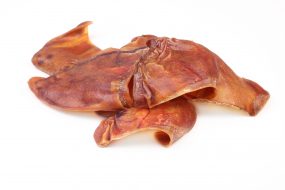
Lennox INtl Inc, located in Edison, New Jersey, is expanding its voluntary recall of its Natural pig ear dog treats for possible Salmonella contamination. The press release states, “To date, Lennox is aware of cases of human illnessrelated to an ongoing Salmonella outbreak in which several people identified Lennox pig eat treats as the brand they purchased. Individually shrink-wrapped product tested by FDA tested positive for Salmonella. Lennox’s pig ears are also sold bulk unwrapped.”

CDC

Latest Outbreak Information
Illustration of a clipboard with check marks on it.
At A Glance
Photo of some pet treats.
  • CDC and FDA are now advising people not to buy or feed any pig ear dog treats to pets, including any that may already be in homes.
  • People can get sick after handling the treats or caring for dogs who ate the treats. Dogs might get sick after eating them.
  • Since the last update on July 17, 2019, a total of 34 ill people have been added to this investigation.
  • A total of 127 people infected with the outbreak strains of Salmonella have been reported from 33 states.
    • 26 ill people (30%) have been hospitalized. No deaths have been reported.
    • 24 illnesses (21%) are among children younger than 5 years.
  • Epidemiologic, laboratory and traceback evidence indicates that contact with pig ear dog treats from many different suppliers is the likely source of this outbreak.
  • State health and regulatory officials in several states and the FDA have tested pig ear dog treats at various suppliers and identified many different strains of Salmonella. No single supplier, distributor or common brand of pig ear treats has been identified that could account for all the illnesses. This is why CDC and FDA are now advising people to not buy or feed any pig ear dog treats to pets.
  • This investigation is ongoing and CDC will provide updates when more information is available.

Research – Physiological traits and relative abundance of species as explanatory variables of co-occurrence pattern of cultivable bacteria associated with chia seeds

Canadian Journal of Microbiological Research

Deciphering the rules defining microbial community assemblage is envisioned as a promising strategy to improve predictions of pathogens colonization and proliferation in food. Despite the increasing number of studies reporting microbial co-occurrence patterns, only a few attempts have been made to challenge them in experimental or theoretical frameworks. Here, we tested the hypothesis that observed variations in co-occurrence patterns can be explained by taxonomy, relative abundance, and physiological traits of microbial species. We used PCR amplicon sequencing of taxonomic markers to assess distribution and co-occurrence patterns of bacterial and fungal species found in 25 chia (Salvia hispanica L.) samples originating from eight different sources. The use of nutrient-rich and oligotrophic media enabled isolation of 71 strains encompassing 16 bacterial species, of which five corresponded to phylotypes represented in the molecular survey. Tolerance to different growth inhibitors and antibiotics was tested to assess the physiological traits of these isolates. Divergence of physiological traits and relative abundance of each pair of species explained 69% of the co-occurrence profile displayed by cultivable bacterial phylotypes in chia. Validation of this ecological network conceptualization approach to more food products is required to integrate microbial species co-occurrence patterns in predictive microbiology.

Denmark -WGS project helps Denmark uncover Campylobacter outbreak

Food Safety News

Fifty people are ill in Denmark from Campylobacter after eating chicken meat but authorities believe the actual number of patients may be much higher.

Statens Serum Institut (SSI), Danish Veterinary and Food Administration (Fødevarestyrelsen) and DTU Food – National Food Institute are investigating the Campylobacter jejuni outbreak.

Campylobacter is the main cause of bacterial intestinal infections in Denmark and more than 4,500 cases were registered in 2018.

The same type of Campylobacter, sequence type 122, identified in patients by whole genome sequencing has also been found in chicken meat from one slaughterhouse, named as HKScan in Vinderup, a town in Northwestern Jutland.