Category Archives: Research

Research – Listeria Diversity in Estonian Foods

Science Direct

Abstract

The aim of the current study was to estimate the prevalence and serotype diversity of Listeria monocytogenes in various foods of Estonian origin such as meat, milk, fish, pastry, crop, culinary, fruit and vegetable with special reference to ready-to-eat (RTE) foods. In 2008–2010, a total of 554 (2.6%) of 21,574 food samples were positive for L. monocytogenes in Estonia. L. monocytogenes contamination was significantly (P < 0.001) higher in raw meat and raw meat products (18.7%), raw mixed salads (18.5%) and in raw milk (18.1%) compare to raw fish products (8.8%). Among RTE fish products, cold-smoked fish products were most frequently contaminated with L. monocytogenes (32.9%). Generally, the counts of L. monocytogenes in tested products remained under 10 colony forming units (CFU) per gram of product. Only 2.9% and 0.8% of the RTE fish products contained L. monocytogenes in range of 100–1000 CFU/g and >1000 CFU/g at the end of shelf life. The majority of tested isolates (73.6%) belonged to serotype 1/2a, followed by 1/2b (7.4%), 1/2c (7.4%), 4b (7.7%) and 4d (3.5%). Our findings showed that the prevalence of L. monocytogenes in various RTE food categories, in spite of higher prevalence among raw products, was generally low in Estonia.

ESBL Found in nearly half of the Chicken Meat Produced in Denmark in 2011

Global Meat News

Almost half of chicken meat in Denmark in 2011 contained extended spectrum beta lactamase (ESBL) – an enzyme promoting resistance to antibiotics used to treat severe infections in humans – according to a new study from the Danish Integrated Antimicrobial Resistance Monitoring and Research Programme (DANMAP).

E.coli, Salmonella and other Enterobacteriaceae are known producers of ESBL

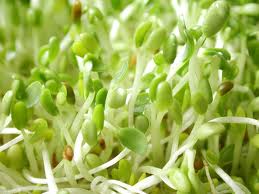
Vietnam Bean Sprout Warning

Vietnam News

HA NOI (VNS)— Up to 40 per cent of tested bean sprout samples sold in Ha Noi’s markets are infected with harmful bacteria, including E.coli, prompting national food safety officials to call for tightened controls on raw vegetables.

Head of the Plant Protection Department Nguyen Xuan Hong announced the result at a meeting yesterday following a test conducted on 50 bean sprout samples to check their Arsenic and bacteria levels.

Hong said the test proved the samples were safe from metalloid, but the high amount of micro-organisms on the product raised concern.

The micro-organisms, namely E.coli, Salmonella and Listeria, were found to be at an unsafe lavel for raw vegetables, which can lead to food poisoning.

FSANZ – Call for Submissions on Listeria monocytogenes in RTE

FSANZ

Food Standards Australia New Zealand (FSANZ) today called for submissions on a proposal to review existing limits for Listeria monocytogenes  in the Food Standards Code.

FSANZ Chief Executive Officer Steve McCutcheon said that since the limits were first set, preventative food safety requirements had been introduced and new limits had been established internationally.

“These changes mean it’s time for FSANZ to review the limits in the code to ensure we are providing a nationally consistent approach and where possible, harmonising our standards with those set by international standard-setting bodies,” Mr McCutcheon said.

“FSANZ is also exploring what tools would need to be developed to help industry and enforcement agencies apply any new approach.”

L. monocytogenes causes the serious illness, listeriosis, in some people. People particularly at risk of listeriosis include pregnant women, their unborn and newborn babies, the elderly, and other people whose immune systems have been weakened by illness or immuno-suppressant drugs.

The review of the limits for L. monocytogenes is the first stage of a broader review of microbiological limits in the Code.

The closing date for submissions on Proposal P1017 is 16 November 2012.

FSA Scotland Food Survey Report

FSAS

The results from the analysis of food samples collected from Scottish businesses in 2011 have shown a slight increase in the levels of satisfactory samples in comparison with the previous year.

The report has shown that 80% of samples collected in 2011 by local authorities in Scotland and submitted to the UK Food Surveillance System (UKFSS) were satisfactory, a rise of 3% on 2010. Areas where improvements could be made in relation to food handling practices in retail and catering businesses were also identified in the report (see attached).

During 2011, almost 9,200 food samples were collected from Scottish businesses and analysed by the Public Analyst Laboratories in Scotland. More than 5,000 samples were examined microbiologically and a further 4,188 underwent chemical analysis, including tests for contaminants, additives and labelling inaccuracies.

As in previous years, the results of sampling in 2011 show that there were very few issues relating to foodborne pathogens (illness causing organisms). The majority of failures in microbiological testing (83%) were due to the elevated levels of hygiene indicators (bacteria that can be used as indicators of general hygiene practices in food premises) and total bacterial counts (total number of bacteria on a food sample). These are not inherently a hazard but can indicate poor hygiene practices during food preparation and handling.

3M – Data Trending Software


3M is pleased to announce software enhancements to the 3MTM Clean-TraceTM Data Trending Software for application with its 3MTM Clean-TraceTM  Hygiene Monitoring System.  Available immediately, version 5.03 includes newly formatted audit ready reports, customised trend analytics and a sophisticated graph wizard, together with tools for development and implementation of company specific sample plans and master sanitation schedules.

For more information contact Matthew Wilkins (UK) on 01509 613859

Info Link

FSANZ – Listeria Information Page

FSANZ

This is an interesting collection of information on Listeria with a video, brochure and other information.

UK -Microbiology of Drinking Water Updates 2012

MDW Part 7 – Total Viable Count 2012

MDW Part 5 – Enterococci 2012

Listex 100 – Listeria Killing Phage – Approved in Australia and New Zealand

Food Production Daily

Listeria-killing Listex P100 has been approved for use in Australia and New Zealand, making it the first bacteriophage product for food safety to be permitted for use in Australasia.

Listex 100

LISTEX™ P100 is a culture of safe micro-organisms (bacteriophage preparation) in use as a processing-aid, characterized by its broad spectrum toward Listeria monocytogenesstrains.

The use of LISTEX™ P100, and its application, can be easily integrated within the daily routine of the normal production process. The application of LISTEX™ P100 does not affect any of the properties of the food product, be it chemical, physical, or organoleptic (i.e. taste and flavor).


UK Daily Mail – Attack of the Poisoned Lettuces!

Daily Mail Online 

It is there on every packet of salad: ‘wash before eating’. But how many of us will simply rip open the wrapping and empty the contents into a salad bowl, or tear it into a sandwich without a second thought?

Doing so could yield unpleasant results, says the Food Standards Agency (FSA), the Government’s advisory body.

Last year, Spanish cucumbers and German beansprouts made headlines worldwide as being possible sources of a deadly outbreak. A variety of the bacterium E.coli that was pathogenic (capable of causing infection) had killed six people and left almost 300 very ill in Germany.

Most of us are aware of the risk of food poisoning from meat and poultry if they’re not properly stored, handled or cooked, but we don’t tend to think of vegetables and fruit as posing a risk to our health.

Read Full Article