Category Archives: Biofilm

Research – Combination of ultraviolet light‐C and clove essential oil to inactivate Salmonella Typhimurium biofilms on stainless steel

Wiley Online

Abstract

Salmonella typhimurium is able to form biofilms as a resistance mechanism against antimicrobials; therefore, it represents a problem for assuring food safety and highlights the importance of research on anti‐biofilm technologies. In this study, S. typhimurium biofilms were inactivated with the combination of clove essential oil (CEO) and ultraviolet light (UV‐C). The volatile composition of the CEO determined by gas chromatography showed eugenol as the major constituent (82%). A combination of CEO with UV‐C achieved a complete bacterial reduction (6.8 log/cm2) on biofilms with doses of 1.2 mg/ml and 76.41 mJ/cm2, respectively. Individually, the CEO at 1.2 mg/ml caused a reduction of 1.8 log CFU/cm2 of attached bacteria cells on stainless steel, while UV‐C individually used at 620.4 mJ/cm2 caused a 2.9 log CFU/cm2 reduction compared to control biofilms. In conclusion, this study demonstrated a synergistic effect of combining CEO and UV‐C irradiation to inactivate biofilms of S. typhimurium.


Research -New Monoclonal Antibody Treatment Takes Aim at Bacterial Biofilms

Contagion Live

Microbial biofilms can present a variety of medical challenges by generating chronic infections, modulating host immune response, contaminating medical devices or environments, and facilitating the emergence of antimicrobial resistance.

Investigators at the Lewis Katz School of Medicine at Temple University have shown that a new monoclonal antibody treatment is able to break apart these communities of harmful bacteria, which could aid existing antibiotic treatments in more efficiently clearing out infections. Their research was published in Nature Communications.

The investigators tested a human monoclonal antibody with pan-amyloid-binding activity, mAb 3H3, against biofilms formed by Salmonella enterica serovar typhimurium.

The antibody was isolated from a healthy human subject. The study team was interested in 3H3’s ability to attach to β-amyloid.

Research – Biofilm-inhibition activities of fractions of Senna Siamea (LAM) Irwin & Barneby leaf against Escherichia coli

Academic Journals ecoli

Escherichia coli has carved its niche in the urinary tract with the formation of a formidable matrix called biofilm. This biofilm is not only recalcitrant to the body’s immune system but also resistant to antibacterial agents. Senna siamea (Lam) Irwin and Barneby is a medicinal plant with established antibacterial effect against planktonic cells of many bacteria. An attempt was made herein to evaluate the effect of its leaf extract and fractions on biofilm of E. coli isolates. Crude extracts of leaf, stem bark and root of this plant were prepared using ethanol as the solvent for the cold extraction. Phytochemical screening was carried out on the three extracts. Two E. coli strains from different antenatal patients attending General Hospital, Kafanchan, Kaduna were donated to us by a researcher from Ahmadu Bello University, Zaria and the reference strain, E. coli, WDCM 00013 (from Germany) were tested for biofilm production using the Congo red method. Antimicrobial susceptibility testing of the crude extracts against the isolates was carried out using the agar diffusion method. The Minimum Inhibitory Concentration (MIC) and the Minimum Bactericidal Concentration (MBC) were determined for the leaf extract of the plant using micro broth dilution and agar diffusion methods respectively. In order to establish the antibiofilm activities of the leaf extract of the plant, sub-inhibitory concentrations (sub-MIC) were used against the test isolates in the remaining assays in the work. Column chromatography backed by thin layer chromatography (TLC) was used to fractionate leaf extract (having the best antibacterial activity) of the plant, using different ratios of a combination of hexane, ethyl acetate and n-butanol as fractionating solvents. MIC and MBC of the leaf extract were and 50 mg/ml respectively. High values of percentage biofilm inhibition were observed against all the bacterial isolates from the antibiofilm assay. Combination of solvents in the increasing order of polarity enhanced the antibiofilm activity of the various fractions of the leaf extract of Senna siamea. In conclusion, further fractionation of Senna siamea leaf extract increases its antibiofilm activities.

Research – Occurrence and characterisation of biofilms in drinking water systems of broiler houses

NCBI

Abstract

Background

Water quality in the drinking water system (DWS) plays an important role in the general health and performance of broiler chickens. Conditions in the DWS of broilers are ideal for microbial biofilm formation. Since pathogens might reside within these biofilms, they serve as potential source of waterborne transmission of pathogens to livestock and humans. Knowledge about the presence, importance and composition of biofilms in the DWS of broilers is largely missing. In this study, we therefore aim to monitor the occurrence, and chemically and microbiologically characterise biofilms in the DWS of five broiler farms.

Results

The bacterial load after disinfection in DWSs was assessed by sampling with a flocked swab followed by enumerations of total aerobic flora (TAC) and Pseudomonas spp. The dominant flora was identified and their biofilm-forming capacity was evaluated. Also, proteins, carbohydrates and uronic acids were quantified to analyse the presence of extracellular polymeric substances of biofilms. Despite disinfection of the water and the DWS, average TAC was 6.03 ± 1.53 log CFU/20cm2. Enumerations for Pseudomonas spp. were on average 0.88 log CFU/20cm2 lower. The most identified dominant species from TAC were Stenotrophomonas maltophiliaPseudomonas geniculata and Pseudomonas aeruginosa. However at species level, most of the identified microorganisms were farm specific. Almost all the isolates belonging to the three most abundant species were strong biofilm producers. Overall, 92% of all tested microorganisms were able to form biofilm under lab conditions. Furthermore, 63% of the DWS surfaces appeared to be contaminated with microorganisms combined with at least one of the analysed chemical components, which is indicative for the presence of biofilm.

Conclusions

Stenotrophomonas maltophiliaPseudomonas geniculata and Pseudomonas aeruginosa are considered as opportunistic pathogens and could consequently be a potential risk for animal health. Additionally, the biofilm-forming capacity of these organisms could promote attachment of other pathogens such as Campylobacter spp. and Salmonella spp.

Electronic supplementary material

The online version of this article (10.1186/s12866-019-1451-5) contains supplementary material, which is available to authorized users.

Research – Indoor Particulate Matter From Smoker Homes Induces Bacterial Growth, Biofilm Formation, and Impairs Airway Antimicrobial Activity. A Pilot Study

Frontiers

Background: Particulate matter (PM) air pollution causes deleterious health effects; however, less is known about health effects of indoor air particulate matter (IAP).

Objective: To understand whether IAP influences distinct mechanisms in the development of respiratory tract infections, including bacterial growth, biofilm formation, and innate immunity. Additionally, we tested whether IAP from Iowa houses of subjects with and without recent respiratory exacerbations recapitulated the National Institute of Standards and Technology (NIST) IAP findings.

Methods: To test the effect of NIST and Iowa IAP on bacterial growth and biofilm formation, we assessed Staphylococcus aureus growth and Pseudomonas aeruginosa biofilm formation with and without the presence of IAP. To assess the effect of IAP on innate immunity, we exposed primary human airway surface liquid (ASL) to NIST, and Iowa IAP. Lastly, we tested whether specific metals may be responsible for effects on airway innate immunity.

Results: NIST and Iowa IAP significantly enhanced bacterial growth and biofilm formation. NIST IAP (whole particle and the soluble portion) impaired ASL antimicrobial activity. IAP from one Iowa home significantly impaired ASL antimicrobial activity (p < 0.05), and five other homes demonstrated a trend (p ≤ 0.18) of impaired ASL antimicrobial activity. IAP from homes of subjects with a recent history of respiratory exacerbation tended (p = 0.09) to impair ASL antimicrobial activity more than IAP from homes of those without a history respiratory exacerbation. Aluminum and Magnesium impaired ASL antimicrobial activity, while copper was bactericidal. Combining metals varied their effect on ASL antimicrobial activity.

Conclusions: NIST IAP and Iowa IAP enhanced bacterial growth and biofilm formation. ASL antimicrobial activity was impaired by NIST IAP, and Iowa house IAP from subjects with recent respiratory exacerbation tended to impair ASL antimicrobial activity. Individual metals may explain impaired ASL antimicrobial activity; however, antimicrobial activity in the presence of multiple metals warrants further study.

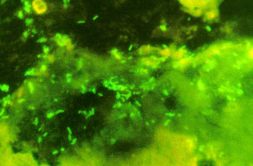
Research – Removal of Salmonella enterica serovar Typhimurium and Cronobacter sakazakii biofilms from food contact surfaces through enzymatic catalysis

Wiley Online

Bacterial biofilms are highly difficult to control, hence significant economic resources have been allocated to develop strategies to eradicate them. This study evaluated the effect of an enzymatic treatment to be used as a cleaning product to control the presence of biofilms. Two different materials used in the food industry, polystyrene and stainless steel, were tested using Salmonella Typhimuirum and Cronobacter sakazakii. Biofilm formation was carried out by inoculating the surfaces with a standardized concentration of 4 log (CFU cm−2) and incubated for 48 hr with renewal of nutrients. The biofilm formation and subsequent enzymatic treatment were quantified using fluorescence microscopy and the conventional culture method. The enzymatic treatment showed significant reductions of 2–3 log (CFU cm−2) in biofilm cells, which was attributed to the degradation of the extracellular matrix and the further detachment of both microorganisms. The maximum biofilm detachment obtained with the preventive formula was 46.67%; however, this percentage could be increased by applying an aggressive treatment or by adding a subsequent disinfection step that would eliminate adhered microbial cells. Further, the enzymatic cleaning treatment could be exploited as a potent technology to control bacterial adherence and biofilm formation in the food industry.

Research – Environmental persistence and virulence of Salmonella spp. isolated from a poultry slaughterhouse

Science Direct

Salmonella spp. is responsible for severe foodborne disease, and is one of the main agents involved in foodborne outbreaks worldwide. Contamination occurs mainly as a result of poultry and egg consumption since they can carry some serotypes pathogenic to humans. The aim of the study was to evaluate the persistence and pathogenic potential of Salmonella spp. (n = 40) isolated from poultry slaughterhouse mats, using adhesion and invasion assays, antimicrobial susceptibility by disc diffusion, and biofilm production as phenotypic tests and genotypic analyses. Polystyrene mats presented 3.2 times greater chance of isolating Salmonella than canvas mats. Besides, we observed resistance to tetracycline (17.5%), ampicillin (10%), cefotaxime (7.5%), trimethoprim-sulfamethoxazole (5%), and chloramphenicol (2.5%). All strains possessed the invA, sipB, sipD, ssaR, sifA, sitC, iroN, tolC, flgK, fljB, and flgL genes. The genes sopB and sipA were both present in 92.5% of the isolates, while sopD and spvB were observed in 90% and 32.5% of strains, respectively. All strains adhered to and invaded HeLa cells. Regarding biofilm production, 31 (77.5%) strains were able to produce biofilm on polystyrene microplates. Using PFGE, we detected the persistence of clones in the environment for up to 18 fromthe 20 weeks. The ability of these strains to produce a biofilm and thus persist in the environment and disperse through contact surfaces in the processing plant favors the contamination of food, aggravated by the pathogenic potential of these isolates demonstrated by their adhesion capacity, invasion and resistance to various antibiotic agents.

Research -The probiotic, Leuconostoc mesenteroides, inhibits Listeria monocytogenes biofilm formation

Wiley Online listeria

Listeria monocytogenes biofilm formation renders these cells highly resistant to current sanitation methods, and probiotics may be a promising approach to the efficient inhibition of Listeria biofilms. In the present study, three Leuconostoc mesenteroides strains of lactic acid bacteria isolated from kimchi were shown to be effective probiotics for inhibiting Listeria biofilm formation. Biofilms of two L. monocytogenes serotypes, 1/2a (ATCC15313) and 4b (ATCC19115), in dual‐species culture with each probiotic strain were decreased by more than 40‐fold as compared with single‐species Listeria biofilms; for instance, a reduction from 5.4 × 106 colony forming units (CFU)/cm2 L. monocytogenes ATCC19115 in single‐species biofilms to 1.1 × 105 CFU/cm2 in dual‐species biofilms. Most likely, one of the Leuconostoc strains, L. mesenteroides W51, led to the highest Listeria biofilm inhibition without affecting the growth of L. monocytogenes. The cell‐free supernatant from the L. mesenteroides W51 culture containing large protein molecules (>30 kDa) also inhibited Listeria biofilms. These data indicate that Leuconostoc probiotics can be used to repress L. monocytogenes biofilm contamination on surfaces at food processing facilities.


Research – Combined Effect of Cold Atmospheric Plasma and Hydrogen Peroxide Treatment on Mature Listeria monocytogenes and Salmonella Typhimurium Biofilms

Frontiers IN

Cold Atmospheric Plasma (CAP) is a promising novel method for biofilm inactivation as log-reduction values up to 4.0 log10 (CFU/cm2) have been reported. Nevertheless, as the efficacy of CAP itself is not sufficient for complete inactivation of mature biofilms, the hurdle technology could be applied in order to obtain higher combined efficacies. In this study, CAP treatment was combined with a mild hydrogen peroxide (H2O2) treatment for disinfection of 1 and 7 day(s) old Listeria monocytogenes and Salmonella Typhimurium biofilms. Three different treatment sequences were investigated in order to determine the most effective treatment sequence, i.e., (i) first CAP, then H2O2, (ii) first H2O2, then CAP, and (iii) a simultaneous treatment of CAP and H2O2. Removal of the biofilm, induction of sub-lethal injury, and H2O2 breakdown due to the presence of catalase within the biofilms were investigated in order to comment on their possible contribution to the combined inactivation efficacy. Results indicated that the preferred treatment sequence was dependent on the biofilm forming species, biofilm age, and applied H2O2 concentration [0.05 or 0.20% (v/v)]. At the lowest H2O2 concentration, the highest log-reductions were generally observed if the CAP treatment was preceded by the H2O2 treatment, while at the highest H2O2 concentration, the opposite sequence (first CAP, then H2O2) proved to be more effective. Induction of sub-lethal injury contributed to the combined bactericidal effect, while the presence of catalase within the biofilms resulted in an increased resistance. In addition, high log-reductions were partially the result of biofilm removal. The highest overall log-reductions [i.e., up to 5.42 ± 0.33 log10 (CFU/cm2)] were obtained at the highest H2O2 concentration if CAP treatment was followed by H2O2 treatment. As this resulted in almost complete inactivation of the L. monocytogenes and S. Typhimurium biofilms, the combined treatment of CAP and H2O2 proved to be a promising method for disinfection of abiotic surfaces.

Research – Exploitation of plant extracts and phytochemicals against resistant Salmonella spp. in biofilms

Science Direct

Salmonella is one of the most frequent causes of foodborne outbreaks throughout the world. In the last years, the resistance of this and other pathogenic bacteria to antimicrobials has become a prime concern towards their successful control. In addition, the tolerance and virulence of pathogenic bacteria, such as Salmonella, are commonly related to their ability to form biofilms, which are sessile structures encountered on various surfaces and whose development is considered as a universal stress response mechanism. Indeed, the ability of Salmonella to form a biofilm seems to significantly contribute to its persistence in food production areas and clinical settings. Plant extracts and phytochemicals appear as promising sources of novel antimicrobials due to their cost-effectiveness, eco-friendliness, great structural diversity, and lower possibility of antimicrobial resistance development in comparison to synthetic chemicals. Research on these agents mainly attributes their antimicrobial activity to a diverse array of secondary metabolites. Bacterial cells are usually killed by the rupture of their cell envelope and in parallel the disruption of their energy metabolism when treated with such molecules, while their use at sub-inhibitory concentrations may also disrupt intracellular communication. The purpose of this article is to review the current available knowledge related to antimicrobial resistance of Salmonella in biofilms, together with the antibiofilm properties of plant extracts and phytochemicals against these detrimental bacteria towards their future application to control these in food production and clinical environments.