Monthly Archives: April 2014

Research – Poultry as a Reservoir for Foodborne Disease

SFAM Salmonella Campylobacter

This article by Frieda Jorgensen and Caroline Willis first appeared in Microbiologist Vol 15 No. 1, March 2014.

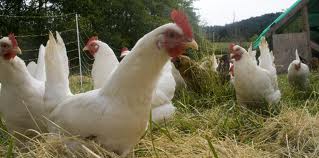
Poultry and poultry products are recognized as the most significant source of human Campylobacter and Salmonella infections in the developed world, including the UK. Outbreak investigations and case-control studies investigating risk-factors and transmission routes have identified poultry meat and eggs as major sources of infection. However, non-foodborne routes such as animal contact, and occupational or recreational exposure, are also important.


 

Research – Determination of Thermal Inactivation Kinetics of Hepatitis A Virus in Blue Mussel (Mytilus edulis) Homogenate

American Society for Microbiology Mussels

Hepatitis A virus (HAV) is a food-borne enteric virus responsible for outbreaks of hepatitis associated with shellfish consumption. The objectives of this study were to determine the thermal inactivation behavior of HAV in blue mussels, to compare the first-order and Weibull models to describe the data, to calculate Arrhenius activation energy for each model, and to evaluate model efficiency by using selected statistical criteria. The times required to reduce the population by 1 log cycle (D-values) calculated from the first-order model (50 to 72°C) ranged from 1.07 to 54.17 min for HAV. Using the Weibull model, the times required to destroy 1 log unit (tD = 1) of HAV at the same temperatures were 1.57 to 37.91 min. At 72°C, the treatment times required to achieve a 6-log reduction were 7.49 min for the first-order model and 8.47 min for the Weibull model. The z-values (changes in temperature required for a 90% change in the log D-values) calculated for HAV were 15.88 ± 3.97°C (R2, 0.94) with the Weibull model and 12.97 ± 0.59°C (R2, 0.93) with the first-order model. The calculated activation energies for the first-order model and the Weibull model were 165 and 153 kJ/mol, respectively. The results revealed that the Weibull model was more appropriate for representing the thermal inactivation behavior of HAV in blue mussels. Correct understanding of the thermal inactivation behavior of HAV could allow precise determination of the thermal process conditions to prevent food-borne viral outbreaks associated with the consumption of contaminated mussels.


Russian Food Hygiene – A Bit Cheesy!

Mail Online

Russian food safety officials have launched an investigation into a group of male workers posing naked in a vat of milk used to make cheese.

Officials were notified by furious consumers after the internet posting of the ‘sickening’ picture of a New Year party at the plant in Omsk, Siberia.

‘Yeah, our job is really boring,’ says the caption on the online posting on the site of an Artem Romanov, one of the workers.


Research – Naturally Occurring Viruses are Slowly Gaining Popularity in Eradicating Foodborne bacteria.

Inside Science

Outbreaks of foodborne diseases carried by bacteria can be a nuisance at best, and deadly at worst. Researchers are looking into novel ways to keep food safe. One way to destroy these pathogens is with more pathogens.

Bacteriophages are viruses that specifically attack bacteria. These phages, as researchers call them, have evolved alongside bacteria and become very good at what they do.

Scientists are most interested in lytic phages – viruses that inject their DNA into a bacterium and then hijack the cell’s machinery to make new copies of the virus. The copies eventually burst through bacterium’s membrane, killing it, and attack neighboring cells.

Recently, a team of researchers at Purdue University in West Lafayette, Indiana developed a cocktail of different phages that was extremely effective against Escherichia coli O157:H7, the pathogen that was estimated to have caused more than 63,000 illnesses and 2,138 hospitalizations between 2000 and 2008 in the U.S.

Australia – Cheese Recall – E.coli

FSANZ FSANZ3

Woodside Cheese Wrights has recalled Woodside Cheese Wrights Charleston jersey cow milk Brie and Woodside Cheese Wrights Capricorn Goat Brie from independent grocers and gourmet grocers in NSW, QLD and SA due to E.coli contamination. Food products contaminated with E.coli may cause illness if consumed.

Consumers should not eat these products and should return them to the place of purchase for a full refund. Any consumers concerned about their health should seek medical advice.

Research – Quantitative Microbial Risk Assessment of Antibacterial Hand Hygiene Products on Risk of Shigellosis

Ingenta Connect handwashing

There are conflicting reports on whether antibacterial hand hygiene products are more effective than nonantibacterial products in reducing bacteria on hands and preventing disease. This research used new laboratory data, together with simulation techniques, to compare the ability of nonantibacterial and antibacterial products to reduce shigellosis risk. One hundred sixtythree subjects were used to compare five different hand treatments: two nonantibacterial products and three antibacterial products, i.e., 0.46% triclosan, 4% chlorhexidine gluconate, or 62% ethyl alcohol. Hands were inoculated with 5.5 to 6 log CFU Shigella; the simulated food handlers then washed their hands with one of the five products before handling melon balls. Each simulation scenario represented an event in which 100 people would be exposed to Shigella from melon balls that had been handled by food workers with Shigella on their hands. Analysis of experimental data showed that the two nonantibacterial treatments produced about a 2-log reduction on hands. The three antibacterial treatments showed log reductions greater than 3 but less than 4 on hands. All three antibacterial treatments resulted in statistically significantly lower concentration on the melon balls relative to the nonantibacterial treatments. A simulation that assumed 1 million Shigella bacteria on the hands and the use of a nonantibacterial treatment predicted that 50 to 60 cases of shigellosis would result (of 100 exposed). Each of the antibacterial treatments was predicted to result in an appreciable number of simulations for which the number of illness cases would be 0, with the most common number of illness cases being 5 (of 100 exposed). These effects maintained statistical significance from 106Shigella per hand down to as low as 100 Shigella per hand, with some evidence to support lower levels. This quantitative microbial risk assessment shows that antibacterial hand treatments can significantly reduce Shigella risk.

New Zealand – Food Safety Food Safety Assurance Advisory Council

3 News 

An independent council is being set up to advise the Government on food safety issues. Food Safety Minister Nikki Kaye says it will have six members skilled in food regulation, public health, science, business and international relations.

Establishing the Food Safety Assurance Advisory Council was one of the 29 recommendations that came out of the Government’s inquiry into Fonterra’s whey protein contamination crisis.

“At the moment there’s no independent group that looks at the whole of New Zealand’s food safety and assurance system and is able to provide high-level independent advice and risk analysis,” Ms Kaye said.

“The council is being set up to do this. It will also identify current and future trends and risks that may impact on our food safety and assurance system.”

Members will be appointed in time for the council to hold its first meeting in July

Radio New Zealand News

The Government has established a new food safety council to give it independent advice on food safety and risks.

USA – Salmonella From Bearded Dragons

Food Poisoning Bulletin BeardedDragonEatting

At least 132 people in 31 states have contracted Salmonella infections from contact with pet bearded dragons since February 2012, according to the Centers for Disease Control and Prevention (CDC). Most of them are children five and under.

The outbreak strain, Salmonella Cotham, is extremely rare. Less than one one hundredth of one percent of Salmonella strains cultured from Americans since 1963 have been been Salmonella Cotham.

USA – FDA Recall -Ground Annato Spice – Salmonella

FDA Salm2

Miravalle Foods, Inc. of El Monte, CA, is conducting a voluntarily recall on its 0.75 ounce packages of Miravalle brand Achiote Molido Ground Annato spice because they have the potential to be contaminated with Salmonella, an organism which can cause serious and sometimes fatal infections in young children, frail or elderly people, and others with weakened immune systems. Healthy persons infected with Salmonella often experience fever, diarrhea (which may be bloody), nausea, vomiting and abdominal pain. In rare circumstances, infection with Salmonella can result in the organism getting into the bloodstream and producing more severe illnesses such as arterial infections (i.e., infected aneurysms), endocarditis and arthritis.

The recalled packages of Ground Annato 0.75 oz. were distributed in California, Utah, Idaho, Colorado, Nevada, Washington and Oregon, in retail stores.

The product comes in a 0.75 ounce, clear plastic package marked with lot # 0015 & #0018 on the top of the UPC number (712810005020).

No illnesses have been reported to date in connection with this problem.

UK Research- Norovirus in Food Outlets to be Mapped

Medical Press norovirus-2(1)

The University of Liverpool is leading a £2 million Food Standards Agency (FSA) project to map the occurrence of norovirus in food premises and industry workers.

Norovirus outbreaks can rapidly affect of people. In 2012 a batch of frozen strawberries infected 11,000 people in Germany, but there are significant gaps in the authorities’ understanding of which strains cause and which foods are the most likely to harbour the bacteria.

Researchers will produce data that will help the FSA to develop plans to reduce the infection by collecting swabs from work surfaces at more than 200 pubs, restaurants and hotels in the North West and South East of England.