Tag Archives: food standards australia new zealand

New Zealand – FSANZ – Call for Review of Limits for Listeria monocytogenes

Date: 8/11/2013FSANZ

Food Standards Australia New Zealand (FSANZ) today called for submissions on a Proposal to review limits for Listeria monocytogenes in the Food Standards Code.

FSANZ Chief Executive Officer Steve McCutcheon said Proposal P1017 was seeking to establish criteria that are based on whether growth of L. monocytogenes can occur in ready-to-eat foods.

“This approach is consistent with L. monocytogenes management internationally,” Mr McCutcheon said.

“It recognises that L. monocytogenes is able to grow to high numbers in some foods and should not be present at detectable levels if the food is to be kept safe. In other foods, where we know the pathogen cannot grow, there is a possibility for occasional low level detections that will not affect the safety of the food.

“The review of the limits for L. monocytogenes is the first stage of a broader review of microbiological limits in the Code.”

The closing date for submissions on Proposal P1017 is 10 January 2014.

More information

Proposal P1017 – Criteria for Listeria monocytogenes – Microbiological Limits for Foods

Read more about the proposal

How to make a submission

FSANZ’s latest notification circular

What is Listeria? – See our consumer advice

Media contact: 0401 714 265 (Australia) or +61 401 714 265 (from New Zealand) or email media@foodstandards.gov.au
Australia – Tasmanian Scallops PSP and Unsafe Poultry

AFNSalmonella Campylobacter

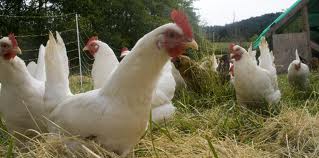
The Food Safety Information Council has released concerning national survey data this week that shows 60% of home cooks in Australia are putting themselves at additional risk of food poisoning from chicken.

The data showed that 60 per cent were at risk from washing whole poultry before it was cooked, which can spread bacteria around the kitchen. A further 16% of those surveyed incorrectly tasted chicken to see if it was cooked properly rather than using a safe meat thermometer.

The focus on cross-contamination of meats by the Food Safety Information Council (FSIC) comes as yesterday marked the start of Australian Food Safety Week. The FSIC week is specifically focusing on chicken and those most affected by food poisoning with the theme “vulnerable populations.”

Food Safety Information Council Chairman, Dr Michael Eyles said that chicken, as Australia’s most popular meat, was consumed by 8 in every ten home cooks.

”Home cooks are probably following what their parents or grandparents did in the past by washing poultry, not to mention probably patting it dry with a tea towel. Washing poultry splashes these bacteria around the kitchen cross contaminating sinks, taps, your hands, utensils, chopping boards and foods that aren’t going to be cooked like salads or desserts,” Dr Eyles said.

“Chicken is a healthy, convenient meal [but] other poultry is also becoming popular with just under half of those surveyed cooking whole turkey and 37% whole duck but these, too, are being washed before cooking, with 68% washing turkey and 74% duck,” he added.

According to a Food Standards Australia New Zealand survey referenced by the Food Safety Information Council, 84 per cent of raw chicken carcasses tested positive to the food poisoning bacteria Campylobacter and 22 per cent to Salmonella.

News Com Au

SCALLOPS from the east coast of Tasmania have joined the area’s mussels in being banned following a toxic algal bloom.

A scallop fishery in the White Rock area has been closed after the same paralytic shellfish toxin (PST) found in Spring Bay Seafood’s mussels was detected in samples taken on November 2.

“PST levels in tested scallops are currently either close to or slightly over the permitted level, but it’s possible the level will increase before it goes back down again,” a health department warning said.

The affected shellfish don’t look or taste different and the toxin is not destroyed by cooking or freezing, but there have been no reports of illness.

Australia – Recall – Yoghurt – E.coli

AVA

 Voluntary recall of B.d Farm Paris Creek Organic Biodynamic Yoghurt Apricot from Australia completed

November 2012: The Food Standards Australia New Zealand has issued an alert on the recall of a batch of yoghurt product from B.d Farm Paris Creek Pty Ltd due to microbial contamination. (E.coli)


FSANZ – Call for Submissions on Listeria monocytogenes in RTE

FSANZ

Food Standards Australia New Zealand (FSANZ) today called for submissions on a proposal to review existing limits for Listeria monocytogenes  in the Food Standards Code.

FSANZ Chief Executive Officer Steve McCutcheon said that since the limits were first set, preventative food safety requirements had been introduced and new limits had been established internationally.

“These changes mean it’s time for FSANZ to review the limits in the code to ensure we are providing a nationally consistent approach and where possible, harmonising our standards with those set by international standard-setting bodies,” Mr McCutcheon said.

“FSANZ is also exploring what tools would need to be developed to help industry and enforcement agencies apply any new approach.”

L. monocytogenes causes the serious illness, listeriosis, in some people. People particularly at risk of listeriosis include pregnant women, their unborn and newborn babies, the elderly, and other people whose immune systems have been weakened by illness or immuno-suppressant drugs.

The review of the limits for L. monocytogenes is the first stage of a broader review of microbiological limits in the Code.

The closing date for submissions on Proposal P1017 is 16 November 2012.