Category Archives: water microbiology

Ireland – Boil water notice issued for Clare Island public water supply

Con-telegraph

crypto

FOLLOWING advice from the Health Service Executive, Irish Water and Mayo County Council have issued a boil water notice for the area supplied by the Clare Island public water supply to protect approximately 165 people following a recent drinking water quality test.

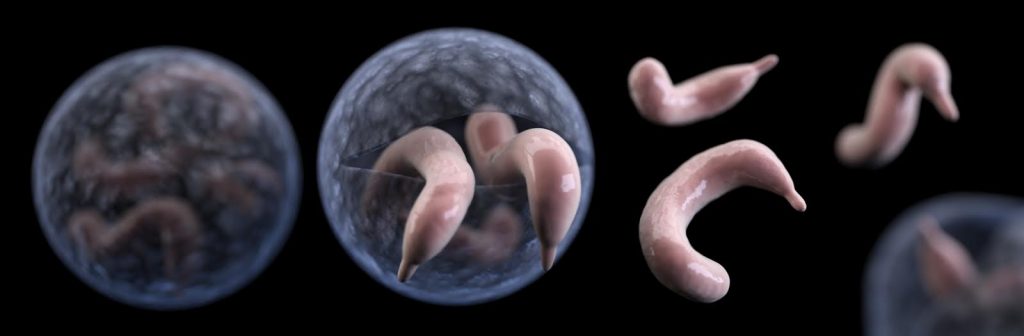
The notice has been put in place due to the detection of cryptosporidium in the Clare Island public water supply.

Cryptosporidium is a tiny parasite found in human and animal waste. If it is swallowed (ingested), it can cause a disease called cryptosporidiosis. The symptoms of cryptosporidiosis include fever, stomach upset, weight loss and diarrhoea.

Cryptosporidium may be found in water if it has been contaminated or if there has been a problem with water treatment.

Research – Escherichia coli Survival on Strawberries and Unpacked Romaine Lettuce Washed Using Contaminated Water

MDPI

A number of foodborne outbreaks have occurred in the past decade, with higher incidences associated with romaine lettuce and strawberries. Contaminated agricultural water has been reported as the source of microbial contamination in most of these outbreaks. Maintaining the adequate and sanitary quality (0 E. coli/100 mL) of agricultural water can be challenging during post-harvest operations such as washing. The study focused on the attachment of generic E. coli (Rifampicin resistant) onto romaine lettuce and strawberries, mimicking the produce wash step. The produce was washed with contaminated water, air-dried, and stored in display units for 7 days. The produce was sampled randomly each day and analyzed for the surviving E. coli count. The results indicated that E. coli can survive in both lettuce and strawberries over extended periods. A survival population of 2.3 log CFU/cm2 (day 8) was observed on lettuce with an initial population of 2.8 log CFU/cm2 (day 0). On strawberries, the population reduced from 3.0 (day 0) to 1.7 log CFU/cm2 (day 7), with an initial E. coli concentration of approx. 6 log CFU/mL in the wash water. Strawberry leaves had a higher attachment of E. coli than the fruit (p < 0.05). In conclusion, romaine lettuce and strawberries washed with contaminated water can cause an outbreak affecting consumers and public health. View Full-Text

Research – Determining bacterial load and water quality of tomato flume tanks in Florida packinghouses

Journal of Food Protection

Monitoring and maintenance of water quality in dump tanks or flume systems is crucial to prevent pathogen cross-contamination during postharvest washing of tomatoes, but there is limited information on how organic matter influences sanitizer efficacy in the water. The main objective of this study was to monitor water quality in flume tanks and evaluate the efficacy of postharvest washing of tomatoes in commercial packinghouses. Flume tank water samples (n=3) were collected on an hourly basis from three packinghouses in Florida and analyzed for pH, total dissolved solids (TDS), free chlorine, chemical oxygen demand (COD), oxidation-reduction potential (ORP), and turbidity. Additionally, three flume water samples were collected and tested for total aerobic plate count (APC), total coliforms (TC), and generic E. coli (EC). Fresh tomatoes (n=3), both before and after washing, were collected and analyzed for the same bacterial counts. Turbidity, COD, and TDS levels in flume water increased over time in all packinghouses. Correlations observed include COD and turbidity (r = 0.631), turbidity and TDS (r = 0.810), and ORP and chlorine (r = 0.660). APC for water samples had an average range of 0.0 to 4.7 log CFU/mL and TC average range of 0.0 to 4.7 log CFU/mL. All water samples were negative for generic E. coli . The average APC for pre-and post-flume tomatoes from the three packinghouses was 6.0 log CFU/tomato and ranged from 2.2 to 7.4 log CFU/tomato. The average TC count was <1.5 and 7.0 log CFU/tomato for pre-and post-wash tomatoes, respectively. There was no significant effect ( P >0.05) of postharvest washing on the microbiological qualities of tomatoes. Water quality in flume tanks deteriorated over time in all packinghouses during a typical operational day of 4-8 h.

Research – Legionella and Biofilms—Integrated Surveillance to Bridge Science and Real-Field Demands

MDPI

Legionella_Plate_01

Legionella is responsible for the life-threatening pneumonia commonly known as Legionnaires’ disease or legionellosis. Legionellosis is known to be preventable if proper measures are put into practice. Despite the efforts to improve preventive approaches, Legionella control remains one of the most challenging issues in the water treatment industry. Legionellosis incidence is on the rise and is expected to keep increasing as global challenges become a reality. This puts great emphasis on prevention, which must be grounded in strengthened Legionella management practices. Herein, an overview of field-based studies (the system as a test rig) is provided to unravel the common roots of research and the main contributions to Legionella’s understanding. The perpetuation of a water-focused monitoring approach and the importance of protozoa and biofilms will then be discussed as bottom-line questions for reliable Legionella real-field surveillance. Finally, an integrated monitoring model is proposed to study and control Legionella in water systems by combining discrete and continuous information about water and biofilm. Although the successful implementation of such a model requires a broader discussion across the scientific community and practitioners, this might be a starting point to build more consistent Legionella management strategies that can effectively mitigate legionellosis risks by reinforcing a pro-active Legionella prevention philosophy. View Full-Text

Ireland – Tipperary County Council not aware of source of Cryptosporidium in Borrisokane water

Tipperary Live

crypto

Tipperary County Council is not aware if the source of the cryptosporidium that has affected Borrisokane water supply has been found, local councillors have been told.

Cllr Ger Darcy had also raised concerns as to whether the pollution could happen again.

Irish Water is installing a UV system to kill any bacteria in the supply and director of water services Jerry Robinson said that hopefully that would be done this month, but warned it was a “work in progress”.

He said the UV system should prevent issues in the future.

EU – Legionnaires’ disease – Annual Epidemiological Report for 2019

ECDC

Legionella_Plate_01

ECDC’s annual surveillance reports provide a wealth of epidemiological data to support decision-making at the national level. They are mainly intended for public health professionals and policymakers involved in disease prevention and control programmes.

Executive summary

  • Legionnaires’ disease remains an uncommon and mainly sporadic respiratory infection with an overall notification rate in 2019 for the EU/EEA of 2.2 cases per 100 000 population.
  • There is heterogeneity in notification rates between EU/EEA countries, with the highest rate reported by Slovenia (9.4 cases per 100 000 population).
  • The annual notification rate increased in recent years, from 1.4 in 2015 to 2.2 cases per 100 000 population in 2019.
  • There was a marginal decrease of less than 1% in the number of reported cases in 2019, compared with 2018.
  • Four countries (France, Germany, Italy, and Spain) accounted for 71% of all notified cases in 2019.
  • Males aged 65 years and above were most affected (8.4 cases per 100 000 population).
  • Only 10% of cases were culture-confirmed (10%) probably meaning that disease caused by Legionella species other than Legionella pneumophila is under-estimated.

Research – How Legionella makes itself at home

Science Daily

Scientists at UT Southwestern have discovered a key protein that helps the bacteria that causes Legionnaires’ disease to set up house in the cells of humans and other hosts. The findings, published in Science, could offer insights into how other bacteria are able to survive inside cells, knowledge that could lead to new treatments for a wide variety of infections.

“Many infectious bacteria, from listeria to chlamydia to salmonella, use systems that allow them to dwell within their host’s cells,” says study leader Vincent Tagliabracci, Ph.D., assistant professor of molecular biology at UTSW and member of the Harold C. Simmons Comprehensive Cancer Center. “Better understanding the tools they use to make this happen is teaching us some interesting biochemistry and could eventually lead to new targets for therapy.”

Tagliabracci’s lab studies atypical kinases, unusual forms of enzymes that transfer chemical groups called phosphates onto proteins or lipids, changing their function. Research here and elsewhere has shown that Legionella, the genus of bacteria that cause Legionnaires’ disease, is a particularly rich source of these noncanonical kinases. According to the Centers for Disease Control and Prevention, nearly 10,000 cases of Legionnaires’ disease were reported in the U.S. in 2018, though the true incidence is believed to be higher.

After identifying a new Legionella atypical kinase named MavQ, Tagliabracci and his colleagues used a live-cell imaging technique combined with a relatively new molecular tagging method to see where MavQ is found in infected human cells, a clue to its function. Rather than residing in a specific location, the researchers were surprised to see that the protein oscillated back and forth between the endoplasmic reticulum — a network of membranes important for protein and lipid synthesis — and bubble- or tube-shaped structures within the cell.

Further research suggests that MavQ, along with a partner molecule called SidP, remodels the endoplasmic reticulum so that Legionella can steal parts of the membrane to help create and sustain the vacuole, a structure that houses the parasite inside cells and protects it from immune attack.

Tagliabracci, a Michael L. Rosenberg Scholar in Medical Research and a Cancer Prevention & Research Institute of Texas (CPRIT) Scholar, says that he suspects other bacterial pathogens may use similar mechanisms to co-opt existing host cell structures to create their own protective dwellings.

This work was funded by NIH grants DP2GM137419, R01GM113079, T32GM008203-29, F30HL143859-01, Welch Foundation grants I-1911, I-1789, CPRIT grant RP170674, and Polish National Agency for Scientific Exchange scholarship PPN/BEK/2018/1/00431.

Armenia – Armenia reports gastrointestinal outbreak, Hundreds sickened

Outbreak News Today

The Armenian Ministry of Health reports an outbreak of intestinal infections in the country’s Sisian community.

To date, the ministry has recorded 370 cases with diagnoses that are characteristic of intestinal infections and 7 of the 370 patients are currently undergoing treatment at a hospital.

The Ministry of Health said that the patients are in serious condition, while other residents are receiving outpatient treatment.

Outbreak News Interviews Podcast

Sample from water and from patients have been taken for microbial testing to include enteropathogenic intestinal bacteria, Yersinia enterocolitis and Campylobacter, as well as Norovirus and Adenovirus.

Denmark – Legionnaires’ disease in Denmark in 2020

SSI

Legionella_Plate_01    CDC legionella

278 cases of legionnaires’ disease were detected in Denmark in 2020. Of these, 94.6% had been infected in Denmark. That is the highest number ever.

The Statens Serum Institut (SSI) has issued the annual report on how many cases of Legionnaires’ disease (LS) were found in Denmark in 2020.

A total of 278 cases of LS, also known as legionella pneumonia, were detected. Of these, 165 were men (59.4%) and 113 women (40.6%).

Out of these, 39 patients died within 30 days after the disease had broken out or they had been hospitalized. It gives a mortality rate of 14%.

Almost 95% infected in Denmark

Out of the 278, 263 people were infected in Denmark. This corresponds to 94.6%. This is an increase of 25% compared to the average for the last three years, and thus the highest number ever.

“The increase in the number of infected in Denmark may be related to a higher test activity in 2020. It may be due to the fact that many hospitalized patients with suspected covid-19 have also been examined for legionella infection,” says head of department Søren Anker Uldum from SSI.

15 infected on travel

There are only 15 cases (5.4%) where people in 2020 were infected with LS when traveling abroad. In 9 cases, it was while traveling in Europe. 5 were infected while traveling in Asia and 1 traveling to the American continent.

The proportion of travel-related LS cases is usually 20-25%

“Due to the extensive travel restrictions in 2020 due to the Covid-19 pandemic, there has been very limited travel activity. This is probably the reason for the few travel-associated legionella cases in 2020 ”, says Søren Anker Uldum.

Read more

You can read more about Legionnaires’ disease here.

You can also see the annual statement for legionnaires’ disease in Denmark in 2020 here .

Ireland – HPSC provides advice for parents following large increase in incidence of Cryptosporidiosis

HPSC

crypto

The HSE-Health Protection Surveillance Centre (HPSC) is providing advice to parents about preventing cryptosporidiosis following a large increase in a potentially serious tummy bug in children over the last few weeks.

Since the beginning of March, the number of cases of cryptosporidiosis has more than doubled in comparison to the average rates, especially in small children aged 1 to 4 years of age. When children spend time outdoors and in particular on farms, they are more likely to pick up this bug and it is important they wash their hands regularly with soap under warm running water.

Factsheet to assist parents

Hands should always be washed:

  • After using the toilet
  • Before eating
  • Before preparing food
  • After playing, working or being outside (especially on the farm)
  • After touching dirty outdoor clothes or boots
  • After touching pets, livestock and other animals

It is important to know that:

  • Alcohol hand gel will not kill the cryptosporidiosis bug – only soap and warm water will
  • Children should not eat food (including sweets and treats) out of doors especially on the farm, or in the open countryside, unless their hands have been cleaned
  • Raw (unpasteurised) milk can be contaminated with many harmful infectious diseases including cryptosporidiosis. Young children and pregnant women are at most risk.
  • If you have a private well, you should ensure that the water from it is safe. The EPA has advice on protecting your well

Symptoms:
Symptoms of cryptosporidiosis generally begin about a week after swallowing the bug, but can start after only a couple of days. The symptoms last about one week (but can last longer). People who are immunocompromised (whose body’s defence system is weak due to a medical condition or because of medication) can have severe symptoms if they catch cryptosporidiosis.

The most common symptom of cryptosporidiosis is watery diarrhoea. Other symptoms include:

  • Stomach cramps or pain
  • A temperature
  • Nausea
  • Vomiting

Some people with cryptosporidiosis will not get sick at all.

Cryptosporidiosis is spread when the bug passes from the person or animal in the stools or manure, and anything contaminated by the stools or manure (hands, touch surfaces, handles, food, water and outdoor surfaces) can lead to a person becoming infected.