Category Archives: Toxoplasmosis

Research – Molecular detection and genotype identification of Toxoplasma gondii in domestic and industrial eggs

Wiley Online 


Abstract

Birds are important intermediated hosts of Toxoplasma gondii. Consumption of chicken meat and its infected products is one of the main sources of human infection with T. gondii. However, little information is available about T. gondii infection in egg. In this study, the contamination of industrial and local eggs with Toxoplasma was investigated by PCR method targeting the RE gene in two tropical cities of Iran. Genotypes of T. gondii were determined by PCR‐RFLP method targeting the SAG3 gene. T. gondii DNA was detected in 11% (22/200) of the eggs. Genotyping of 14 T. gondii isolates revealed that all of the isolates were belonged to genotype III of T. gondii. Sequencing of the isolates by the SAG3 gene showed 95%–100% similarity with the T. gondii isolates in GenBank.

Practical applications

The findings of this study suggested that consumption of raw or undercooked eggs might play a role in human infection with Toxoplasma. Hence, consumption of adequately cooked eggs should be considered for prevention of human toxoplasmosis.

Brazil – Santa Maria reports 569 confirmed cases of toxoplasmosis, of which 50 are pregnant women

Outbreak News Today Toxoplas

The number of confirmed cases of toxoplasmosis in Santa Maria, in the Central Region of Rio Grande do Sul, rose to 569, according to a report released Monday (June / 2018) by the municipal and state health departments. According to the document, of the confirmed cases, 50 are pregnant women. The previous bulletin, released on June 8 [2018], reported 510 cases.

Research – Hostile intruder: Toxoplasma holds host organelles captive

PLOS Pathogens Toxoplas

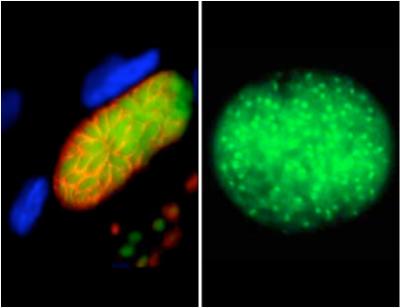
Toxoplasma gondii, a human pathogen of the Apicomplexa phylum, is an obligate intracellular parasite, i.e., a microbe that must reside within a foreign cell to survive and propagate. To achieve intracellular replication, Toxoplasma has mastered three strategies: seclusion, secretion, and scavenging. Upon invasion, the parasite secludes itself from the host cytoplasm by forming the parasitophorous vacuole (PV), a self-made niche that protects it from host cell assaults. Within its PV, Toxoplasma secretes many proteins that transform the PV into a replication-competent milieu, and it subverts many host cell pathways by exporting proteins into the host territory. The parasite relentlessly scavenges nutrients from the host mammalian cytosol and organelles until egress. Hereafter, we focus on the unique properties of the T. gondii PV in relation to the scavenging of host cell–derived nutrients by the parasite.

Research into Toxoplasma gondii

Science DailyToxoplasma

Toxoplasma gondii is a parasite that commonly infects cats but is also carried by other warm-blooded animals, including humans. Up to a third of the UK population are chronically infected with the parasite. In most cases the acute infection causes only flu-like symptoms. However, women who become infected during pregnancy can pass the parasite to their unborn child which can result in serious health problems for the baby such as blindness and brain damage. People who have compromised immunity, such as individuals infected with HIV, are also at risk of serious complication due to reactivation of dormant cysts found in the brain.

Studies in the USA and UK state that up to 50% of infections can come from food.

Current thinking on how the Toxoplasma gondii parasite invades its host is incorrect, according to a study published today in Nature Methods describing a new technique to knock out genes. The findings could have implications for other parasites from the same family, including malaria, and suggest that drugs that are currently being developed to block this invasion pathway may be unsuccessful.

Organic Meats Increased Toxoplasmosis Risk?

Food Poisoning Bulletin 

A study published in the May 22, 2012 issue of Clinical Infectious Diseaseshas found that organic meats may have increased toxoplasmosis risk.

Toxoplasmosis gondii is a single-celled parasite that used to be a significant problem in pork. The definitive host for the parasite is cats. When pigs were allowed to forage for food, they often ate food contaminated with infected cat feces, or ate wild animals and birds that contained the oocysts. That’s why your grandmother used to cook pork well done to 160 degrees F, because that destroyed the parasite in all of its forms.

When pork farmers changed the methods of hog raising to eliminate foraging and fed the animals processed food, the risk of toxoplasmosis fell considerably. But the current trend toward free-range food animals, especially pigs and lamb, has increased the toxoplasmosis risk, since those animals are foraging for food. Wild game, such as venison, is also a a source of the toxoplasmosis parasite.

Toxoplasma Research Required

Food Manufacture

More research is needed to determine how big a role food plays in the transfer of the parasitic disease toxoplasmosis to humans in the UK, according to scientists.

Toxoplasmosis has been implicated in the USA and UK as a  foodborne illness in about 50% of reported cases.

Toxoplasma Research Link to Severe Illness in Newborns

Eurek Alert

Although this may not at first appear to be food linked, it is estimated that in the USA and Europe 50% of Toxoplamsma infections are via food.

Scientists have identified which strains of the Toxoplasma gondii parasite, the cause of toxoplasmosis, are most strongly associated with premature births and severe birth defects in the United States. The researchers used a new blood test developed by scientists at the National Institute of Allergy and Infectious Diseases (NIAID), part of the National Institutes of Health, to pinpoint T. gondii strains that children acquire from their acutely infected mothers while in the womb.

Pregnant women can become infected with T. gondii through contact with cat feces that contain infectious forms of the parasite or by eating undercooked meat. Women who become infected while pregnant may miscarry, give birth prematurely, or have babies with eye or brain damage.

Controlling Toxoplasma in Pork

Meating Place.com

This the second article in a five-part series analyzing the most prevalent pathogen-food combinations in the United States. Using CDC and USDA data, researchers at the University of Florida’s Emerging Pathogens Institute identified – for the first time – which pathogens and which foods cause the most illness in the United States. The series is exploring the following five pathogen-food combinations: campylobacter in poultry; toxoplasma in pork; toxoplasma in beef; listeria in deli meats; and salmonella in poultry. Each article offers strategic insights into the food safety issue of each of those five combinations, identifying what makes them such a threat – and offering solutions to combat them.

It doesn’t carry the regulatory weight of E. coli, and it hasn’t grabbed headlines the way Salmonella has, but Toxoplasma in pork – and the illness Toxoplasmosis – is a growing threat, the third leading cause of death from foodborne illness worldwide. A parasite with properties similar to Trichinella spiralis (trichinae), it can cause havoc in certain processed meats that have little thermal processing, but it is particular a threat to fresh meats.

Toxoplasmosis a Time to Act?

Food Production Daily                                 FSA Consultation Paper

An article in Food Production daily has reported on a consultation paper released by the FSA about Toxoplasma gondii and Toxoplasmosis. Toxoplasmosis is under reported in the UK and there are large gaps on knowledge about the parasite. Figures from the US and UK would indicate that about 50% of Toxoplasmosis cases are foodborne although the disease is more associated with domestic animals. In the US it is estimated that 60 million people carry the parasite and estimate figures for the UK are 15 million of the adult population carry the parasite.

It is listed in the top five organisms for economic loss from foodborne illness in the USA.

In general exposure to the healthy population would lead to mild symptoms but in immunosuppressed and pregnant could develop more severe and even life threatening symptoms.

There is a raft of information in both links above.