Category Archives: campylobacter coli

Research – Rise in Campylobacter positive flocks in Norway

Food Safety News

The number of broiler flocks positive for Campylobacter in Norway increased in 2023 but is still at low levels, according to the latest data.

Surveillance in 2023 showed that 128 flocks, or 6.1 percent, were positive for Campylobacter.

This is from tests on broiler flocks slaughtered before 51 days of age during May and October by the owner or keeper. There was no information shared on the levels of Campylobacter detected.

Research – Measures for the control of Campylobacter spp. in chicken meat.

FAO

Scope and objectives
In response to a request from the 52nd Session of the Codex Committee on Food
Hygiene (CCFH), the Joint FAO/WHO Expert Meeting on Microbiological Risk
Assessment (JEMRA) convened a meeting in Rome, Italy from 6 to 10 February
2023, to collate and assess the most recent scientific information relevant to the
control of thermotolerant Campylobacter species C. jejuni and C. coli (hereafter
Campylobacter) in broiler production and chicken meat, including a review of
the Codex Guidelines for the Control of Campylobacter and Salmonella in Chicken
Meat (CXG 78-2011).1
The scope was focused on aspects of broiler primary production from the point of
chick placement into production establishments to consumer handling.
The objectives were to identify and assess control measures for Campylobacter in
the broiler production chain. The expert committee reviewed the available data
on Campylobacter control including scientific literature published from 2008 to
October 2022 and data submitted in response to a call for data for this meeting. The
experts:

1) determined the quality and quantity of evidence of control measures
for Campylobacter,

2) evaluated the impact of measures to control Campylobacter
in the broiler production chain,

3) determined which hazard-based interventions
pertained specifically to Campylobacter and which were general to the control
of foodborne pathogens in the pre- and post-harvest broiler production chain,
and

4) reviewed and recommended revisions to the Guidelines for the Control of
Campylobacter and Salmonella in Chicken Meat (CXG 78-2011), paragraphs 1 to
115, based on the currently available scientific evidence (Annex 3).
Control measure evaluation began at the time of chick placement since there
is currently no evidence that parent flocks or hatchery practices contribute to
the colonization of broiler chicks. The available literature on interventions was
predominantly based on laboratory and pilot studies, with few commercial
scale applications; therefore, limited conclusions could be reached. The experts
recommend the use of a combination of multiple interventions approach) suitable to production and processing stages to lower Campylobacter contamination on chicken me

Research – Campylobacter presence on Dutch broiler farms and associated risk factors

Science Direct

ABSTRACT

Campylobacter is the most reported zoonotic pathogen in humans in the European Union. Poultry is a major source of human infection with Campylobacter. Although many studies are done on the presence of Campylobacter in broilers and theoretically effective control measures are known, their relative importance at broiler farms remains poorly understood. Therefore the aim of this study was to investigate the presence of Campylobacter on selected broiler farms in the Netherlands, to determine the moment of introduction, and associated risk factors. A longitudinal study on 25 broiler farms was carried out between June 2017 and December 2020. Fecal samples were collected weekly from 43 broiler houses. In total 497 flocks were sampled. Putative variables on flock and farm characteristics for a risk factor analysis were gathered through questionnaires. Risk factors associated with the presence of Campylobacter in a broiler flock were determined using regression models. In total 30% of the flocks included in the study were positive for Campylobacter. Factors associated with presence of Campylobacter at slaughter age included: season, mowing lawns and presence of agricultural side activities. While summer/autumn and mowing lawns were associated with an increase in Campylobacter presence in flocks, the farmer having agricultural side activities other than poultry production was associated with a decrease. Analysis of the age at which flocks first tested Campylobacter positive revealed that slower growing breeds became positive on average one week later compared to regular growers. This study revealed a delayed introduction of Campylobacter in slower grower versus regular grower broiler flocks reared indoors. In addition it confirmed importance of season as major risk factor. The relevance of mowing and preceding positive flocks as risk factors needs further investigation.

Research – Investigating bacteriophages as a novel multiple-hurdle measure against Campylobacter: field trials in commercial broiler plants

Nature

Abstract

Campylobacter mitigation along the food production chain is considered effective for minimizing the public health burden of human campylobacteriosis. This study is the first combining different measures in a multiple-hurdle approach, using drinking water additives and feed additives in single and combined application schemes in commercial broiler plants. Broiler chickens in the study groups were naturally contaminated with Campylobacter. Application of an organic acid blend via drinking water, consisting of sodium propionate, potassium sorbate, and sodium diacetate, resulted in significant reductions of up to 4.9 log10 CFU/mL in fecal samples and in cecal samples at slaughter. The application of a phage mixture, consisting of Fletchervirus phage NCTC 12673 and Firehammervirus phage vB_CcM-LmqsCPL1/1, resulted in reductions of up to 1.1 log10 CFU/mL in fecal samples 1 day after dosing. The sole administration of curcumin via feed resulted in small and inconsistent reductions. In the group receiving a combination of all tested measures, reductions of up to 1.1 log10 CFU/mL were observed. Based on the results of our field trials, it was shown that both the sole application and the combined application of mitigation measures in primary production can reduce the Campylobacter load in broiler chickens, while no synergism could be observed.

Research – The antimicrobial effect of eugenol against Campylobacter jejuni on experimental raw chicken breast meat model

Wiley Online

Campylobacter jejuni is the predominant bacterial cause of gastroenteritis, the main cause of foodborne deaths. Currently, Campylobacter is a common foodborne pathogen found in poultry; thus, there is a need for the development of novel intervention strategies. The aim of the study was to examine the effect of eugenol on C. jejuni load in an experimental chicken meat model. We observed that eugenol was effective in reducing C. jejuni load for 7 days of storage. Eugenol treatment at all concentrations (1.28, 5.12, and 10.24 mg mL−1) decreased Campylobacter load more significantly in the reference strain, and this decrease was dose-dependent throughout the storage period. Compared to the control group, eugenol reduced the counts of chicken isolate and the reference strain of C. jejuni by approximately 1.5 and 4.5 log/CFU, respectively, after 7 days of storage. Eugenol is a promising agent for improving the safety of poultry.

Research – A comparison of European surveillance programs for Campylobacter in broilers

Science Direct

Campylobacter kswfoodworld

Abstract

Campylobacter is an important foodborne pathogen as it is associated with significant disease burden across Europe. Among various sources, Campylobacter infections in humans are often related to the consumption of undercooked poultry meat or improper handling of poultry meat. Many European countries have implemented measures to reduce human exposure to Campylobacter from broiler meat. In this paper, surveillance programs implemented in some European countries is summarized. Our findings reveal that many European countries test neck skin samples for Campylobacter as per the Process Hygiene Criterion (PHC) set by the European Regulation. Variations to the legal plan are seen in some countries, as in Norway and Iceland, where weekly sampling is performed during infection peak periods only, or in Iceland, where the Campylobacter limit is set at 500 CFU/g instead of 1000 CFU/g. Furthermore, northern European countries have implemented national Campylobacter surveillance plans. Denmark tests cloaca and leg skin samples at the slaughterhouses and meat samples at the retail, while Finland, Norway, and Sweden test caeca at slaughterhouses. In contrast, Iceland tests feces on farms. Iceland and Norway test flocks close to the slaughter date and when a farm tests positive, competent authority implement measures such as logistic slaughter, heat treatment or freeze the meat from these flocks. In Iceland, frozen meat is further processed prior to being put on the market. While the incidence of campylobacteriosis has declined in all European countries except France since the introduction of PHC in 2018, it is uncertain whether this decrease is due to prevalence reduction or underreporting during the COVID-19 pandemic. Future investigations with more comprehensive data, devoid of potential confounding factors, are necessary to validate this potential trend. However, it is evident that the implementation of national action plans can be successful in reducing the incidence of human campylobacteriosis, as demonstrated by Iceland.

Research Bio- Mapping Salmonella and Campylobacter Loads in Three Commercial Broiler Processing Facilities in the United States to Identify Strategic Intervention Points

MDPI

Abstract

The poultry industry in the United States is one of the largest in the world. Poultry consumption has significantly increase since the COVID-19 pandemic and is predicted to increase over 16% between 2021 and 2030. Two of the most significant causes of hospitalizations and death in the United States are highly related to poultry consumption. The FSIS regulates poultry processing, enforcing microbial performance standards based on Salmonella and Campylobacter prevalence in poultry processing establishments. This prevalence approach by itself is not a good indicator of food safety. More studies have shown that it is important to evaluate quantification along with prevalence, but there is not much information about poultry mapping using quantification and prevalence. In this study, enumeration and prevalence of Salmonella and Campylobacter were evaluated throughout the process at three different plants in the United States. Important locations were selected in this study to evaluate the effect of differences interventions. Even though there were high differences between the prevalences in the processes, some of the counts were not significantly different, and they were effective in maintaining pathogens at safe levels. Some of the results showed that the intervention and/or process were not well controlled, and they were not effective in controlling pathogens. This study shows that every plant environment is different, and every plant should be encouraged to implement a bio-mapping study. Quantification of pathogens leads to appropriate risk assessment, where physical and chemical interventions can be aimed at specific processing points with higher pathogen concentrations using different concentrations of overall process improvement.

EFSA – Story map on Campylobacter

EFSA

The most clinically relevant  species  are Campylobacter jejuni (C. jejuni) and C. coli, which are responsible for almost 95% of Campylobacter-associated diarrheal diseases. Other emerging species have been recently identified as human or animal pathogens. The involvement of some of these species in human disease is still unclear.

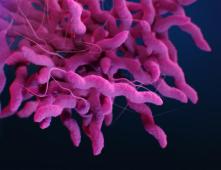
Campylobacter are a group of small, curved, gram-negative, non-spore-forming, motile bacteria with a single polar flagellum or bipolar flagella.

Thermotolerant Campylobacter species (e.g. C. jejuni, C. coli) are able to grow at temperatures between 37° and 42˚C but not below 30˚C, while strains of non-thermotolerant Campylobacter species (e.g. C. fetus subsp. venerealis, C. fetus subsp. fetus) may not grow at 42˚C. Generally, they are highly sensitive to oxygen, desiccation, osmotic stress, and low  pH , and they cannot grow in foods during handling or storage at room temperature in moderate climates. Freezing reduces the number of viable Campylobacter, but it must nevertheless be stressed that the bacteria can survive extended periods of refrigeration and freezing.

UK – Campylobacter project finds labs can do better.

Food Safety News

According to a report, only one laboratory got a top score as part of a Campylobacter testing exercise, suggesting there is room for improvement.

In 2018, the Food Standards Agency (FSA) commissioned the UK Health Security Agency (UKHSA) to provide an external quality assessment (EQA) scheme for the detection and enumeration of Campylobacter from a simulated matrix representing uncooked chicken.

It was available to 20 laboratories in the UK that provided an accredited test for Campylobacter in foods. At the time, there was no reliable test to identify the pathogen.

The EQA ran from March 2019 to November 2021, due to COVID-19 disruption. A total of 39 samples were sent; 26 for enumerating the levels of Campylobacter, if detected, and 13 for detection of the organism.

An EQA provides labs with an independent external assessment of their performance. Regular participation is part of quality procedures and helps to ensure that results of tests are accurate. It also gives assurance for clients.

France – Campylobacter Information

Sante Publique

Transmitted to humans mainly through contaminated, undercooked meat, Campylobacter infections are a common cause of bacterial gastroenteritis in developed countries.